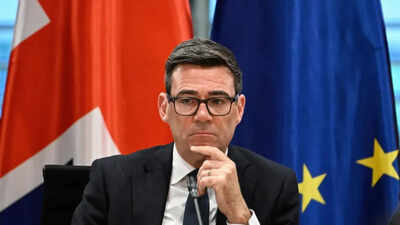
British Prime Minister Andy Burnham is set to acknowledge that Britain has lost more than it has gained from leaving the European Union. He argue that the country’s post-Brexit arrangement created economic difficulties and failed to fulfil key promises made during the 2016 referendum.According to the BBC, Burnham will make the remarks at the Lord Mayor’s Banquet on Monday, ahead of a UK-EU summit scheduled for Friday.He is expected to compare Britain’s Brexit settlement to the story of “The Emperor’s New Clothes”, arguing that political leaders have been unwilling to acknowledge its shortcomings.“It’s like the emperor’s new clothes, where no-one is prepared to say the obvious truth. Well, I say it as I see it. And to be frank, the emperor has nothing on,” he is expected to say.“The Brexit we were given has not worked. We have lost more than we have gained,” Burnham will add.He will also describe Brexit as “needlessly hard”, saying it created barriers for businesses while failing to deliver on the promise to “take back control”, BBC reported.Burnham’s criticism is directed at the terms under which Britain left the EU rather than the decision to leave the bloc itself. He has argued that the previous government’s approach resulted in a harder Brexit, creating additional barriers for businesses and limiting the benefits of Britain’s departure.He is expected to set three tests for any new agreement with Brussels. According to the BBC, the first is that any deal must remain consistent with Labour’s 2024 general election manifesto, which ruled out rejoining the EU’s single market and customs union or restoring freedom of movement.The second is the “Makerfield test”, which requires any agreement to bring tangible improvements to people’s everyday lives. The third is that the new arrangement must improve the original Brexit deal and come closer to what people believed they were voting for in 2016.Britain voted to leave the European Union in a referendum held on June 23, 2016. The Leave campaign secured 51.9 per cent of the vote, while 48.1 per cent voted to remain in the bloc.The referendum was held after then prime minister David Cameron promised a public vote on EU membership ahead of the 2015 general election. Cameron had campaigned for Britain to remain in the bloc but announced his resignation after the Leave campaign won.Britain formally left the EU on January 31, 2020, after the government triggered Article 50 in March 2017. However, the transition period continued until December 31, 2020, when Britain also left the EU single market and customs union.The departure brought an end to frictionless trade arrangements and introduced additional customs procedures, paperwork and regulatory checks on goods moving between Britain and the EU. These changes increased costs and administrative requirements for businesses trading with the bloc.