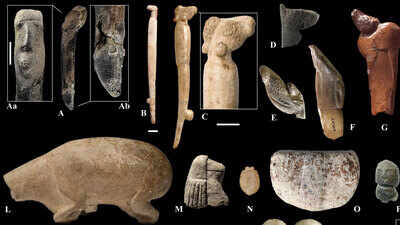
What if the history of art began much earlier than we have been taught? And what if some of the earliest clay artists were children?A remarkable archaeological discovery in Israel is offering a fresh perspective on both questions. Researchers have identified 154 figurative clay artefacts dating back approximately 15,000 to 11,650 years, suggesting that communities in the Middle East were experimenting with clay art long before farming became established.The findings, published in PLOS ONE on November 11, 2026, challenge a long-standing archaeological assumption that figurative clay-making in Southwest Asia developed primarily alongside Neolithic agricultural societies. More surprisingly, an examination of fingerprints preserved on the artefacts suggests that children, alongside adults, actively participated in making them.
Ancient clay figures reveal an artistic tradition before farming
The artefacts were recovered from three Natufian archaeological sites in the Southern Levant, in present-day Israel: el-Wad Terrace, Hayonim Terrace and Eynan-Mallaha.The Natufians were hunter-gatherers who began adopting increasingly settled lifestyles thousands of years before agriculture transformed human societies. Their communities developed permanent structures, complex social practices and distinctive forms of symbolic expression.Until now, archaeologists had largely associated the widespread use of clay figurines in Southwest Asia with the Neolithic period, when farming communities began to emerge.The new study changes that timeline. Researchers identified 15 figurative objects depicting recognisable animal, bird and human forms, alongside 139 cylindrical artefacts believed to represent fragments of figurines or their body parts.Some objects also carry traces of red colouring, suggesting that their creators paid attention not only to shape but also to appearance and decoration.The discovery indicates that clay was already being used as a medium for symbolic expression much earlier than previously recognised.
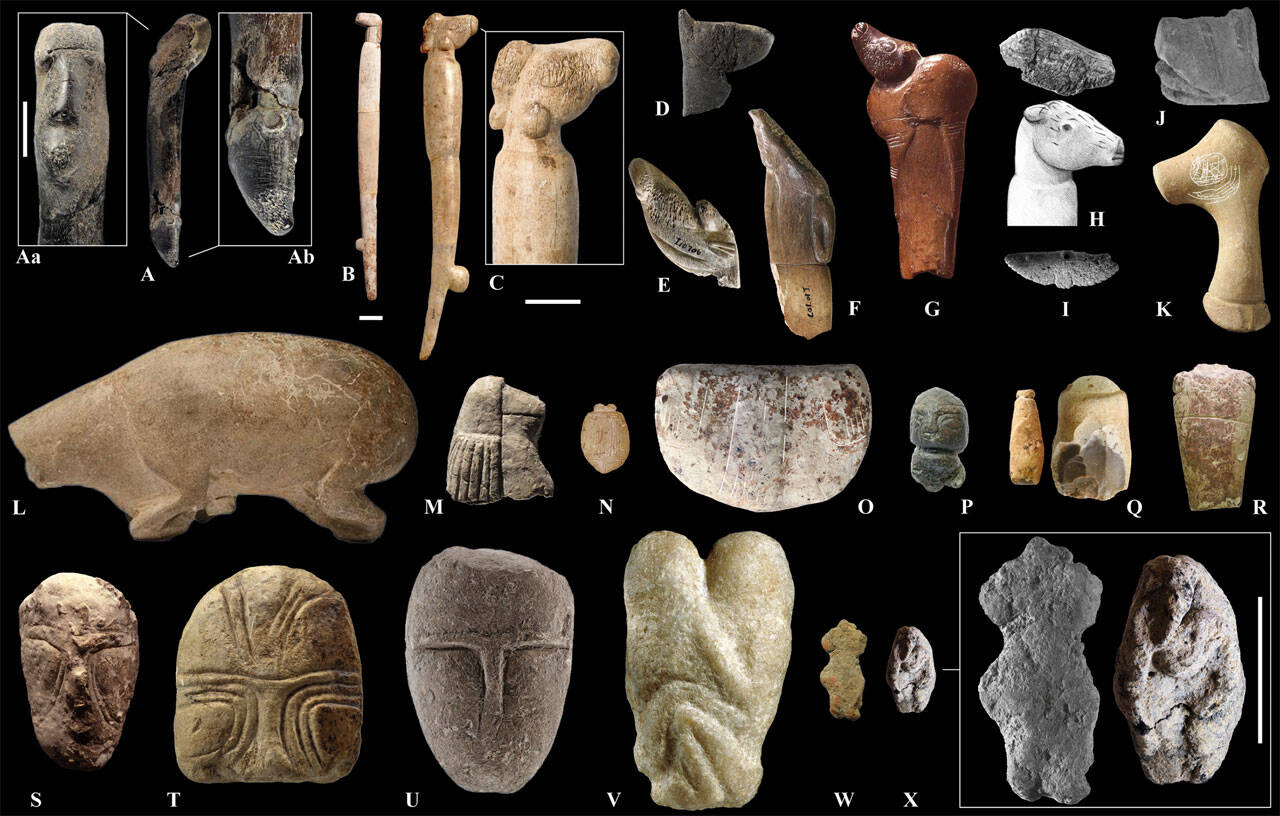
Buried for 15,000 years, these clay figurines reveal a secret about prehistoric humans that archaeologists never expected. (Photo: PLOS ONE)
Fingerprints reveal the surprising role of children
Perhaps the most fascinating aspect of the research lies in something almost invisible to the naked eye: ancient fingerprints.Researchers examined impressions preserved on the clay surfaces to estimate the ages of the people who handled and shaped the objects. Their analysis revealed fingerprints belonging to children, adolescents and adults.One particularly intriguing figurine carried two overlapping fingerprints. The researchers believe the first was left by a young adult or adult female, while the second belonged to a pre-pubescent child. This suggests that an adult may have passed the unfinished object to a child during the modelling process.Another bird-shaped figurine carried a fingerprint believed to belong to a child probably younger than 10 years.These traces offer an unusual glimpse into prehistoric childhood. Children may not have been mere observers of adult activities. They appear to have participated directly in shaping and colouring clay objects.The researchers suggest that these interactions could reflect early forms of learning, creative play and the transfer of skills between generations.
What the discovery tells us about early human creativity
The findings go beyond adding a new chapter to the history of ancient art. They challenge the idea that sophisticated symbolic expression developed only after humans adopted agriculture and established farming settlements.Instead, the Natufian communities appear to have developed creative traditions while still relying largely on hunting and gathering.The study also highlights how everyday activities such as shaping clay could have played a role in passing cultural knowledge from one generation to another.Although researchers caution that much remains to be understood about the purpose of these figurines, the evidence points towards a surprisingly rich artistic tradition.For archaeologists, the tiny impressions left on these objects may be as significant as the figurines themselves. They preserve traces of hands that worked with clay nearly 15,000 years ago, including those of children whose names and stories have long disappeared.The discovery is a reminder that creativity, learning and artistic expression may have been integral to human communities long before the arrival of agriculture.