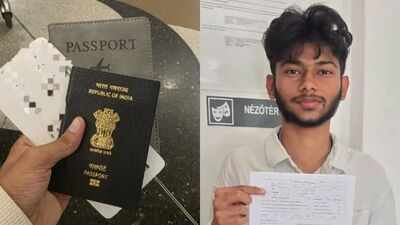
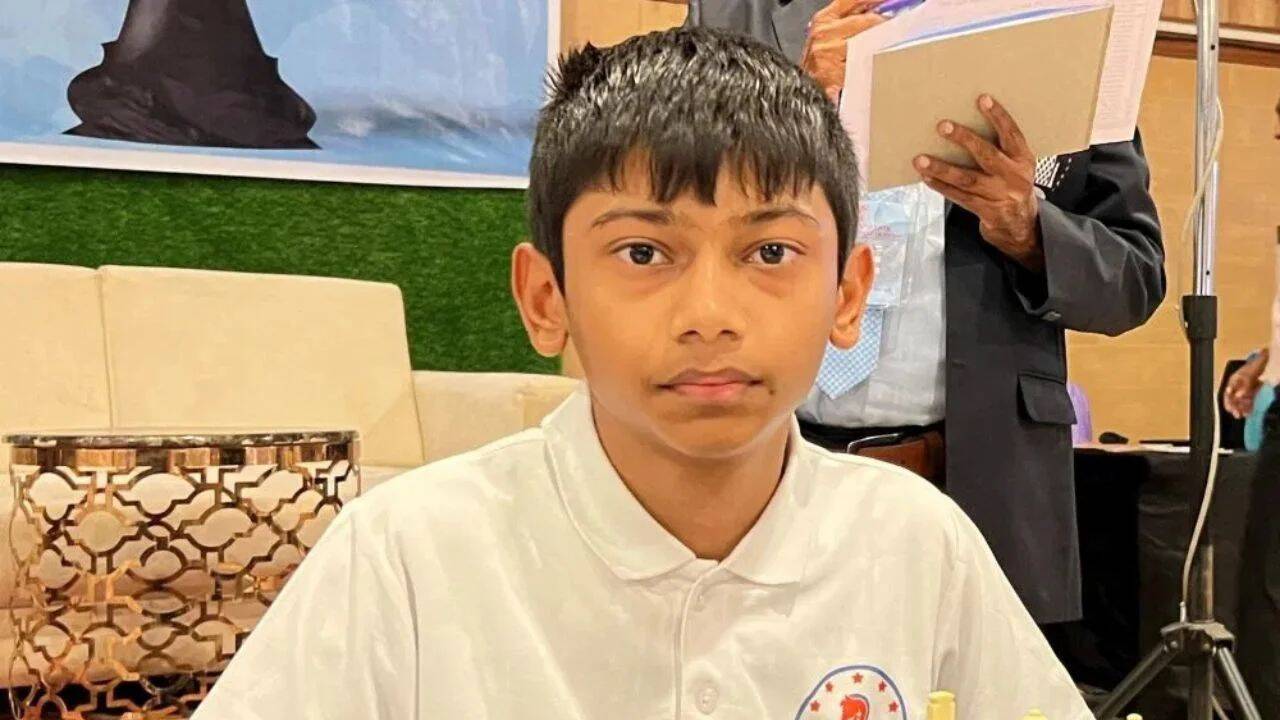
NEW DELHI: Last June, seventeen-year-old Md Imran was in Bratislava, Slovakia, when an incident turned his European chess campaign into a nightmare. As previously reported on TimesofIndia.com, he lost his passport, his phone, money and several personal belongings. More than just his valuables, he had lost something far more important, his valid US F-1 visa and Schengen visa.Stranded in a foreign country, with no easy way to get home or continue his journey, the young Indian chess player suddenly found himself fighting a battle that had little to do with the 64 squares. But Imran, hailing from Andhra Pradesh, refused to let the setback end his journey.In the days and weeks that followed, he produced two consecutive Grandmaster (GM) norms, bringing him within touching distance of the coveted Grandmaster title.Yet, four months after that incident, Imran is back in India, facing a different kind of situation, which includes an unresolved US visa crisis, mounting family debt, and the possibility of losing a full university scholarship that could change his life.The teenager, who became an International Master (IM) in 2025, has already deferred his admission to the University of Texas at Rio Grande Valley (UTRGV) in Brownsville, Texas, from Fall 2026 to Spring 2027.His new university orientation is scheduled for January 19, 2027. If he cannot secure his US F-1 visa before then, he risks losing the scholarship altogether.For a teenager who has spent years travelling across continents to chase his Grandmaster dream, the next few months could prove decisive.
The Bratislava incident that changed everything
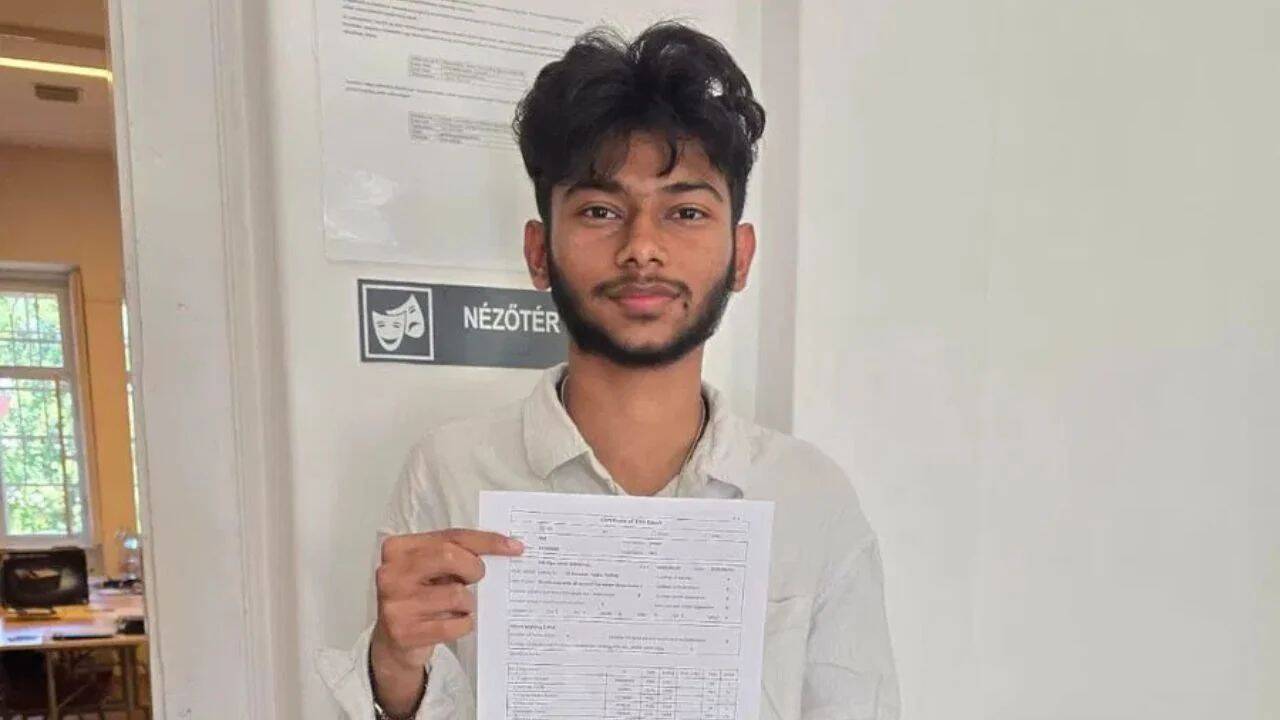
The consequences of losing his passport in Bratislava were particularly severe because it contained both his valid US F-1 visa and his Schengen visa, which was valid until October 31.He eventually managed to obtain a replacement passport from the Indian Embassy in Budapest on June 29 and returned to India on July 6. But coming home did not mean the troubles were over.“The very next day, on July 7th, I applied for a new Schengen visa for Hungary. This marked my 13th attempt at applying for a Schengen visa,” Imran told TimesofIndia.com.Despite having competed extensively in Hungary over the previous two years, and having previously received a one-year multiple-entry visa from the same consulate, Imran was granted only a three-month visa, valid from July 18 to October 31.The decision left him frustrated, particularly when he knew fellow players who had received visas valid for two to five years in far fewer attempts.“It sounded completely ridiculous, especially when I know many friends who have received 2- to 5-year validity visas in just their 2nd to 5th attempts. I truly don’t understand what’s wrong with my case,” he added.For a young professional chess player, travelling back to India solely to process visas means more than another appointment and a few documents.“Flying back to India solely for visa processing costs an exorbitant amount of time and heavy money on flight tickets, on top of the constant re-application hurdles,” he added.
A university dream on hold
Even amid the uncertainty, Imran had already earned two norms in closed round-robin tournaments and was chasing his final open Swiss GM norm to complete the requirements for the Grandmaster title.His original plan was to continue competing in Europe, secure the remaining norm and return to India in time to obtain a US visa and attend UTRGV’s Fall 2026 student orientation on August 23. But the US visa appointment never materialised.“I waited in Europe and tried for a U.S. appointment all the way through August, September, and October. Unfortunately, despite trying every single day for four months since the June incident, I still have not secured an appointment,” he said.With the August university deadline passing, he had little choice but to defer his admission to Spring 2027.His scholarship remains at stake. If he cannot make it to the university by the January 19 orientation, he could lose the financial support that would help him pursue higher education alongside his chess career.Between July and October, he competed in over ten events. However, only three were strong open tournaments where he had a realistic opportunity to secure his final GM norm.
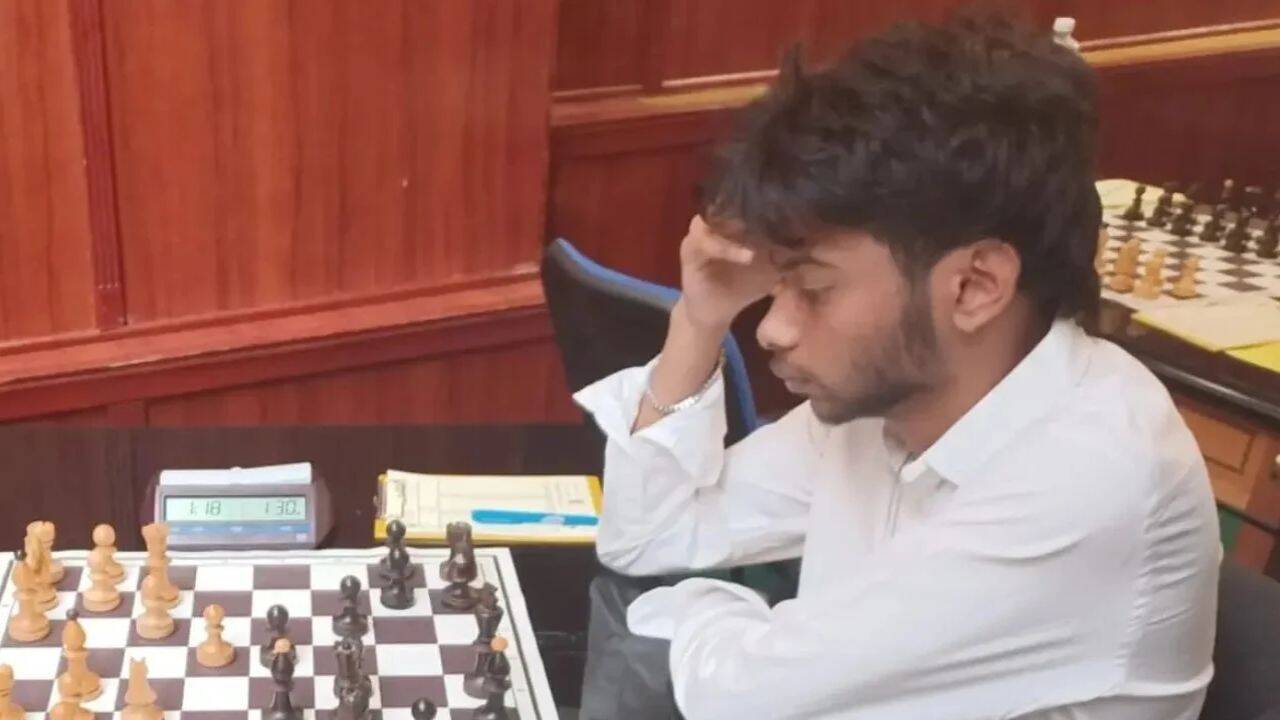
The remaining events were regular prize-money opens and round-robin competitions that helped him stay active.The three major opportunities were also poorly spaced, with two tournaments scheduled back-to-back between August 8 and 23, followed by the final one from October 3 to 11.It was a relentless schedule, made even harder by the uncertainty surrounding his university admission and his inability to secure a US visa appointment.The pressure eventually took its toll on the chessboard.“Under the intense psychological pressure of the missing norm and my crumbling U.S. visa situation, my performance dipped. I suffered an insane rating decline despite relentless fighting spirit. Completely exhausted and under immense stress, I flew back home on October 12,” Imran, who had a peak rating of 2503 and is now rated 2477, revealed.
A family stretched to its financial limits
Imran’s father is a police officer, while his mother is a homemaker. Coming from a middle-class background, the family has had to stretch its resources to support his international chess career.Playing professionally in Europe costs between Rs 1.5 lakh and Rs 3 lakh every month. The expenses include flights, visas, accommodation, tournament entry fees, food and travel between countries.The family has reportedly accumulated loans of around Rs 40-50 lakh to finance his career. The June incident in Slovakia added another unexpected financial burden, with the loss of his passport, phone and other valuables.“My father has supported me with everything he possibly can, stretching himself to the absolute limit, but it’s falling short over time,” Imran further noted. “I built my chess career entirely through my own hard work without formal high-end coaching.”Imran has approached the Andhra Pradesh Chief Minister’s Office and other political leaders, seeking financial assistance through state sports incentive schemes. However, his requests have so far gone unanswered.
A race against time
With his three-month Schengen visa approaching its October 31 expiry, Imran returned to the Hungarian Consulate in Mumbai on October 16 for another application. It was his 14th Schengen visa application.This time, he received an emergency appointment and was granted a one-year visa on October 24. While the longer validity offers some relief, it was still shorter than the five-year visa he had hoped to secure given his extensive tournament and travel history across Europe.At least one part of the travel crisis had eased. But the bigger problem remained untouched, his US F-1 visa. With January 19, 2027, approaching, Imran now needs to secure an appointment and complete the visa process in time to join UTRGV and protect his scholarship.
One final Grandmaster norm
Despite everything, Imran is preparing to return to Europe for another demanding tournament circuit in the hope of securing his final GM norm. He is scheduled to fly back on November 19, with four events lined up across Portugal, Spain and Sweden:
- Funchal Open, Portugal: November 26 to December 2
- El Llobregat Open, Spain: December 3 to 8
- Sunway Sitges Chess Festival, Spain: December 12 to 22
- Rilton Cup, Stockholm, Sweden: December 27 to January 5
The schedule leaves little room for rest. More importantly, he is desperately hoping to secure a US visa appointment before leaving India on November 19.“My life is currently at a critical crossroads. Between the heavy financial debts of playing professional chess, the constant struggle to secure my final GM norm, and the looming threat of losing my U.S. university scholarship at the University of Texas at Rio Grande Valley if I can’t resolve my visa crisis by Spring 2027, the situation is completely overwhelming,” he concluded.For a teenager who has done so much to keep his dreams alive, the question is whether the support he needs will arrive before January 19.