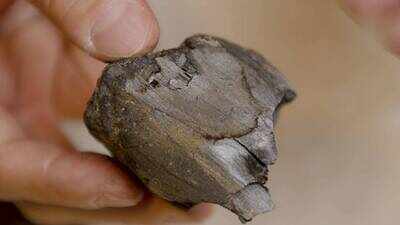
The first photographs of wooden fragments reportedly discovered beneath Turkey’s Durupınar Formation, a site long associated with the search for Noah’s Ark, have been released. The images show blackened, cracked pieces of wood with visible grain patterns and markings that researchers believe could point to human workmanship.The fragments were reportedly found around 30 feet below the surface of the boat-shaped formation near Mount Ararat. Researchers investigating the site believe the discovery could offer a new clue in the decades-long search for the biblical vessel. However, whether the pieces are ancient or have any connection to Noah’s Ark remains to be established.The photographs offer the first visual glimpse of the material that has now been sent for scientific examination. Four independent laboratories in different countries are expected to analyse the samples to determine their age, identify the type of wood and investigate their possible origins.
What do the first photographs of the wooden fragments show?
The released images show charred wooden pieces with cracked surfaces and visible grain patterns. Researchers have drawn attention to markings that they believe could indicate that the material was shaped using tools.Archaeologist Dr Cenker Atila told Fox News, “One of the wooden pieces clearly shows signs of human workmanship.“Its surface appears to have been slightly shaped and flattened using an axe or a knife.“The fact that these wooden fragments were found at such a considerable depth indicates that they may belong to an ancient period.”The research team is also looking for traces of tree pitch in the samples. Andrew Jones, founder of Noah’s Ark Scans, which is involved in the investigation, said in a statement, “We’re testing this material to establish its age, identify the type of wood and look for traces of tree pitch.“After decades of searching, this could be a crucial piece of the puzzle.”The reference to pitch is significant because the biblical account describes Noah being instructed to coat the Ark inside and outside with the waterproofing substance. However, the charred appearance of the fragments does not establish that pitch was used or that the wood belonged to an ancient vessel.
Why the discovery has renewed interest in the Noah’s Ark search
Researchers believe markings on the fragments could indicate human workmanship, although their origins remain unverified. (Photo: Noah’s Ark Scans)
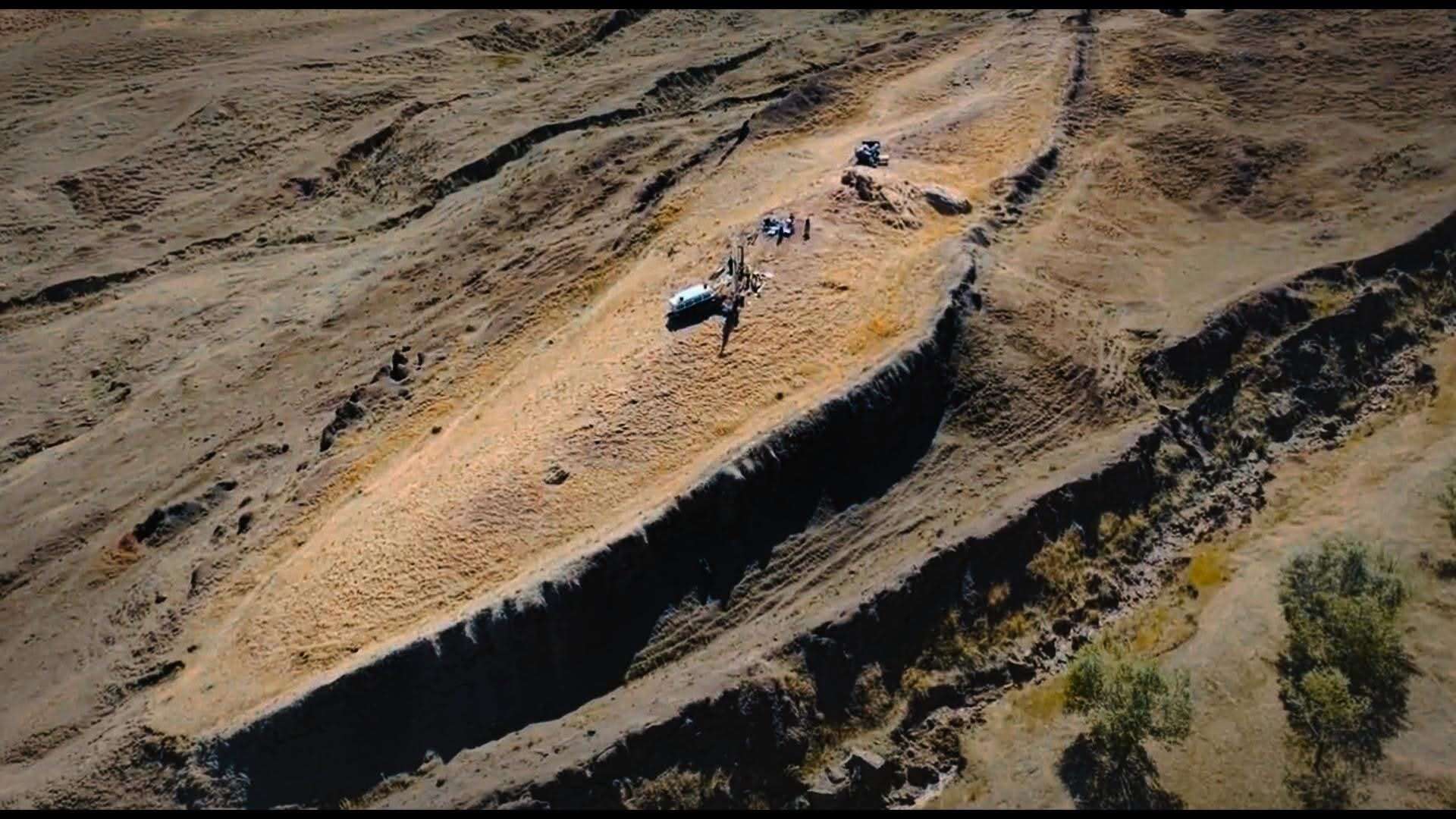
The Durupınar Formation lies around 18 miles south of Mount Ararat, Turkey’s highest peak. Its unusual boat-like outline has fuelled comparisons with the biblical account, which places the Ark’s resting place in the “mountains of Ararat”.Researchers point to the formation’s approximate length of 515 feet, which they say corresponds to the dimensions of Noah’s Ark described in the Book of Genesis. Based on their conversion of biblical measurements, the vessel would have been approximately 515 feet long, 86 feet wide and 52 feet tall.The site’s shape, dimensions and location have made it a focus of interest for those searching for evidence of the biblical vessel. However, these similarities alone do not establish that the formation is man-made or connected to the Ark.
Radar scans reveal possible chambers and corridors beneath the formation
The discovery of the wooden fragments follows radar investigations that have reportedly identified unusual underground patterns within the formation.Dr Khosrow Bakhtar, a veteran US defence scientist, has said that scans revealed features resembling chambers and corridors inside the approximately 515-foot-long structure.“This is the most significant finding of 45 years of my career. It’s not geologic-related, because we masked all the geologic features,” Bakhtar said in a press release in late October.The latest investigation builds on a 2019 radar survey that detected straight lines and angular patterns, which the team interpreted as possible walls, passageways and compartments.This year, Bakhtar examined the formation using a more powerful radar system developed through US Air Force research. The team said the system could reach deeper underground and reportedly detected large boundaries and spaces that researchers interpreted as possible sediment-filled chambers, corridors and tunnels.Five prominent features appeared to form a possible tunnel system stretching around 151 feet, with an average height of more than 14 feet.Researchers also identified a thick underground layer that appeared to contain three separate sublayers. They compared this observation with the biblical description of Noah’s Ark having three decks.“In our holy books, Noah’s Ark had three levels; in our radar studies, we also identified a formation with three levels,” Atila, an archaeologist at Sivas Cumhuriyet University in Turkey, said.The team has claimed that it has “100 per cent confirmed” that the formation is a man-made object rather than a natural geological feature. This remains the researchers’ interpretation and has not been independently established.
What researchers have said about the formation
Jones, who has investigated the area for nearly 30 years, has previously argued that neither radar surveys nor drilling inside the formation detected limestone or solid bedrock.“This destroys the theory that the site is a solid limestone block shaped into a boat by glaciers and weathering after coming down the mountainside, and it also refutes the theory that this is bedrock around which mud flowed to form the shape,” he told the Daily Mail.However, ruling out these explanations would not, by itself, prove that the formation was constructed by humans or that it is Noah’s Ark.Radar readings are not photographs of actual underground rooms or passageways. They show how signals respond to different materials and boundaries beneath the surface. Further drilling and physical examination would be needed to establish what is producing the patterns.The team is using the scans to identify locations that could be suitable for further drilling. The laboratory analysis of the wooden fragments is expected to provide more information about their age and origin.Jones has acknowledged that the findings have not definitively identified the formation as the biblical vessel.“I firmly believe the Durupınar Formation represents the buried remains of Noah’s Ark,” he said, describing the scans as a “compelling new line of evidence” rather than definitive proof.