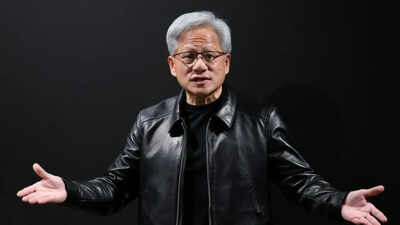
In January, Jensen Huang was asked how he had stayed Nvidia’s chief executive since co-founding the company in 1993. “The secret for being CEO for this long is, one, don’t get fired, and, two, don’t get bored,” he said at an event in Las Vegas. Ten months later, Nvidia’s board is investigating him, and the probe has exposed a question the world’s most important AI chipmaker has never answered in public: who runs the company if he can’t?The board opened the inquiry on Sunday, November 8, after Huang, 63, admitted to an affair with Alice Huang, also known as Huang Le. She is a former executive at Singapore-based Megaspeed, and US intelligence agencies believe she was working for China’s Ministry of State Security, as The New York Times first reported. China has called the allegation a smear. A committee of independent directors, working with outside counsel, will run the investigation. Huang stays on as CEO while it continues, and the board says it has “confidence in Jensen and his leadership team.”Nvidia has no public succession plan and no obvious heir. Huang holds both the CEO and president titles. Under him, Nvidia has taken an estimated 90% of the market for the chips behind large AI projects. Shareholders have seen returns of roughly 700,000%, and the company hit a record market value of nearly $5.8 trillion in October. Governance experts now put Huang’s chances of keeping his job at roughly a coin flip.“The issue at Nvidia is that there is no clear successor to Jensen, and we had expected him to stay in this role for at least 10 more years,” analysts at Melius Research wrote in a note on Monday. Investors appear to share the concern. Nvidia closed 4.27% lower at $178.67 on Monday, wiping about $190 billion off its market value on a day when the Nasdaq rose 2.74%. Economist Mohamed El-Erian thinks the drop may not go far enough. “The so-called ‘key-man risk’ looms large here, and it’s doubtful markets have adequately priced it in,” he wrote on X.
Jensen Huang doesn’t believe in succession planning, and Nvidia shows it
The problem starts with how Huang runs the company. He has long rejected conventional hierarchy and once said on a podcast that traditional organisational charts made no sense to him. He runs Nvidia mostly through project meetings that bring together recent graduates and senior executives in the same room. In September 2025, he said he had as many as 60 direct reports. Internal records reviewed by CNBC this week put the number at 33. They include CFO Colette Kress, chief scientist Bill Dally and Ian Buck, the inventor of Nvidia’s CUDA software.Even the lower figure is far more than most tech leaders manage. His lieutenants send him emails listing their “top five things”, and he reads and answers them at all hours. He says he goes through several thousand emails a day.His office at the Santa Clara headquarters shows the same setup. According to Bloomberg, Huang sits at an enormous oval desk facing his senior staff, with stadium seating behind them for more employees.Huang’s argument is that a flat structure, where leaders pass on what they know as they go, produces many possible successors rather than one. The catch is that nobody except Huang sees the whole company.“Jensen is Nvidia. Nvidia is Jensen,” Bernstein analyst Stacy Rasgon told CNBC on Monday. He added that Huang “runs the thing pretty much top down” and “sort of pulls all the strings.”
Can Nvidia’s board actually fire Jensen Huang
Yes, and that is where Nvidia differs from other founder-led tech giants. Huang owns about 3.6% of the company. That makes him its largest individual shareholder, but it gives him far less control than Mark Zuckerberg has at Meta or Elon Musk has at SpaceX. Nvidia has no dual-class share structure that would protect him. He is one member of a board that has no official chair.That puts the decision with the directors, and governance specialists are already questioning how they got here. “You can’t base a company that big around one person. You just can’t,” Charles Elson, a former University of Delaware professor, told Axios. “What if he gets hit by a bus?”Jeffrey Sonnenfeld of the Yale School of Management said it was “ridiculous that they have nobody in management identified.” He pointed out that no executive has been given trial assignments to prepare for the top job. Peter Jaworski, a business ethics professor at Georgetown University, said the missing plan suggests the board was “asleep at the wheel.” He added a warning: “We always think there’s no chance this person gets fired, until they do.“The board’s makeup complicates things. The New York Times reports that Huang has filled it with early investors and long-time partners. Two directors have ties to the venture firms that backed Nvidia in 1993, and two others were executives at a chip designer that worked with Nvidia in the 1990s. The rest include a former Taco Bell president, a former NFL chief marketing officer and an engineering professor. Three former employees told the paper that Huang has treated the board mainly as a governance requirement.David Larcker, a Stanford professor who has studied CEO relationship scandals, told The Wall Street Journal he expects the board to bring in outside advisers to draw up a plan if none exists. He said the national security angle makes this case unusual. “This is so unusual it’s not like you can call somebody up and they say, ‘Here’s a game plan for this that’s very tidy,'” he said.Nvidia’s own filings hedge the risk without naming him. Huang isn’t listed as a key person. Instead, the company says it is “highly dependent on the services of our longstanding executive team” and that poor succession planning “could hinder our strategic planning, execution, and long-term success.”
Nvidia’s executive bench can run the business, but can’t replace Jensen Huang
After Huang, the most visible executive is Kress, who sits beside him on earnings calls. Analysts don’t see a career finance chief as the obvious replacement for a CEO whose job is part engineering and part evangelism.Melius points to a “strong bench” across networking, hyperscale and high-performance computing. It also cites the technical depth of CTO Michael Kagan and Dally. “While these folks can keep the engine running, Jensen is one of a kind, and his energy will be needed to maintain confidence in the AI trade,” the analysts wrote.Outside names are already circulating. Sonnenfeld told Axios he has heard former Google CEO Eric Schmidt mentioned as someone who could steer the chipmaker. “I’ve heard it rumored. He could step in tomorrow and do a very good job,” he said.Daniel Newman, CEO of research firm Futurum Group, compared the situation to Apple. “In many ways Jensen is Nvidia’s Steve Jobs. That does not mean they cannot find a Tim Cook in the future, but it would be a massive changing of the guard, and the company has not been set up for that,” he told The Wall Street Journal. Apple had Cook ready well before Jobs’s death in 2011. Nvidia has no equivalent. Newman told Fortune it was “very improbable that they’re going to find one person that’s going to fill all the gaps.” He expects a post-Huang Nvidia to be run by a leadership team rather than a single figure.There is also a precedent for companies doing well after a famous founder leaves. Sonnenfeld pointed to Uber, which he said did “far better” after Travis Kalanick was pushed out. “People thought he was so critical,” he said.
Inside Nvidia, some see Jensen Huang’s children as future successors
The family is another part of the picture. Five current and former employees told The New York Times that Huang has given his children more power and authority at Nvidia over the past few years.His daughter, Madison Huang, is senior director of physical AI and robotics product marketing. His son, Spencer Huang, is a director of robotics product management. Both are working on robotics, an area Huang has repeatedly pitched as Nvidia’s next big growth opportunity after data centres. Nvidia’s 2026 proxy statement shows Madison received $1.23 million in total compensation for the fiscal year and Spencer $1.32 million. It says the pay is in line with others in similar roles.On paper, neither is an executive officer or reports to their father. In practice, Huang has the final say on every major decision, and his children can reach him directly in a company where access to him is everything. Employees say that has created unusual power dynamics in meetings and frustrated some colleagues. Some staff have come to believe Huang is nurturing them to take over one day. Some customers, suppliers and advisers have started cultivating their own relationships with the children.Huang has played down the idea. Asked by Bloomberg last month whether his daughter might one day take over, he said that if that is their aspiration, “they have to go earn it, and it’s really, really hard work.”The overlap between family and company was visible in his memo on Sunday. It was addressed “To my colleagues at Nvidia” but included a direct message to his wife and children, some of whom work at the company. “My family bears no responsibility for my choices. I do. Please give them privacy,” Huang wrote.Any family succession would also run into the ownership problem. Founders at family-controlled companies can pass down voting power along with the job. Huang can’t. With a stake of about 3.6% and no special voting shares, any decision on who comes next belongs to the board.
Huang’s son-in-law Nico Caprez has been called “Jensen’s consigliere”
The family member drawing the most attention inside Nvidia may not be one of Huang’s children. Nico Caprez, 35, is the company’s vice president of global AI infrastructure growth, and he married Madison Huang in September.Caprez took an unusual path to the chip industry. He is a former alpine skier who represented Switzerland, and he started his career as a consultant at Boston Consulting Group. He met Madison while doing his MBA at London Business School, graduating in 2021.His rise at Nvidia has been fast. He joined in February 2024 as a corporate development manager. About a year ago he became director of global AI infrastructure enablement for Nvidia’s cloud partners. In less than three years he has gone from manager to vice president.His current role puts him at the heart of the deals investors worry about most. Caprez was part of the team that put together the $500 billion financing arrangements in August with six major asset managers, including Apollo Global Management and Blackstone, to fund Nvidia chips for data centres. He also reportedly helped Nvidia take minority stakes in two data centre developers.Colleagues rate him highly. Vladimir Troy, Nvidia’s vice president of AI infrastructure, who works alongside Caprez, has said “Nico is very important.” A cloud executive who has met him called him “Jensen’s consigliere” in an interview with The Information.That has fed speculation about succession. “I do imagine Huang is kind of preparing [Madison] and Nico for that next step,” an Nvidia employee who works with Caprez told The Information last month.
Losing Huang could change how Nvidia’s AI deals and policy fights play out
Investors are worried about more than chip design. Nvidia holds about $99 billion in equity investments across frontier AI labs, neoclouds and infrastructure companies, and Huang drove the $500 billion financing push that Caprez helped execute.“It’s unclear to us what these partnerships and financing deals would look like with a different Nvidia CEO,” Morningstar senior equity analyst Brian Colello wrote in a note. He warned that the cost of capital could rise if Huang is no longer putting those deals together. He also flagged a risk that US approval for Nvidia’s H20 chip sales to China could be revoked.Huang’s political network would be just as hard to replace. In recent months he has met French President Emmanuel Macron and German Chancellor Friedrich Merz to argue against heavy AI regulation, and last month he received the National Medal of Science from Trump. “Jensen Huang is irreplaceable. He’s become a singular force in the geopolitics of AI,” Jim Secreto, a former deputy chief of staff at the Commerce Department, told The Wall Street Journal. Ryan Fedasiuk of the Foundation for American Innovation told the paper that this “unparalleled access to politicos and other industry titans” is what made Huang an attractive intelligence target in the first place.For now Huang still has the White House on his side. Trump told reporters that Huang should stay on as CEO and that he would “certainly take him” on his next China trip. Pressure is building elsewhere, though. Democrats, who are set to take control of both houses of Congress, are calling for investigations. Senator Elizabeth Warren has demanded new legislation “to stop advanced AI chips from fueling China’s military.“The pressure has reached the courts as well. Five minutes after the market closed on Monday, Nvidia shareholders led by Mark Kistenmacher filed a proposed class action in federal court in San Jose, California, Reuters reported. The suit accuses Nvidia and Huang of defrauding investors by hiding his ties to Alice Huang and failing to disclose national security concerns that could damage the company’s reputation and business prospects. It seeks unspecified damages.Other investors are worried about the opposite outcome. Michael Monaghan, a partner at Nvidia investor Founder ETFs, told Axios that the fund would sell its shares if Huang leaves. “We don’t really believe there is such thing as succession in these massive founder-led companies,” he said.Not everyone expects him to go. Timm Schulze-Melander of Rothschild & Co Redburn wrote in a note that Huang would likely be pushed to step back only if the probe finds “something materially more serious” than an undisclosed relationship. The board, he wrote, “needs to demonstrate independence and protect shareholders without destabilizing a company whose success is unusually dependent on its founder.” Morningstar’s Colello said he “can’t rule out the investigation fading away and Nvidia returning to business as usual.“Several analysts expect the investigation to bring governance changes either way, including a formal plan for a transition. Nvidia has never had one, because it has never had another CEO.It’s unclear how long the probe will take. In his memo to staff, Huang said he is “fully committed to Nvidia and will work to earn back your confidence.” At the earnings call later this month, analysts are likely to ask the succession question directly. Huang’s own rule for staying CEO was not to get fired. Whether he does is now up to the board.