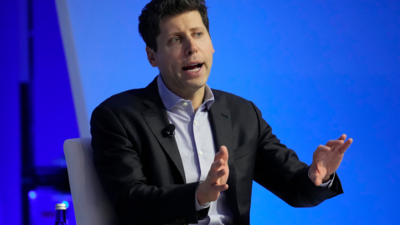
OpenAI CEO Sam Altman has expressed reservations about children developing relationships with artificial intelligence chatbots, saying he does not want his son to have an AI bot as his best friend. He made that particular remark during a US Senate hearing in May 2025. More recently, in an exclusive interview with Vanity Fair, published on October 5, 2026, Altman discussed raising children in a world increasingly shaped by AI and said he had not decided at what age he would allow his own children to use ChatGPT. He also voiced concerns about excessive technology use during childhood and the potential effects of emerging technologies on developing brains. His comments come amid growing concerns among child development experts about AI companions, emotional dependence and children’s ability to build meaningful human relationships.
Why Sam Altman is cautious about introducing AI to his children
Speaking to Vanity Fair, Altman said he had not settled on an appropriate age for his children to start using ChatGPT. He indicated that he was not comfortable introducing the technology to them at their current age.The OpenAI chief also expressed support for limiting children’s exposure to technology more broadly. He believes young children should have opportunities to spend time outdoors, play in nature and experience the world beyond screens.Altman raised concerns about children becoming accustomed to touchscreens and short-form videos at an early age. He also pointed to the uncertainty surrounding the effects of emerging technologies on developing brains.He acknowledged that children growing up today would inevitably encounter AI and would need to understand how to use it. However, he questioned whether introducing conversational AI during early childhood was necessary, particularly when its long-term effects on development are still being studied.
What Sam Altman said about AI becoming a child’s best friend
Altman had addressed the question of AI companionship during a US Senate Committee on Commerce, Science and Transportation hearing on May 8, 2025.During the hearing, Senator Bernie Moreno referred to Altman’s experience as a new father and asked whether he wanted his child’s best friend to be an AI bot. Altman responded directly: “I do not.”He subsequently explained that children needed a much higher level of protection when interacting with AI services than adult users. He said OpenAI wanted to give adults considerable freedom in using its products while applying stricter rules and safeguards for younger users.Altman also acknowledged the difficulty of reliably determining whether an online user is a child or an adult. He said that if technology companies could identify users’ ages with greater certainty, they could offer adults more flexibility while maintaining tighter restrictions for children.During the same discussion, he raised concerns about people increasingly turning to AI systems for life advice and emotional support. He described the development as relatively new and said it needed to be understood and monitored carefully.
Experts are concerned about children forming emotional bonds with AI
The growing popularity of AI companion applications has prompted warnings from child welfare organisations and psychological experts. Unlike conventional search engines or digital assistants, AI companions are designed to maintain conversations, respond to personal information and simulate relationships.This can make interactions feel like conversations with friends, mentors or confidants. However, the responses are generated by AI systems rather than people with genuine emotions or personal experiences.In June 2025, the American Psychological Association (APA) published its health advisory, Artificial Intelligence and Adolescent Well-being. It highlighted concerns about adolescents developing unhealthy relationships with chatbots and warned that young users may be less likely than adults to question the accuracy and intentions of information provided by AI systems.The advisory also warned that adolescents may struggle to distinguish simulated empathy from genuine human understanding. Strong attachments to AI characters could interfere with the development of real-world relationships and social skills.The APA recommended age-appropriate privacy settings, interaction limits, transparency about AI-generated responses and human oversight. It also called for developers to establish clear boundaries around simulated human relationships to prevent AI systems from undermining real-world connections.The organisation acknowledged that AI can support young people through educational and creative activities, including brainstorming, summarising and understanding information. However, it emphasised the need to make children aware of the technology’s limitations.
Nearly three in four teenagers have used AI companions, study finds
Research published by Common Sense Media on July 16, 2025, highlighted how widely AI companions had spread among teenagers in the United States.Its report, Talk, Trust, and Trade-Offs: How and Why Teens Use AI Companions, surveyed 1,060 US teenagers aged 13 to 17 in April and May 2025. It found that 72% had used AI companions, while 52% said they used them at least a few times a month. Around 33% reported using these platforms for social interaction and relationships.Among teenagers who had used AI companions, 33% said they had chosen to discuss important or serious matters with an AI companion instead of a real person. The survey also found that 24% of AI companion users had shared personal or private information, such as their real name, location or personal secrets, with these platforms.The research also offered a more nuanced picture of teenagers’ relationships with AI. Despite widespread adoption, 80% of teenagers who had used AI companions said they spent more time with real-life friends than with AI companions. Additionally, 67% found conversations with AI less satisfying than conversations with their real-life friends.The findings suggest that although AI companions are becoming part of teenagers’ social experiences, many young users continue to value human friendships more highly.
What UNICEF says about protecting children from AI companions
UNICEF has also highlighted the risks associated with AI systems designed to act as friends or emotional companions.In a July 2025 article published by UNICEF Innocenti, titled The Risky New World of Tech’s Friendliest Bots, researchers highlighted concerns about children’s growing use of AI companions. The article featured research and an interview with digital innovation specialist Samia Firmino, examining the potential effects of these platforms on young users.It raised concerns about inadequate safety protections, inappropriate chatbot responses and the possibility of children developing unhealthy attachments to artificial companions.UNICEF subsequently updated its Guidance on AI and Children in December 2025. The third version included specific recommendations addressing AI companions and their potential impact on children’s rights and well-being.The guidance calls on governments and technology companies to prioritise children’s safety, protect their personal information, ensure transparency and establish accountability for AI systems. It also emphasises the importance of designing technology around children’s developmental needs and preparing them to use AI responsibly.UNICEF recognises that AI can provide educational opportunities and improve accessibility for children, including those with disabilities. However, it stresses that these benefits must be balanced against the risks associated with children’s interactions with increasingly sophisticated AI systems.