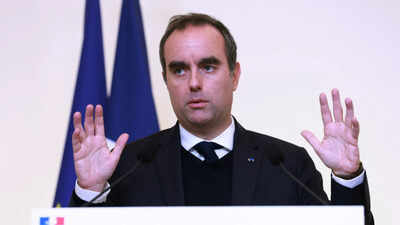
French prime minister Sebastien Lecornu on Monday announced a modest increase in the minimum wage from December 1 in response to mounting cost-of-living protests, but trade unions swiftly dismissed the move as inadequate, saying it fell far short of workers’ demands.Following meetings with representatives of employers’ organisations and trade unions, Lecornu announced a 1.6% increase, which will raise the monthly minimum wage by around 24 euros to approximately 1,502 euros net. The increase comprises a 1% adjustment for inflation and an additional 0.6% boost.The announcement comes after weeks of demonstrations over wages, rising living costs and deteriorating public services. The protests, which began with high school blockades in September, have since expanded into a broader movement involving students, workers and other groups dissatisfied with the government’s economic and political response.The proposed increase falls considerably short of demands from France’s largest trade unions. The CFDT had called for a 100-euro monthly increase, while the hard-left CGT sought a rise of around 150 euros.CFDT general secretary Marylise Leon described the government’s offer as “insufficient”, while CGT leader Sophie Binet dismissed the additional five euros a month, beyond the automatic inflation adjustment, as “crumbs”.“Five euros is one kilo of tomatoes,” Binet said to Reuters, reiterating that a limited increase would do little to ease the financial pressures facing households.The minimum wage currently stands at around 1,478 euros net per month, following a 35-euro increase in June to account for inflation. Labour minister Jean-Pierre Farandou had previously said he wanted the figure to cross 1,500 euros, provided an increase did not damage employment.Farandou had also warned against a sharp rise, arguing that raising the minimum wage to 1,700 euros net could destroy more than 230,000 jobs.France adjusts its minimum wage for inflation every January, while the last discretionary increase dates back to 2012.
Protests spread beyond schools
The government’s announcement follows several weeks of demonstrations that have spread well beyond educational institutions. The protests began with high school blockades in September and have since drawn students, workers and other groups frustrated by rising living costs and the state of public services.Lecornu had sought to signal a change in approach ahead of Monday’s meetings. In a letter to union leaders on Friday, he stressed the importance of social dialogue and engagement with unions and civil society.However, the government’s ability to offer more substantial concessions remains constrained by France’s deteriorating public finances. The country’s public debt stands at around 3.6 trillion euros, or 120% of gross domestic product, while its budget deficit is 5.4%.Union representatives have questioned whether Lecornu can deliver meaningful relief to households under these financial constraints.The dispute also comes as France approaches its presidential election next year. President Emmanuel Macron, who is completing his second term and cannot seek re-election, faces low approval ratings, while opinion polls suggest far-right candidate Marine Le Pen could face hard-left leader Jean-Luc Melenchon in a run-off.Le Pen has opposed a mandatory 10% increase in the minimum wage, arguing that businesses are too financially vulnerable to absorb it. Melenchon’s La France Insoumise, meanwhile, has backed the protesters’ demands. Its coordinator Manuel Bompard said on Sunday that addressing the crisis required an immediate political response to the financial pressures facing households.Candidates from the political centre have also struggled to position themselves amid the unrest. Edouard Philippe, the centre-right Horizons candidate, said minimum wage levels should be determined through negotiations between employers and unions rather than imposed by the government.The immediate challenge for Lecornu is whether Monday’s announcement will ease public anger or further fuel calls for a more substantial increase. Public sector unions have already called for a strike and demonstrations on November 17, signalling that the mobilisation could continue in the coming weeks.