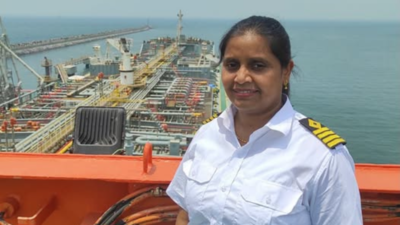
When Captain Ritu Kumari was preparing for the IIT-JEE entrance examination, a career in the Merchant Navy was nowhere on her mind. She had not grown up dreaming of commanding ships or spending months navigating the oceans. But an unexpected admission to a maritime training institute changed the course of her life.Coming from a village in Bihar, Kumari secured admission to Mumbai’s T.S. Chanakya through her entrance examination rank. What began as an unfamiliar career choice eventually took her to the command of a tanker operated by The Great Eastern Shipping Company, making her the first woman officer in the company’s history to command one of its vessels.
28 Oct 2026 | 10:09
What does having a voice mean to you, and when did you first realise its power?
After 16 years of working at sea, her journey has also made her the first woman captain among T.S. Chanakya alumni and one of the few women to reach the rank of captain in the Indian Merchant Navy.In an interview with Indian Masterminds, Kumari recalled how unexpectedly her journey began. “I was preparing for IIT-JEE entrance examination and through my rank, I secured admission in T.S. Chanakya. At that time, I was not even aware that this course was for a career at sea.”
From preparing for IIT-JEE to becoming the only woman cadet in her batch
Meet Captain Ritu Kumari, the first woman to command a Great Eastern Shipping tankerKumari’s decision to join the maritime institute was not driven by a lifelong ambition to become a sailor. Initially, she was attracted by the institute’s training, uniform, facilities and the prospect of earning well while travelling around the world.However, adapting to an unfamiliar environment came with its own challenges. She was the only female cadet in her batch, which often made college life lonely. The infrastructure for women was also limited at the time.Recalling her early days at the institute, she told Indian Masterminds, “Once onboard, I only concentrated on my performance.”That approach became central to her career. Rather than allowing the challenges of entering a male-dominated profession to define her experience, she focused on learning the job and improving her skills.According to The Logical Indian, Kumari graduated in 2009 after completing her training in nautical science. Her professional journey subsequently took her through several shipping companies, including Seaarland Shipping, Scorpio Ship Management, Hafnia Tankers and The Great Eastern Shipping Company.
The difficult voyages that prepared her for command
Becoming a ship’s captain is not simply about accumulating years of experience. It involves taking responsibility for the vessel, its crew, cargo operations and decisions that can have serious consequences.For Kumari, some of her most demanding lessons came while working as a chief officer on tankers.One particularly challenging assignment involved a vessel operating on an extremely tight schedule. The ship handled four grades of cargo and had to undertake repeated loading, discharging and tank-cleaning operations. She spent nine months working on the vessel, dealing with demanding schedules and considerable pressure.Another voyage with Scorpio Shipping Company tested her endurance in a different way.After reaching an Australian port with a loaded vessel, the crew discharged the cargo and loaded five different grades for five separate receivers at five ports. The ports were just six to eight hours apart, leaving very little time to rest between operations.For around 15 days, she had to manage different loading and discharging situations, with minimal and sometimes no rest. The operations also involved strict safety and performance requirements.Looking back at the experience, Kumari said it changed her understanding of her own capabilities.“The responsibilities in this voyage removed all kinds of fear inside me and gave me a confidence that now I can do anything in my life,” she told Indian Masterminds.She described breaking a barrier after 16 years at sea and reaching the top of her profession as deeply significant.
When a compass failure put her decision-making to the test
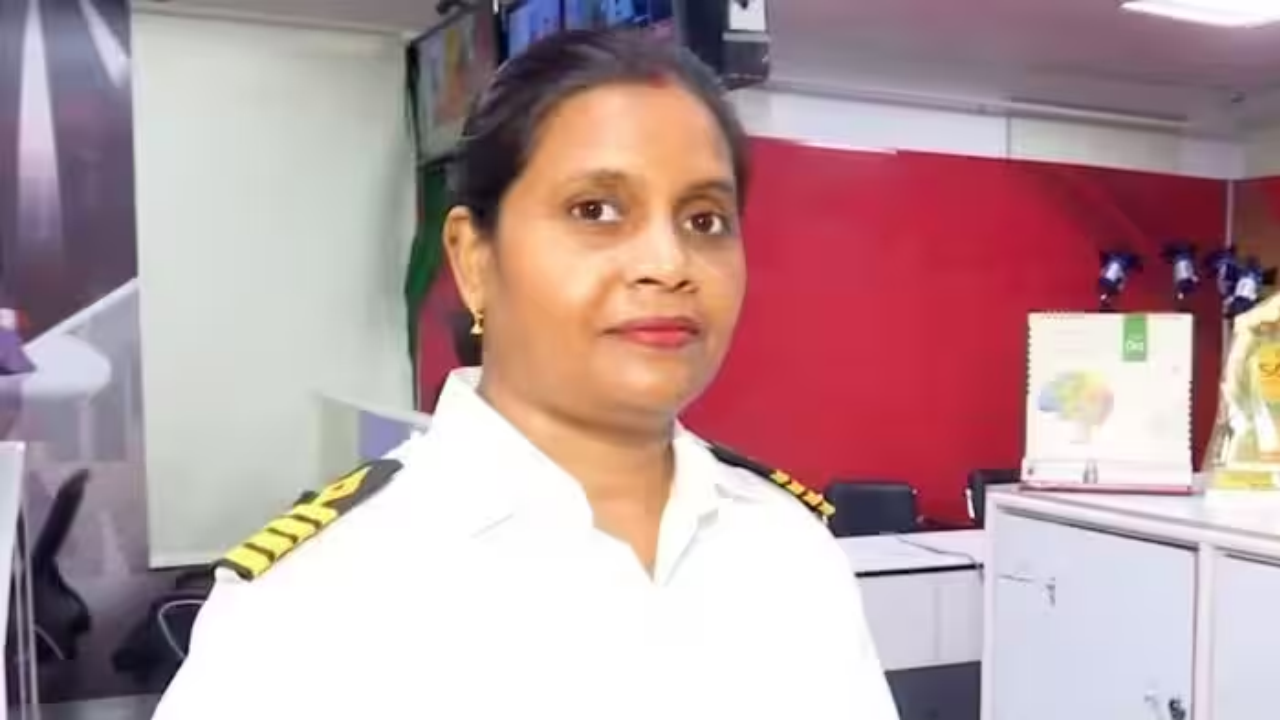
Photo courtes: NBT
One incident that particularly tested Kumari’s ability to handle pressure happened while she was taking a vessel out of a port without a marine pilot.The ship frequently called at the port, and she was familiar with the route. However, shortly after leaving the berth and while still inside the breakwater, the vessel’s gyro compass failed.Ahead was a narrow channel, followed by an area with heavy traffic and several vessels at anchor.With the gyro compass unavailable, she had to rely on visual observations and a magnetic compass to navigate the vessel.The situation demanded composure and quick judgement. It was also a reminder of the responsibility that comes with commanding a ship, where unexpected technical problems can arise during critical operations.
‘I have not only worked on ship, I have lived life on ship’
Life at sea comes with a lifestyle that is very different from a conventional shore-based job. Long periods away from home, demanding work schedules and the responsibility of working with people from different backgrounds become part of everyday life.Kumari’s contract as a master typically lasts four months. She has also had the opportunity to work with multinational crews, an experience she values for the exposure it provides to different cultures and working practices.Describing her relationship with the profession, she say, “I have not only worked on ship, I have lived life on ship. I have been a happy sailor.”She believes that working at sea has made her more independent, adaptable and spontaneous. Over the years, the ship has become more than just a workplace for her.Her achievement has also earned her the Shakti Ratna Award from the Maritime Union of India for her performance as a tanker captain.
Her message to young women from smaller towns and villages
Kumari’s appointment as the first woman officer to command a vessel in The Great Eastern Shipping Company’s history is a significant milestone. But she hopes her achievement will encourage more women to explore the Merchant Navy rather than see it as a profession beyond their reach.Her message is particularly relevant for students from rural backgrounds who may not have much exposure to maritime careers. “I too belong to a village in Bihar, if I can reach here, so can every one of you irrespective of your background.”She also believes that women entering the profession should focus on professional competence, take their examinations and promotions seriously, and prepare themselves for the responsibilities of the next rank.From an IIT-JEE aspirant who entered maritime training without fully understanding what lay ahead to a woman commanding a Great Eastern Shipping tanker, Kumari’s journey has unfolded over 16 years of demanding assignments, learning and professional growth.Her story is not just about being the first woman to command a vessel at the company. It is also about finding a career unexpectedly, staying with it through its toughest demands and eventually reaching a position she had never initially imagined.