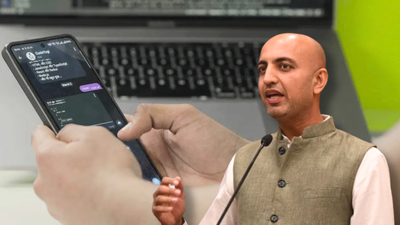
In 2010, Prashant Chaudhary became the first person from his village near Meerut to enter an Indian Institute of Technology. Years later, he would return to the problem of access to education from a different direction: helping students in rural India learn coding and artificial intelligence (AI) without needing a computer, a laboratory or even a trained teacher.His initiative, CodeYogi Foundation, has now reached more than 3.5 lakh students across nine states and 120 districts. On October 31, 2026, Chaudhary, a technology educator based in Dehradun, received the fifth Rohini Nayyar Prize for his contribution to rural development. The award carries a cash prize of Rs 10 lakh, a citation and a trophy. Former NITI Aayog CEO Amitabh Kant presented the award at a ceremony in New Delhi, according to PTI.The project uses smartphones that students already have at home to make technology education accessible in Indian languages. Its approach has evolved from teaching coding to helping young people use AI tools for practical tasks in their studies and everyday lives.
From a village near Meerut to IIT Delhi
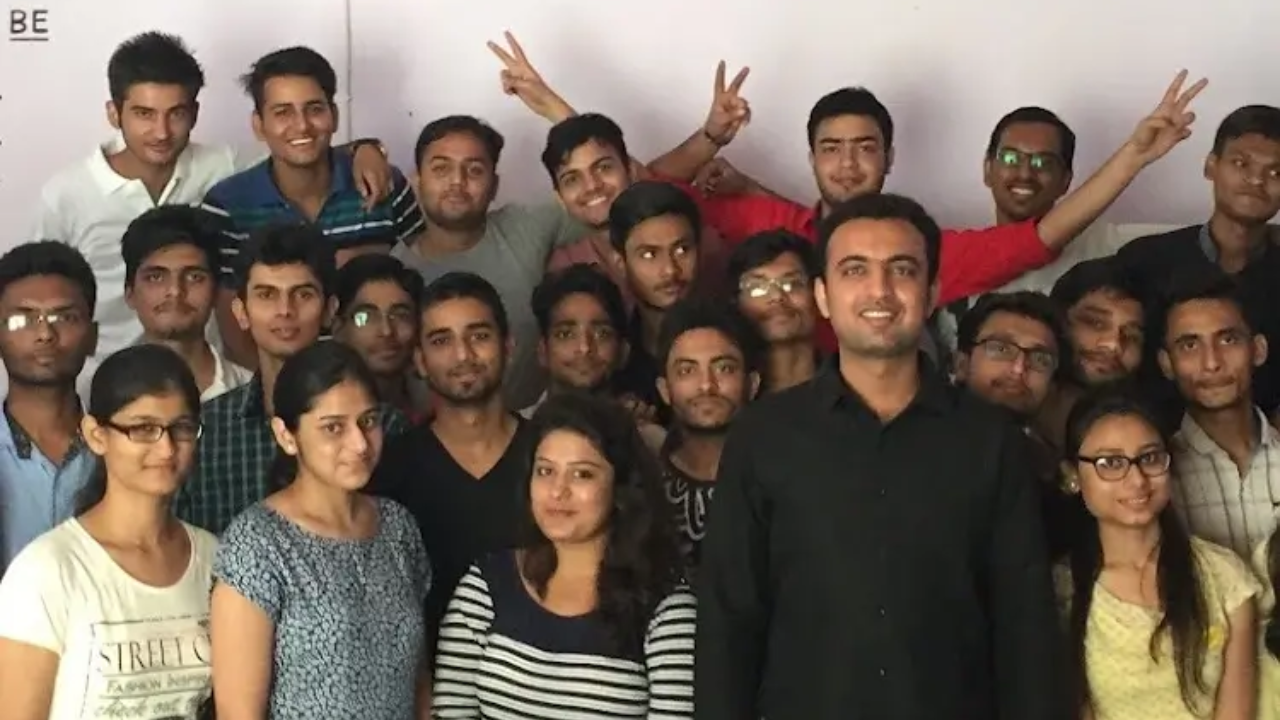
Image courtesy: CodeYogi
According to the official website of CodeYogi, Chaudhary began teaching technology skills in his village near Meerut while working remotely for a US-based startup. In 2015, he started volunteering to teach coding at an engineering college. The free classes attracted so many students that they soon filled an auditorium.The response encouraged him to continue. Between 2016 and 2019, students brought their friends to the programme, and several batches went on to clear interviews for software jobs, the organisation says.In 2020, after moving to Dehradun, Chaudhary began offering free software training at a government polytechnic. Five diploma students cleared an aptitude test and studied alongside engineering students through online classes. All five received pre-placement offers of Rs 8 lakh a year, according to CodeYogi.The experience also showed him how access to computers and laboratories could determine who got an opportunity to learn. In 2021, the Uttarakhand Chief Minister’s Office invited the team to run its programme in ITIs and polytechnics across the state. Around 40,000 students took the aptitude test, and 1,000 were selected for a six-month programme.The programme produced encouraging results, but it also exposed a major limitation. About 400 students completed the course, and more than 80 per cent received internships or pre-placement offers above Rs 6 lakh a year. However, 600 students could not finish when access to computer laboratories became a problem, while thousands of others could not get a place.A group of girls at a mountain college managed to complete the course using their phones even though their computer laboratory was closed. That experience influenced the next phase of the initiative.
Why CodeYogi shifted to smartphones
Rather than wait for schools and colleges to provide better computer facilities, Chaudhary and his team redesigned the programme around smartphones. In 2023, CodeYogi introduced a Hindi-first, smartphone-based coding course. Students could access lessons and practise programming on their phones instead of depending on computer laboratories. The programme cost less than Rs 100 per student a year, according to the organisation.The shift helped the initiative expand. In Dewas, Madhya Pradesh, more than 16,000 students from over 180 government schools enrolled within a few months. In 2024, district administrations in different parts of the country began sharing the programme’s link through school groups. By that year, CodeYogi had crossed one lakh students across more than 60 districts in six states.The smartphone-first approach is central to the model. Students do not need expensive computers, specialist laboratories or fluency in English to begin learning. They can use family smartphones and access lessons in Indian languages.
From coding lessons to AI education
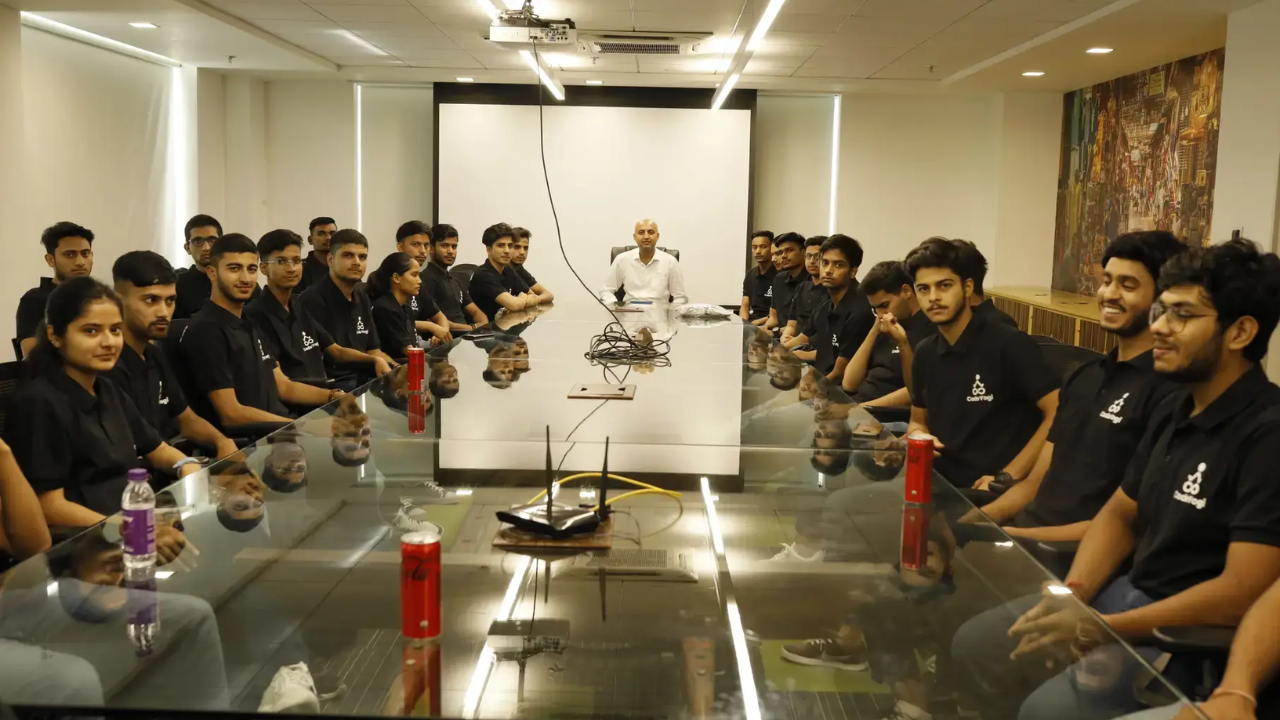
Image courtesy: CodeYogi
As AI tools became more widely available, CodeYogi expanded its focus beyond conventional programming. In April 2026, the organisation launched a 30-day AI Fluency Programme on WhatsApp. According to its journey report, more than 68,000 students and 3,000 teachers joined within the first two months.The programme teaches students to use real AI tools for tasks relevant to their education and family lives. The objective is to help them understand and apply the technology rather than simply learn about it.Speaking at the award ceremony on October 31, Chaudhary described how the initiative had developed. “The model has evolved into a 30-day applied AI fluency programme where students use real AI tools for tasks that matter in their studies and family lives,” he said, according to PTI.He added that the initiative had reached more than 3.5 lakh students across nine states and 120 districts in three years, covering around 30 per cent of India’s geographical area. The student profile is also significant. According to figures shared by Chaudhary at the ceremony, 48.6 per cent of learners are girls, while 95 per cent rely exclusively on smartphones. He said that 59 per cent of the programme’s advanced learners come from non-STEM backgrounds.This means the platform is not limited to students studying science or engineering. Young people from humanities and commerce backgrounds can also learn to use AI and technology tools.
Why he won the Rohini Nayyar Prize
The Rohini Nayyar Prize is awarded annually by the Nayyar Foundation for Social and Economic Purpose to recognise individuals who have made significant contributions to rural development in India. It was instituted in 2022 in memory of economist and former administrator Dr Rohini Nayyar.The prize carries Rs 10 lakh, along with a citation and trophy. It recognises work that brings sustained change to rural communities or uses innovative approaches, including emerging technologies, to address development challenges. Chaudhary received the 2026 award from Amitabh Kant, former CEO of NITI Aayog.For Chaudhary, the next target is to expand CodeYogi’s reach. The organisation says it aims to reach five million students over the next three years through government partnerships.