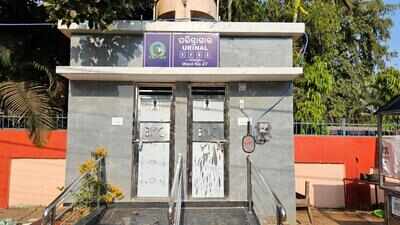
Bhubaneswar: To improve urban sanitation and curb open urination, Bhubaneswar Municipal Corporation (BMC) is constructing 200 standalone urinals across the city, with at least three such facilities planned in every ward.Officials said each urinal unit costs around Rs 6.5 lakh to build, with the overall project involving an expenditure of around Rs 13 crore. Construction of 87 urinals has already been completed, they added, while work on the remaining units is underway. New facilities will supplement the city’s existing network of 114 public toilets, which include toilets as well as urinals.Standalone urinals are being developed primarily in areas that currently lack adequate public sanitation facilities. BMC officials said the initiative covers all 67 wards, with a focus on locations witnessing high pedestrian movement. Some of the key locations where the urinals are being installed include Unit-I Market, Rasulgarh bus stop, Bapuji Nagar, near Nayapalli police station, Priyadarshini Market, Unit-VIII Boys’ High School, Indradhanu Market and CRPF Traffic Square.BMC additional commissioner Kailash Chandra Dash said places with significant public footfall across the corporation’s three zones were identified before finalising the sites. “No fee will be charged for using the urinals. User charges are applicable only in public toilets where toilet and bathing facilities are available,” he said.The initiative is linked to a 2024 survey conducted by the civic body that identified 168 “yellow spots” across the city, locations frequently used for open urination despite availability of public facilities in some cases. Alongside construction of urinals and toilets, BMC has also undertaken beautification and landscaping measures at some of these sites.BMC officials noted that several yellow spots were found in prominent areas, including commercial zones, parking areas and locations near banks, hotels, cinemas, bus stands and railway stations. Some of these identified locations have been included in the current construction plan. “Most of these urinals are intended for the floating population and residents visiting markets and other public places. We have observed that people often continue to urinate in open spaces despite nearby toilet facilities. Therefore, we are developing urinals in vacant areas where public movement is high,” said Dash.The civic body hopes the expansion of sanitation infrastructure will significantly reduce open urination and improve cleanliness across the city.