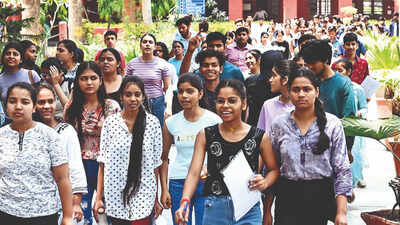
NEW DELHI: Move NEET-UG to computers, build secure question banks and invest NTA’s accumulated surplus in government-run test centres: a parliamentary panel has sought a sweeping overhaul of NTA after NEET-UG 2026 had to be cancelled and conducted afresh despite biometric checks, mobile jammers and AI-monitored CCTV. After the 2024 controversies, it questioned whether security upgrades alone can safeguard examinations.The parliamentary standing committee on education, chaired by Mukul Wasnik, in its 382nd report presented on Friday, said the cancellation despite strengthened safeguards demonstrated the need for “greater procedural and institutional reforms”. Its 35 observations and recommendations include an independent mechanism to audit examination security, investigate candidates’ grievances and report directly to the education ministry.Acknowledging that NTA conducts examinations involving around 1.2 crore candidates annually, the panel welcomed reforms introduced since 2024, including biometric authentication and coordination with states. However, it flagged structural weaknesses in staffing, accountability, outsourcing and transparency, arguing that rebuilding public trust required more than new surveillance measures.The scale of disputes has been substantial. The NTA’s 2024-25 annual report recorded 474 court cases, including 356 concerning NEET-UG 2024. The panel said restoring confidence required “consistent, transparent, and two-way communication”, rather than engagement largely restricted to portals and notifications.The committee found that 16 of NTA’s 39 sanctioned posts were vacant, a 41% shortfall. Existing positions are filled through deputation, limiting continuity in specialised work. It recommended permanent recruitment of experts in psychometrics, examination security, technology and logistics, while discouraging appointments to the director general’s post as an additional charge.It also questioned NTA’s legal status as a registered society, pointing out that it does not lay its annual report before Parliament and faces less scrutiny than a statutory body. The committee sought a framework ensuring parliamentary accountability.Private examination centres had “often proved to be a weak link in examination security”, the report observed. It called for government-owned centres, bringing logistics in-house, and a national registry of blacklisted vendors to prevent disqualified firms from securing contracts elsewhere.On transparency, the panel recommended UPSC-style disclosure of NEET results, noting that centre-wise data released following Supreme Court directions in 2024 had enabled public scrutiny. It also flagged the absence of an official public record of paper leaks, FIRs and investigations.
Share your thoughts in the comments
Be respectful · TOI community guidelines
The education ministry told the panel that no paper leak had occurred in an NTA examination from 2017 to 2025, despite malpractice and disruptions. The report noted that this assertion was “at variance with the opinion of some Members of the Committee”, without concluding that the ministry’s claim was false. It sought a publicly accessible account of examination irregularities and investigations.Backing a phased shift of NEET to computer-based testing, the committee sought government infrastructure in underserved areas and an independently audited normalisation method explained before implementation. It also suggested considering compensation for candidates affected by administrative cancellations and time-bound grievance redressal.