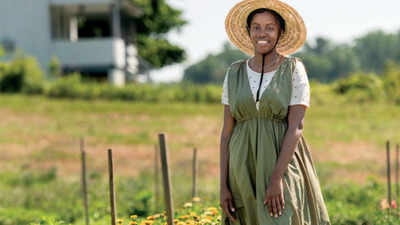
Christa Barfield grew up in Germantown, Philadelphia, and once worked in healthcare. Her career changed after a 2018 trip to Martinique, where she met Black farmers and saw their work first-hand. Five days after returning home, Barfield began planning a new career in farming.Today, the 38-year-old St. Joseph’s University graduate runs FarmerJawn Agriculture in West Chester, outside Philadelphia. According to Philadelphia Tribune, The farm covers 128 acres and employs 26 people. Barfield says it is the largest Black-owned farm in Pennsylvania that grows food.Her work now goes beyond growing crops. FarmerJawn has locations in West Chester, Kensington and Elkins Park, with each location following a different farming model. West Chester is rural, Elkins Park is suburban and Kensington is urban. Barfield wants to show that farming and access to food can work across all three settings.The next step is the planned opening of CornerJawn, a food and medicine corner store in Kensington. The store is scheduled to open on October 1 and is part of Barfield’s effort to bring the food grown by FarmerJawn closer to Philadelphia communities.
A career change after Martinique
Barfield’s decision to enter farming began with her trip to Martinique in 2018. While on the island, she met Black farmers, and the experience changed how she thought about her own career.“I got on a plane to Martinique, and I met Black farmers while I was on the island, and what I saw inspired me,” Barfield told the Philadelphia Tribune. “I came home five days later and started planning to become a farmer.”After returning to Philadelphia, she started working towards becoming a farmer. Her early business was funded through gig work. She delivered groceries for Uber, Lyft and Instacart while building FarmerJawn.The journey also came with challenges. Barfield has spoken about the difficulties of being a Black farm owner. At the same time, she said communities in Philadelphia and West Chester have supported her work.Her farming operation has since grown into a larger network. The West Chester farm is based on the campus of Westtown School. The campus has had a farm in operation since 1799.
From a 128-acre farm to city neighbourhoods
During a recent tour of the farm, the Philadelphia Tribune saw rows of tomatoes, corn, watermelons and collard greens, along with other produce.Barfield describes the farm as regenerative and organic. She also aims to make FarmerJawn one of the only such Black-owned farms in the world.
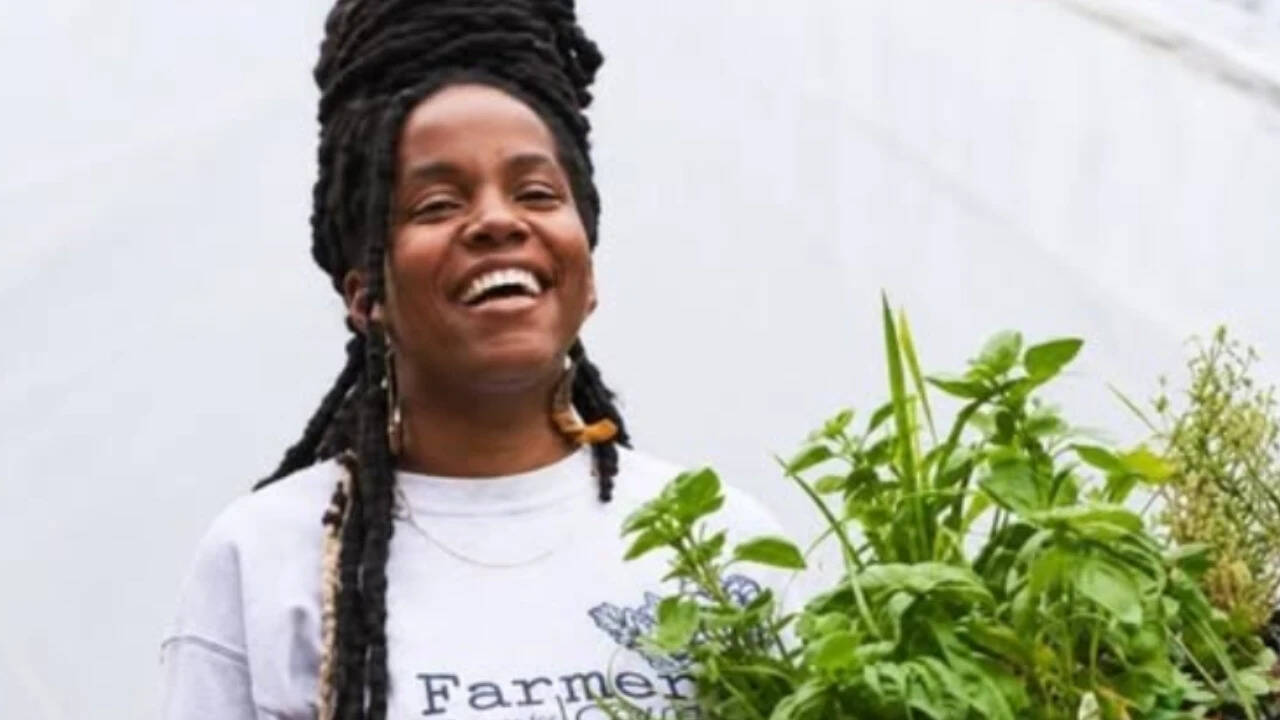
Her goal is to build something that can be repeated elsewhere (Photo: Vista Today)
Her focus is not limited to what happens on the farm. She wants the produce to reach Philadelphia neighbourhoods, including communities that may not have easy access to the food grown at the farm.“We’re really working on building a relationship, cleaning up the food system, and making the food system better,” she said. “Growing food and building storefronts in urban areas to make sure this food gets to communities that need it.”That approach is also behind CornerJawn in Kensington. Barfield wants the store to connect residents with regenerative and organic food while also helping them understand where their food comes from.“All of those residents in Kensington deserve regenerative and organic food, and they all deserve to know where their food comes from and who their farmer is,” she said. “Our commercial corridors should not leave anyone out, and that’s what CornerJawn is we’re going to build something really dope.”
Teaching farming to the next generation
Barfield also wants FarmerJawn’s work to have an educational role. She hopes to partner with schools so students can learn about farming.For Barfield, the connection between farming and the Black community is also important because of its historical significance. She wants the Black community to embrace farming and see it as part of its history.The three FarmerJawn locations are part of that wider approach. The company’s West Chester operation represents rural farming, while the Elkins Park location represents a suburban setting. Kensington provides an urban model.Barfield wants to demonstrate that these different settings can all support farming and access to food. The planned CornerJawn store will add another part to that model by bringing food and medicine into a Philadelphia neighbourhood.
Building something that can be replicated
Barfield says she sees her work as more than a personal career change. She also understands the visibility that comes with running a Black-owned farming business.“I don’t take it lightly (responsibility of being an inspiration to Black and brown people). I am just a girl from Germantown who is a mother, a daughter, who wants to just be good to people,” she said.Her goal is to build something that can be repeated elsewhere. “Building something beautiful that can be replicated in other parts of the world,” Barfield said.