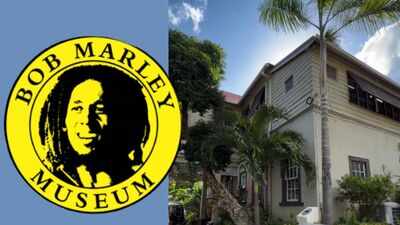
In 1975, Bob Marley purchased 56 Hope Road in Kingston, Jamaica, and turned the property into his home, creative base and a place closely connected with the final years of his life. The 19th-century house later became a museum after Marley’s death in 1981. Six years later, his wife, Rita Marley, converted the property into the Bob Marley Museum, preserving the singer’s personal belongings and the atmosphere of the home where he lived and worked. According to the official Bob Marley Museum website, the site now includes the main house, an 80-seat theatre, a photographic gallery, record shop, gift shop and One Love Café. Visitors can explore the residence, view memorabilia and learn about the musician’s influence on reggae, Jamaican culture and global music.
The house at 56 Hope Road
The Bob Marley Museum stands at 56 Hope Road in Kingston, Jamaica.The property is a 19th-century house that became closely associated with Marley after he purchased it in 1975. It was not simply a residence. It became a place where the musician lived, created music, welcomed collaborators and developed the work that would make reggae known around the world.The house’s architecture gives the museum a sense of history that extends beyond Marley’s career. Its rooms, walls and surrounding grounds belong to an older Kingston, while the objects inside document a defining period in modern music.Marley remained connected to the property until his death in 1981. Six years later, Rita Marley converted the home into a museum, preserving the site for fans and future generations.The decision meant that the building would remain more than a former celebrity residence. It would become a place where visitors could experience the setting in which Marley’s personal and artistic life unfolded.
A home transformed into a museum
When Rita Marley opened the museum, she preserved many of Bob Marley’s personal treasures.The main museum displays items connected with his life, music and public image. These objects help visitors understand Marley as a working artist rather than only as a distant icon.A museum can make a famous life feel more immediate. Visitors see the objects Marley used, the spaces where he spent time and the environment that surrounded his music.The home also allows the story to be presented through personal details. Clothing, photographs, records, instruments and other memorabilia create a more intimate portrait than a concert archive alone could provide.The purpose is not simply to display valuable items. The collection connects each object to the story of a musician who came from Jamaica and built a global audience without abandoning the themes of love, justice, peace and unity.
Bob Marley’s final Kingston years
Marley purchased 56 Hope Road during an important stage of his career.By the mid-1970s, he had become one of Jamaica’s most important recording artists. His band, Bob Marley and the Wailers, was gaining international recognition, and his music was reaching audiences far beyond the Caribbean.Kingston remained central to Marley’s identity even as he travelled widely. The city had shaped his understanding of music, politics, inequality and community. Hope Road gave him a physical base connected to Jamaica while his career expanded internationally.The home also became part of the story of Marley’s final years. He lived there until 1981, when he died at the age of 36 after battling cancer.His short life had already produced a body of music that influenced reggae, rock, pop, hip-hop and world music. The house therefore represents a concentrated period in which personal experience, Jamaican culture and global creativity came together.
The significance of a personal collection
Personal belongings can reveal aspects of a public figure that performances cannot.Marley’s records, photographs, clothing and other possessions help show his routines, tastes and working life. They offer evidence of the person behind the stage image.A collection also protects memories that might otherwise be scattered among family members, archives and private owners. By keeping important objects together at 56 Hope Road, the museum creates a continuous story.The official museum describes its main collection as Marley’s personal treasures. That phrase captures the emotional quality of the site. The objects are not merely historical artefacts. They are part of the family’s preserved memory.The collection also gives visitors a way to connect with Marley’s music through material culture. A photograph may recall a particular period, while a piece of clothing or a room may help make a distant era feel tangible.
The wider museum experience
The Bob Marley Museum extends beyond the original house.The property includes an 80-seat theatre, a photographic gallery, a record shop and a gift shop containing Bob Marley memorabilia. It also has the One Love Café, where visitors can eat after their tour.These facilities allow the museum to serve different kinds of visitors. Some may come primarily to see Marley’s home, while others may be interested in photographs, films, recordings or merchandise.The theatre can support screenings, presentations and cultural programming. A photographic gallery provides a visual narrative of Marley’s life and career, while the record the shop connects the museum to the music that made him famous.The café adds another dimension. Food and conversation can make a museum visit feel less formal and more communal, reflecting the social and welcoming spirit associated with Marley’s message.Together, the facilities turn the property into a broader cultural destination rather than a house with display cases.
More than a musician
Bob Marley’s influence extends far beyond reggae.His songs addressed love, spirituality, oppression, freedom, war and political conflict. He became a global symbol of Jamaican culture and a voice for people seeking peace and dignity.The museum presents his life through music, but visitors also encounter the social and cultural ideas behind the songs.Jamaica’s history shaped Marley’s message: poverty and inequality, Rastafari spirituality, and the political tensions of the 1970s. His music reached people who did not speak Jamaican English or understand every local reference because its emotional themes were universal.Songs such as ‘One Love’, ‘Redemption Song’ and ‘Get Up, Stand Up’ became internationally recognised. They continue to be used in conversations about unity, human rights and social change.The museum’s setting helps keep those themes connected to the person and place from which they emerged.
Why location matters
The museum could have been created anywhere, but its location at 56 Hope Road is central to its meaning.A touring exhibition can display Marley’s belongings in different countries, but it cannot reproduce the context of his Kingston home. The house remains tied to Jamaica, the city where he lived, recorded, performed and developed his worldview.Visiting the property allows fans to place the music within a physical landscape. Kingston is not a background detail. It is part of Marley’s story.The house also represents a link between private life and public legacy. Marley’s global image was shaped in concert halls and recording studios, but it was also formed in homes, streets, churches and communities.By preserving 56 Hope Road, Rita Marley protected a place where those different parts of his life overlapped.
Rita Marley’s role in preserving the legacy
Rita Marley played an important role in keeping the home and its history connected to Bob Marley.Converting the property into a museum six years after his death required more than opening the doors. It involved deciding which belongings to preserve, how to tell his story and how to make the home available to the public.The museum continues to reflect a family-led approach to heritage. It is not only an institution created by outside curators. It grew from the efforts of someone who knew Marley personally and understood the significance of the home.That personal connection gives the museum emotional authority. Visitors are not entering a random building associated with a famous musician. They are visiting the home preserved by his wife after his death.The decision also ensured that Marley’s legacy would remain linked to a physical location in Jamaica rather than existing only through commercial products and recordings.
A destination for fans and newcomers
Many people visit the museum because they already admire Bob Marley’s music. Others may arrive with only a general familiarity with his name.The house can serve both groups.Longtime fans may recognise photographs, personal objects and rooms connected with important parts of Marley’s life. New visitors can learn about his career, Jamaica’s musical history and the origins of reggae’s global influence.The museum’s guided home tour helps organise the experience. Rather than viewing objects without context, visitors can understand how the house relates to Marley’s personal journey.The site also introduces audiences to the cultural world behind the music. Marley’s work emerged from Kingston and Jamaica, but it carried ideas that travelled across continents.The combination of place, objects and music makes the museum an effective entry point for people who want to explore his life beyond individual songs.
The museum and Jamaican identity
Bob Marley became one of Jamaica’s most recognisable cultural figures.His image appears on posters, clothing, records and souvenirs around the world. Yet the museum grounds that global identity in Jamaican history and place.The house shows that Marley was not an abstract symbol created by international marketing. He was a Jamaican artist whose work developed within a specific society and cultural tradition.His music helped bring reggae to global audiences, but it also kept references to Jamaica’s struggles, spirituality and communities.By preserving the house in Kingston, the museum supports the idea that Jamaican culture is not simply something exported for entertainment. It is a living tradition with deep social and historical roots.Visitors encounter this connection through the building, the collection, the photographs and the stories associated with the property.
A legacy preserved in place
Marley’s death in 1981 could have left 56 Hope Road as a private residence whose importance gradually faded.Instead, Rita Marley transformed it into a museum in 1987. The decision protected both the physical house and the memories associated with it.Today, the property includes the original home, an 80-seat theatre, photographic gallery, record shop, gift shop and One Love Café. These additions support a visitor experience built around music, history and culture.The museum’s importance lies in the connection between the ordinary and the extraordinary. It is a house where a global musician lived, but it remains recognisable as a home.That combination makes the visit powerful. Fans can stand inside the spaces that formed part of Marley’s daily life, while newcomers can discover how a Jamaican artist became a worldwide voice for unity and freedom.At 56 Hope Road, Bob Marley’s legacy is preserved not only in sound recordings but in walls, photographs, personal treasures and the Kingston setting that helped shape his music.