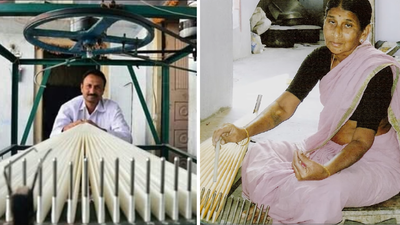
It all started when Chintakindi Mallesham’s mother said “I can’t weave anymore. My hands have worn out.” A saree may take pride of place in a wardrobe, but for the woman who helps make it, the beauty of the finished six-yard fabric can come after hours of repetitive, physically exhausting work. “For one saree, a 12km thread is wound nearly 9000 times.”For Chintakindi Mallesham, that reality was impossible to ignore. He had grown up in a family of handloom weavers in Sharjipet, Telangana, watching his mother Laxmi work on a painstaking process called Asu, an essential step in preparing yarn for the traditional Pochampalli tie-and-dye saree.What his mother said to him that day stayed with him- that eventually led a young man with little formal education and no engineering training to build a machine that would change the way thousands of weavers approached one of the most laborious stages of saree-making.
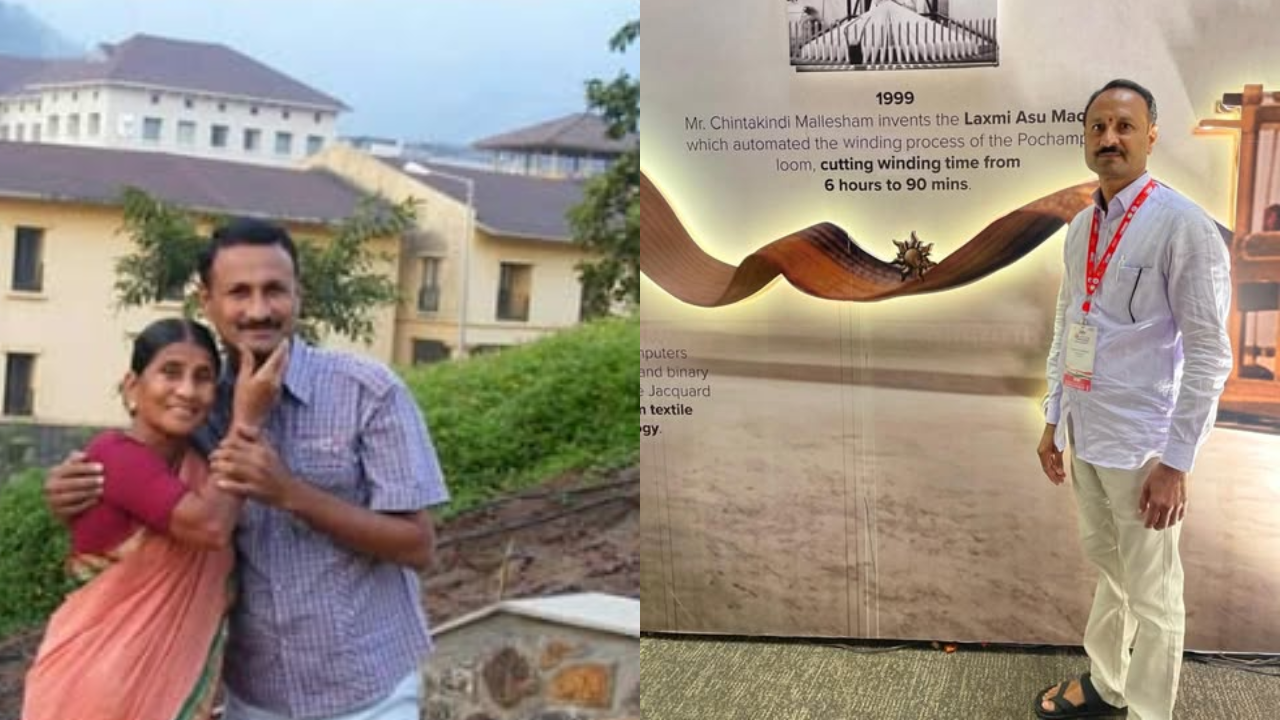
The machine was named Laxmi Asu after Mallesham’s mother
The problem hidden behind a beautiful saree
Before the yarn can reach the loom, it has to be wound in a particular pattern. In the traditional Asu process, the thread is moved back and forth around a set of pegs, following the design required for the saree.Mallesham described the scale of the task in his TEDx talk: for one saree, around 12 km of thread is wound nearly 9,000 times. The repetitive movement could take about four to five hours for a single saree, while the strain was particularly hard on the shoulders and elbow joints.For the women doing it day after day, it was not simply a step in making a saree. It was a physical burden. And Mallesham wanted to remove that burden -not just from his mother’s hands, but from the hands of thousand such workers.
‘I had the idea, but technically zero knowledge’
The biggest obstacle was that Mallesham did not know how to build a machine. “I had the idea to do it, but I had technically zero knowledge,” he said during his TEDx talk.His education had been interrupted by financial difficulties. He eventually returned to studies and passed his Class 10 examination on his third attempt. But when it came to engineering, there was no classroom, laboratory or formal training waiting for him. Instead, there was trial and error.He began looking at machines, studying their movements and buying components. He travelled to Hyderabad to find parts and gradually assembled his own contraption. The process was neither quick nor easy. He repeatedly spent his hard-earned money on components and worked through failures as he tried to recreate the precise movement required for the Asu process.At one point, he had built almost the entire machine but could not solve one crucial movement- getting the thread around the peg and making it slide down correctly.After 7 years of determination and efforts, the breakthrough came in 1999 when he was working at a machine shop in Balanagar, Secunderabad. He spotted a movement in another machine that resembled the one he needed. He had the component made, fitted it into his machine and switched it on- and the first ‘Laxmi Asu machine’ was born.
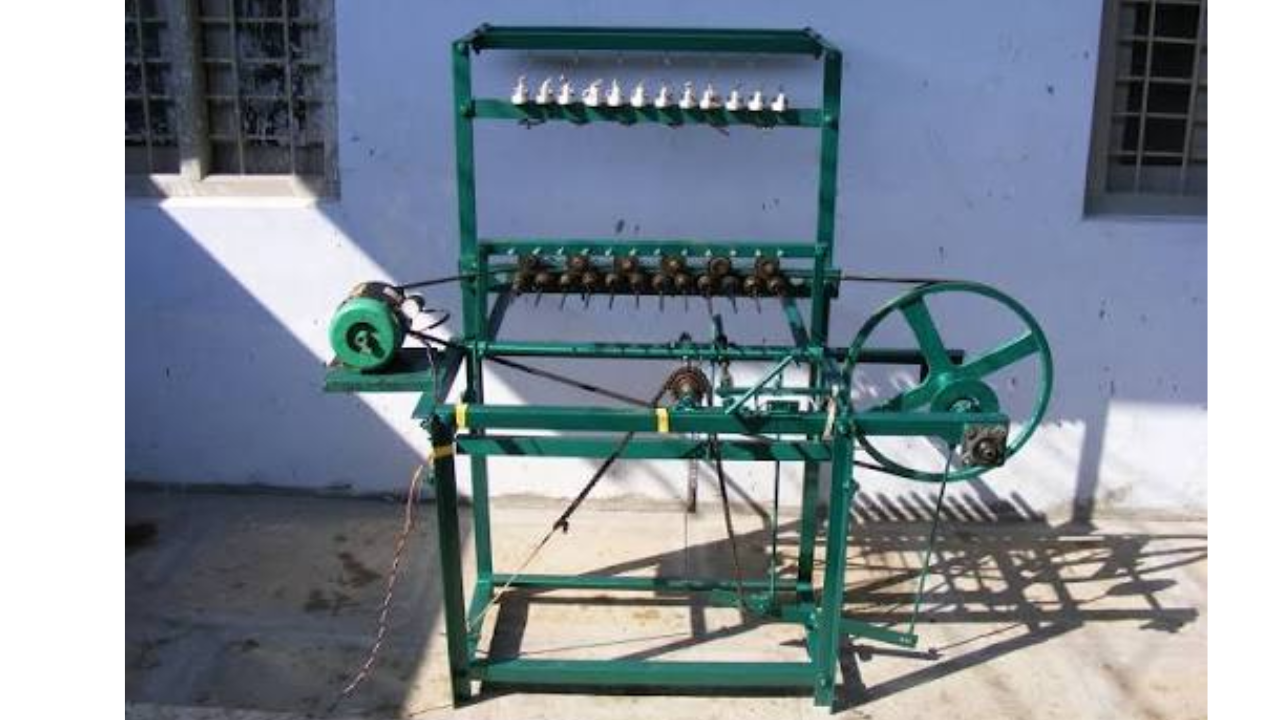
The Laxmi Asu machine- Mallesham’s invention mechanised one of the most laborious steps in saree-making
He named the machine after his mother
The machine was named Laxmi Asu after his mother. What had once taken several hours of repetitive hand movements could now be completed in about 90 minutes. The machine mechanised the winding process while retaining the yarn preparation needed for the traditional saree.The change was not merely about saving time. Earlier, a weaver could produce around two sarees a day using the traditional process. With the machine, productivity could rise substantially; The Better India reported that women could make around six sarees a day.
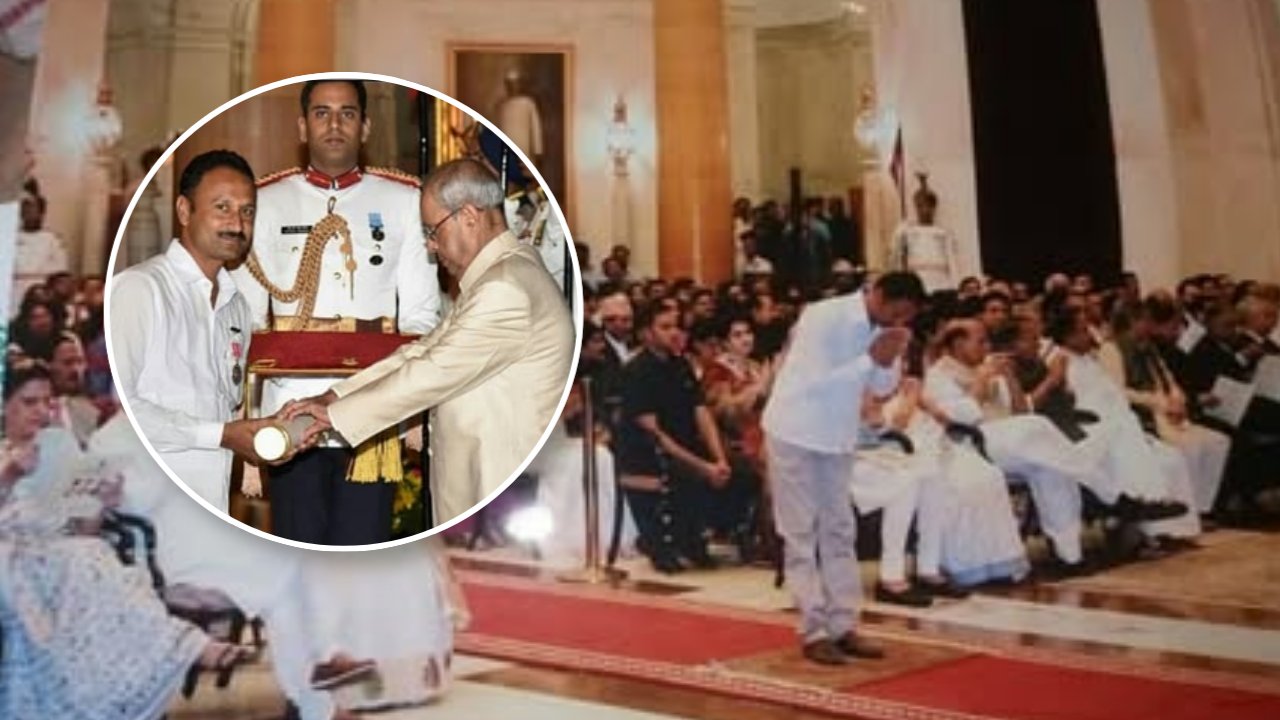
Mallesham was awarded the Padma Shri in 2017 for his contribution to innovation
The National Innovation Foundation later recognised Mallesham’s grassroots innovation, while the machine went on to be patented. He was eventually awarded the Padma Shri in 2017.But the most personal part of the invention had happened much earlier- in a house where a son had watched his mother’s hands hurt from doing the same movement thousands of times.Mallesham did not begin with an engineering degree or a laboratory. He began with a problem he could see every day.A traditional saree still required its intricate patterns, careful yarn preparation and the skill of generations of weavers. What changed was the part that had been wearing their bodies down.Sometimes, an invention does not begin with a desire to build something extraordinary. Sometimes, it begins with wanting a mother to stop saying, “I can’t do this anymore.”