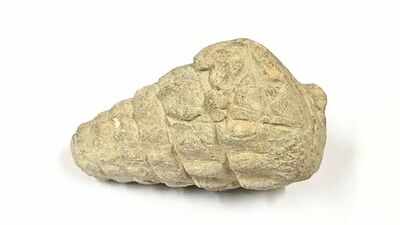
A 66-million-year-old gastropod fossil has been discovered at an archaeological site in Ankara, Turkey. Excavators uncovered the fossil during work at Kulhoyuk in the Oyaca neighbourhood of Ankara’s Golbasi district. Researchers believe it dates to one of the final phases of the Tethys Sea, an ancient body of water that once covered parts of Central Anatolia. The creature existed millions of years before the settlement was established about 5,000 years ago. According to the Anadolu Agency of Turkey, the specimen may have been found elsewhere and later brought to Kulhoyuk by the settlement’s ancient inhabitants.
What was the 66-million-year-old fossil found in Ankara
The fossil belongs to a gastropod, a group of mollusks that includes snails and slugs. It was discovered during archaeological excavations at Kulhoyuk, in Ankara’s Golbasi district. Researchers believe the specimen dates to one of the final phases of the Tethys Sea. The ancient sea began forming about 250 million years ago and once covered parts of Central Anatolia. The fossil therefore predates the settlement by millions of years. The discovery connects Kulhoyuk’s archaeological history with a much older geological past and gives researchers another clue about the site’s history.
What makes the fossil’s presence at Kulhoyuk rare
The fossil, however, is about 66 million years old, long before people lived at Kulhoyuk. The gastropod therefore belonged to a much earlier period than the settlement’s inhabitants. Researchers are considering whether ancient residents may have found the fossil elsewhere before bringing it to Kulhoyuk. This would make the discovery different from a fossil found in the geological setting where it originally formed. It also leaves researchers with questions about how the specimen reached the settlement and why its ancient inhabitants may have chosen to keep it there.
Mystery behind the fossil’s presence at Kulhoyuk
Researchers are considering whether people living at Kulhoyuk thousands of years ago found the fossil elsewhere and brought it to the settlement. However, this remains a possibility rather than a confirmed explanation for how it got there. Researchers would need to establish where the fossil came from and why ancient inhabitants may have decided to keep it at the site. Its age adds another layer to the mystery, since the people at Kulhoyuk were handling an object that had formed millions of years before their time. The discovery has opened another area of investigation into how the fossil reached the settlement and what significance it may have held for those who lived there.
How is the fossil connected to the ancient Tethys Sea
The fossil is believed to date to one of the final phases of the Tethys Sea, an ancient body of water that began forming about 250 million years ago and once covered parts of Central Anatolia. The gastropod lived along the shores of this sea about 66 million years ago before eventually becoming fossilised. Its discovery at Kulhoyuk therefore connects the archaeological site with a much older landscape shaped by the ancient sea. The finding does not indicate that the settlement existed during that period. Instead, it offers a glimpse into the region’s geological past, long before communities were established at Kulhoyuk.
How are discoveries helping researchers understand Kulhoyuk
The fossil is the latest notable discovery from Kulhoyuk, where archaeological excavations have been underway since 2021. Archaeologists recently found what they described as the earliest-known seed remains of Ankara’s distinctive ‘Sevgi Cicegi’, or Love Flower, inside a 4,000-year-old Hittite vessel. The excavation programme is backed by the Turkish presidency and led by Associate Professor Derya Yilmaz Tekin on behalf of Ankara University and the Culture and Tourism Ministry. The work is continuing to uncover evidence from the site and its long history.