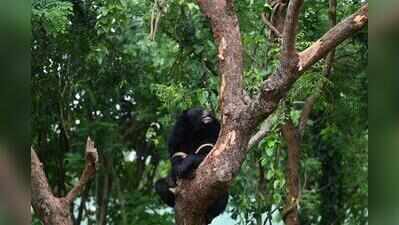
Bhubaneswar: As wildlife campaigners in India and authorities in Indonesia press for the repatriation of the five infant orangutans rescued from an alleged international trafficking racket, history suggests that returning the primates to their native forests may be far more complicated than it appears.The orangutans currently in Nandankanan Zoological Park are thousands of kilometres away from the rainforests of South-east Asia where they were born. While conservationists advocate their eventual return to the wild, experts point out that establishing their origin is a lengthy process involving molecular genetic analysis and identification of maternal lineage before any repatriation decision can be taken.Until then, the orangutans are adapting to their new surroundings seemingly oblivious to the diplomatic and conservation debate surrounding their future.Nandankanan has repeatedly become the final refuge of rescued and trafficked wildlife whose return to the wild is impossible. In March 2025, customs officials intercepted an illegal consignment of exotic reptiles from Bangkok at the Biju Patnaik International Airport. The seizure included 9 California king snakes, 2 of them albino, 10 pig-nosed turtle hatchlings and 9 Nile monitor lizards. Three monitor lizards were found dead during the rescue operation.“After seizure, they had been brought to Nandankanan where 2 California king snakes and 3 pig-nosed turtles now survive,” said zoo deputy director Pradeep Mirase. The surviving reptiles have since become permanent residents of the zoo.The story of Royal Bengal Tiger Nandan remains one of the most cited examples. In 2013, the male tiger strayed into Nandankanan and was shifted to an enclosure. Wildlife activists strongly campaigned for his release, arguing that a wild tiger belonged to its natural habitat. However, after briefly escaping from captivity, the tiger returned to the zoo on its own. What was initially considered a temporary stay gradually became permanent. Nandan lived the rest of his life in captivity and died in 2024.“Wild animals should be released into the wild. The same principle applies to orangutans even if they come from a foreign forest,” said wildlife campaigner Biswajit Mohanty, who had fought for Nandan’s release. “Previous efforts to release rescued wild animals have failed and many eventually became permanent inmates.”Another example emerged in 2021 when five bears rescued from traffickers near Chandaka wildlife sanctuary were brought to Nandankanan. Initially suspected to be sloth bears, they were later identified as the far rarer Himalayan black bears. After spending nearly three years off exhibit, the Central Zoo Authority approved their display at the zoo.Wildlife activists also point to rescued pangolins and elephants that were never released back into the wild. Against this backdrop, conservationists fear the five orangutan cubs may follow a familiar path. Though calls for their return continue to grow, the intricate scientific, legal and diplomatic processes involved mean that, for now, Nandankanan remains the only home they know.