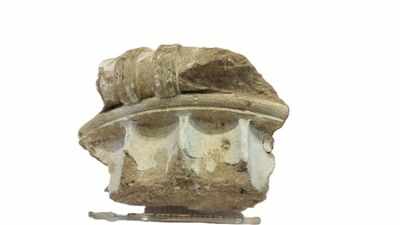
A young German tourist visiting the archeological site of Ancient Olympia in Greece in the 1960s took home a small piece of history: a shard of pottery dating back some 2,400 years. She held on to the relic for decades — first as a travel souvenir, then as a personal reminder of a trip long ago. Decades later the now elderly woman reached out to Greek authorities to facilitate the return of the artifact to the birthplace of the Olympic Games. Her choice, reported by media outlets including NDTV and People, closes a silent chapter of guilt and restitution that spans generations, and underscores how even small objects can bear a heavy moral burden over a lifetime.A memento from the birthplace of the Olympic GamesAncient Olympia, in the western Peloponnese, is one of the world’s most important archeological sites. It housed the sanctuary of Zeus and the first Olympic Games, which began in 776 BC and lasted for more than a thousand years. The site is littered with fragments of temples, altars, statues and everyday objects that once belonged to athletes, priests and visitors who came from all over the Greek world.In the 1960s, tourism at Olympia was growing, but site management and security were not as strict as they are today. Visitors could often walk relatively freely among the ruins, and it was not uncommon for tourists to pick up small stones, shards of pottery or other fragments as souvenirs. For many, these objects felt like harmless mementos, tiny pieces of a vast landscape that would not be missed.A small shard with a long shadowThe German woman who took the fragment has not been publicly named in most reports. She was young at the time, travelling through Greece during a period when the country was under military rule and international tourism was expanding rapidly. At Olympia, she picked up a piece of ancient pottery, later estimated to be about 2,400 years old, and brought it back to Germany.For decades, the shard remained in her home, stored away or displayed as a curiosity. Over time, what may have felt like an innocent act in her youth began to weigh on her. Friends, family or her own reflections reportedly reminded her that the object did not belong to her. It was part of a protected archaeological site, a piece of Greece’s cultural heritage that should remain in its place of origin.The decision to return the relicIn her later years, the woman decided to make amends. She contacted Greek cultural authorities, explaining that she had taken the fragment as a tourist and now wished to return it, as per reports. Details of her initial outreach have not been fully disclosed, but the process involved coordination between German and Greek officials, as well as archaeologists and museum staff responsible for the Olympia site.Reports differ on whether the formal handover of the artifact to Greek officials took place in 2024 or 2025. The return was not considered a criminal proceeding but an act of voluntary restoration. Greek officials said the gesture was symbolically important, and reflected growing awareness among former tourists over the ethics of taking items from archeological sites.Why little things matterTo the casual observer, a small shard of pottery can seem a trivial thing. No gold statue, no complete vase, and maybe no lines of people at a museum. But for archeologists and heritage professionals, every fragment contains information. Pottery shards can tell us about daily life, trade, dating of layers at a site and movement of people and goods in the ancient world.When tourists remove objects from archaeological sites, they disrupt that record. Even a single shard taken out of context loses part of its scientific value. Over decades, the cumulative effect of many visitors taking small souvenirs can amount to a significant loss of material from a site. That is why modern heritage laws in Greece and most other countries strictly prohibit the removal of artifacts, no matter how small.A broader pattern of returnsThe German woman’s case is not unique. In recent years, museums, collectors and private individuals around the world have returned thousands of artifacts to their countries of origin. High-profile cases involve major museums repatriating looted antiquities to Italy, Greece, Egypt and other nations. Alongside these large-scale restitutions, there is a quieter stream of returns from private citizens who, often late in life, decide to send objects back to where they came from.Archaeological authorities in Greece have reported receiving letters and packages from tourists who admit to taking stones, shards or small objects from sites such as Olympia, Delphi, Knossos and the Acropolis. Many express regret and a desire to correct a mistake made decades earlier. While the objects themselves may be modest, the returns are welcomed as signs of respect for cultural heritage and international cooperation.How the relic was received in OlympiaWhen the fragment arrived in Greece, it was received by officials from the Greek Ministry of Culture and staff associated with the Olympia archaeological site. Archaeologists examined the object to confirm its age and origin. Based on media reports, it was identified as a piece of ancient pottery consistent with material found at Olympia and dated to around the 4th century BCE, roughly 2,400 years old.The fragment was then returned to the care of the site, where it will be stored with other archaeological materials from Olympia. It may or may not be displayed to the public, but its primary value now lies in being part of the documented collection from the sanctuary rather than a private keepsake in a foreign home.A personal tale with a public moralThe woman who returned the relic did it as a very personal act. She said she felt a guilt she had carried for a long time and a desire to set things right before she died. In statements relayed through authorities or media, she expressed hope that her return of the object would encourage others to think carefully about what they take from historical sites.Greek officials have used the story to reinforce a broader message to tourists. They emphasise that archaeological sites are not souvenir shops. Every stone, shard and fragment belongs to the host country and to humanity’s shared heritage. Taking even a small piece is not only illegal but also diminishes the integrity of the site for future generations.What this means for travellers todayThe case offers a clear lesson for anyone visiting historical or archaeological sites around the world. Today, heritage laws are very strict and enforcement has improved a lot since the 1960s. Cameras, site guards, signage and international agreements make it far riskier and less acceptable to remove objects from protected areas.Travellers are encouraged to:Take only photographs and leave only footprints at archaeological sites.Respect barriers, signs and instructions from site staff.Understand that even small objects are part of a larger historical record that should remain intact.If they or someone they know has an object taken in the past, consider contacting cultural authorities about possible return.Closing a decades-long chapterMore than half a century after a young tourist picked up a piece of ancient pottery at Olympia, that fragment has come home. The woman’s decision to return it does not erase the original act, but it does offer a form of closure for her and a small restoration of integrity for the site.In the end, the story is less about the shard itself and more about the changing relationship between tourists and heritage. It shows how attitudes develop over a lifetime, how one single act of restitution can send a message far beyond one person’s conscience. The homecoming of this tiny relic to Ancient Olympia, where the Olympic spirit was born, is a gentle reminder that respecting the past is a victory in itself.