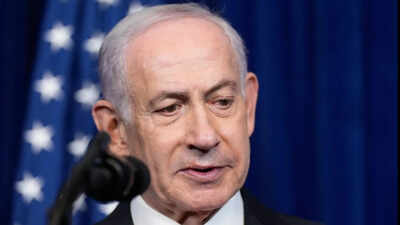
With Benjamin Netanyahu continuing as Israel’s caretaker prime minister despite President Isaac Herzog tasking Gadi Eisenkot with forming the next government, questions have emerged over whether the outgoing administration can launch a fresh military offensive against Iran. Israeli law does not bar a caretaker government from going to war, but it places specific conditions on how such a decision can be taken, including approval from the government or its security cabinet.The issue has gained significance amid reports that Netanyahu has been pressing US President Donald Trump to resume military action against Iran, even as regional leaders urge Washington to prioritise negotiations and avoid further escalation.According to a media report, Netanyahu has been calling Trump every day to urge him to resume strikes on Iran. A person briefed on the discussions told the publication that people within and outside the White House who oppose renewed fighting have been trying to counter the push.Trump, meanwhile, indicated that fresh strikes on Iran appeared unlikely following his discussions with Qatari Prime Minister Sheikh Mohammed bin Abdulrahman Al-Thani, whose government is leading regional efforts to broker an agreement between Washington and Tehran.
What does Israeli law say about launching a war?
Section 40 of Israel’s Basic Law: The Government governs the circumstances under which the country can initiate a war or undertake significant military action likely to lead to war with a probability approaching certainty, The Jerusalem post reports.The provision states that such action requires a decision by the government. It also allows the government to delegate this authority to the Ministerial Committee on National Security Affairs, commonly known as the security cabinet, if the prime minister considers it necessary for reasons of national security, foreign relations or secrecy.However, the provision does not prevent military action required to defend the state and protect public security.
Does caretaker status limit Netanyahu’s powers?
Section 40 makes no distinction between a regular government and a caretaker government. Further, Section 30 of the Basic Law states that an outgoing government continues to discharge its responsibilities until a new government is formed.This means Netanyahu and his ministers retain their executive powers despite the election results and Herzog’s decision to task Eisenkot with forming the next government.However, these powers are not unlimited. Israel’s Supreme Court has established that an outgoing government must exercise restraint and act reasonably and proportionately, taking into account its reduced democratic legitimacy following an election.The extent of this restraint depends on the circumstances.However, a different legal and public question arises if the government considers launching a military operation that could be postponed without compromising operational objectives.
Can Netanyahu independently authorise a war?
Netanyahu cannot independently authorise every decision to initiate a war. Under Section 40(a), military action that amounts to initiating a war or is likely to lead to one with a probability approaching certainty requires a decision by the full government.The security cabinet can also take such a decision if the government has lawfully delegated the authority to it.Therefore, while Netanyahu retains the powers of the prime minister during the political transition, he cannot bypass the prescribed approval process for military action covered by Section 40.