
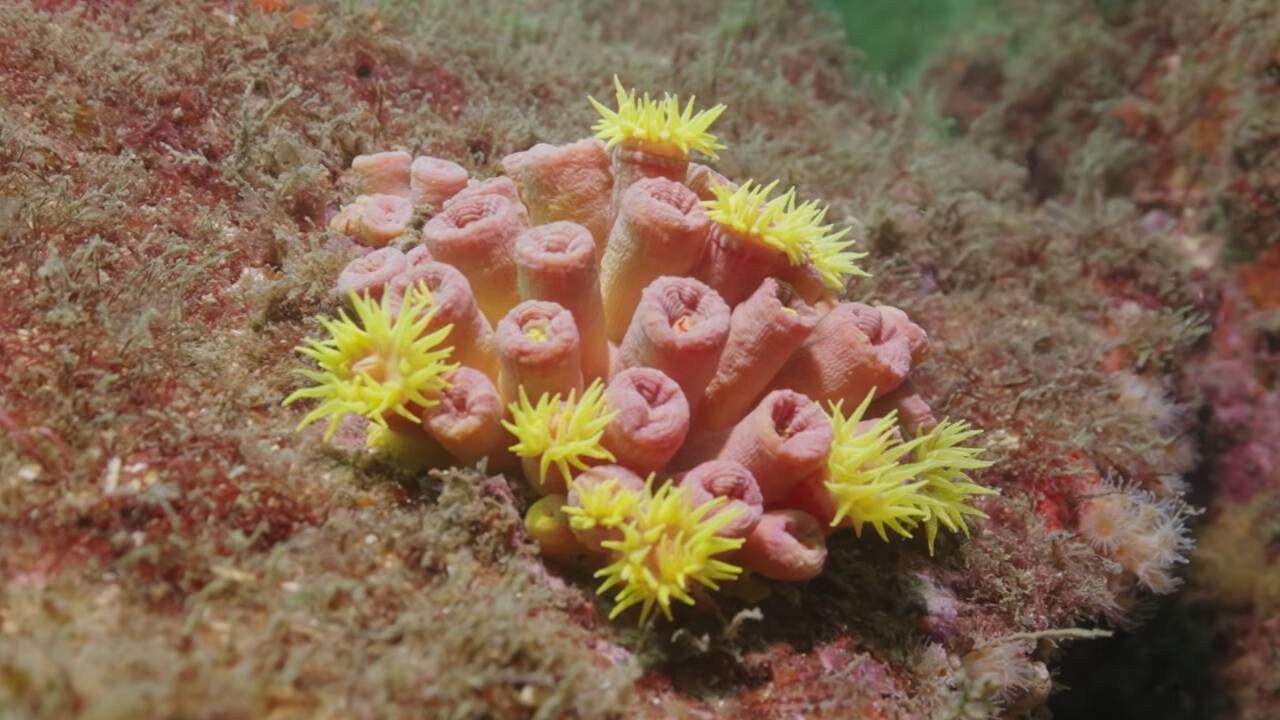
Bright orange sun corals have been present in Brazilian waters for roughly four decades. Now, marine biologists and volunteer divers are fighting back by manually removing and destroying them. The reason? These vibrant corals are invaders: Tubastraea coccinea and Tubastraea tagusensis. These invasive species compete with native corals for space, damage neighbouring colonies and threaten the marine life that depends on healthy native reefs.In a video shared by Mongabay, volunteer divers can be seen carefully removing the bright orange colonies by hand from the waters around the Cagarras Islands, a protected marine area off Rio de Janeiro’s famous Ipanema Beach. The effort is led by marine biologist Adriana Gomes, whose team is working to contain the invasion and protect the area’s native marine biodiversity.
How sun corals are threatening Brazilian waters
Pic credit: Mongaby screenshot
Sun corals (Tubastraea coccinea and Tubastraea tagusensis) were first detected in Brazilian waters in the late 1980s. Native to the Indo-Pacific, these invasive species are believed to have arrived on offshore oil and gas platforms operating in the Campos Basin off the coast of Rio de Janeiro. Since then, they have spread along thousands of kilometres of Brazil’s coastline, threatening native coral species and the marine ecosystems they support. Estimates suggest that the corals spread at a rate of 2 kilometres (1.2 miles) per year and have now colonised roughly 3,500 kilometres (2,175 miles) of Brazil’s coastline, the outlet reported.In Brazil, these corals have no natural predators, so they have spread rapidly. Researchers believe they hitched rides on the hulls of commercial ships and on large towed structures used to build oil rigs. They can also regrow from tiny fragments, making them difficult to eradicate.
Pic credit: Mongaby screenshot
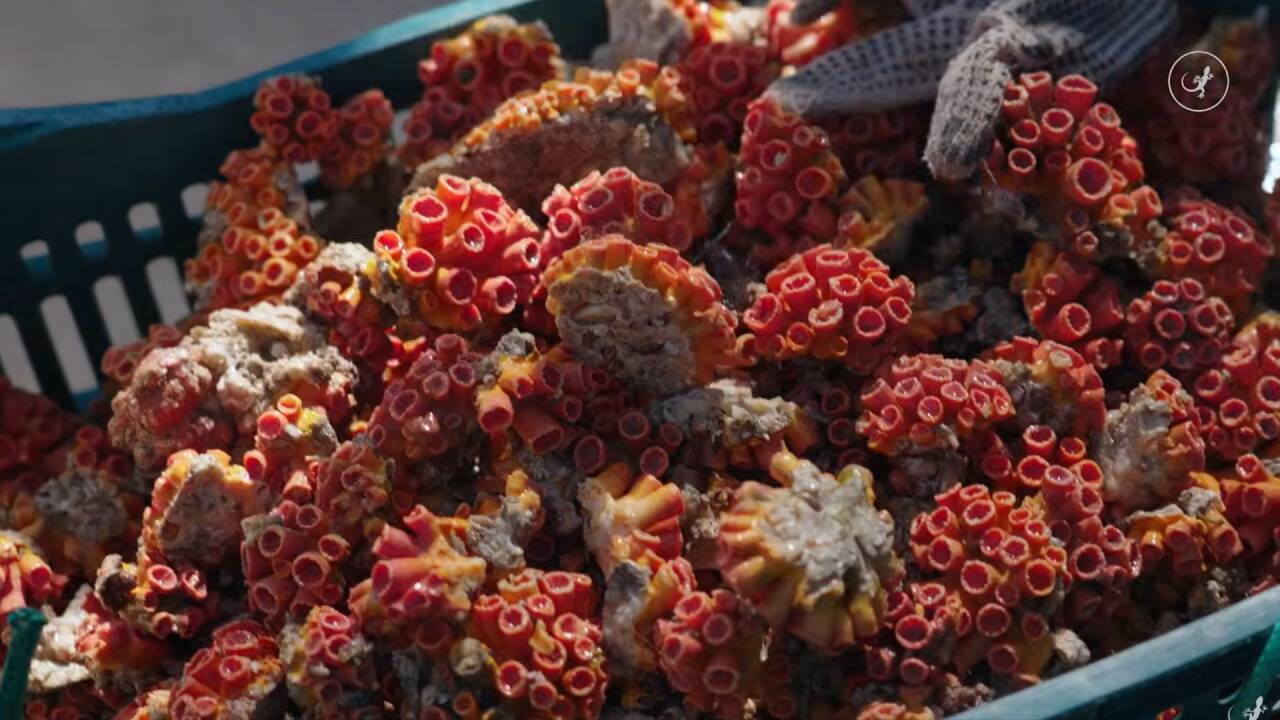
Sun corals compete for space with native species on rocky reefs, and the damage extends beyond their own colonies. Federal environmental reports describe native brain coral, Mussismilia hispida, suffering injury and death wherever the two species come into contact. In some areas, the invasive coral has reduced or wiped out native populations entirely. The effects reach further down the food chain. Researchers at the University of São Paulo have documented significant losses in invertebrate biomass and diversity in parts of north-eastern Brazil where sun coral covers large areas of reef. A separate study has argued that the coral also removes a food source for local fish.
Killing sun corals to protect native species
Pic credit: Mongaby screenshot
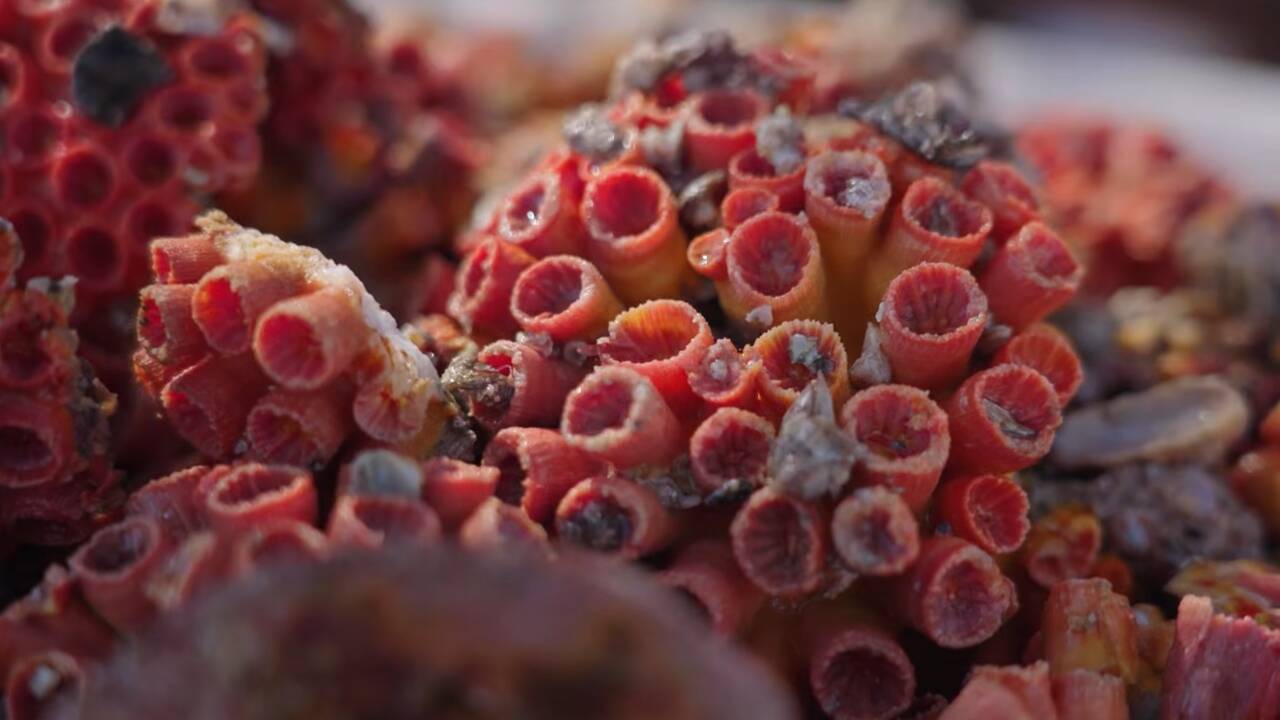
In 2018, Brazil launched a national plan to prevent, control and monitor these invasive species. A team of scientists, conservationists and public authorities was assembled to tackle the problem. Adriana Gomes, a marine biologist with Brazil’s Chico Mendes Institute for Biodiversity Conservation (ICMBio), is leading the team. With the help of volunteer divers, the team is removing sun coral colonies from the waters surrounding the Cagarras Islands, a protected marine area just 5 kilometres (3 miles) off Rio de Janeiro’s iconic Ipanema Beach.Manual removal is effective, although it needs to be carried out in repeated cycles. A 2021 study published in Ocean & Coastal Management tested removal at three sites along 260 kilometres of Brazilian coastline, including Ilha Grande and Cabo Frio. Repeated removal at roughly two-month intervals reduced sun coral cover to zero at every site. A single removal was sufficient only where colony density was low.The current effort is focused on the Cagarras Islands, a federally protected archipelago about 5 kilometres off Ipanema. The site is managed by the Chico Mendes Institute for Biodiversity Conservation