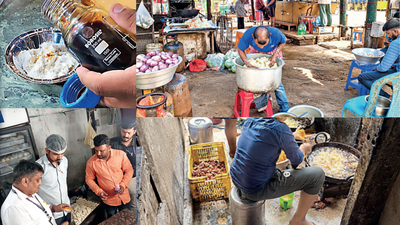
Recent raids by BMC teams on food stalls have shed light on the unhygienic way food items are stored, underscoring the need for stricter measures to ensure safety. TOI looks at the challenges being faced by authorities in monitoring and enforcementOn Oct 7, a BMC food safety team had conducted a surprise raid at a gupchup manufacturing hub at Kharavel Nagar and found the popular street food item and the tamarind water that it is served with stored in a latrine. The discovery sparked outrage and underscored the alarming lapses that continue to exist in the preparation and handling of popular street foods.Food safety officials insist that not all street food vendors are offenders. Many maintain hygiene and follow safe practices. However, recent inspections have repeatedly revealed violations ranging from contaminated ingredients and stale food to improper storage and unsafe serving practices.The problem often begins much before food reaches the consumer. Bulk manufacturers supplying the gupchups and the ingredients used for making dahi bara aloo dum, another popular street food item, frequently operate under conditions where hygiene and quality controls are compromised. By the time these products reach individual vendors, the risks can multiply further if vendors fail to maintain cleanliness, use safe water or properly store perishable items.Officials point out that contamination can occur at every stage of the food chain, from production and transportation to storage and final serving. Popular ready-to-eat foods, such as gupchups, are particularly vulnerable because consumers eat them immediately and any contamination directly translates into a potential health hazard.The safety of water and ice used in gupchup preparation is a major concern. Equally critical are the hygienic preparation of fillings, handling of accompaniments and clean serving practices. Authorities have repeatedly stressed that newspapers and printed materials should never be used in direct contact with food because harmful chemicals from printing ink can migrate into food products.Recent enforcement drives reveal the scale of the challenge. Food safety teams have seized nearly 42 tonnes of substandard food items across Odisha over the past two years. The seizures highlight the persistent presence of adulterated, stale and unsafe products in the market despite regular inspections.According to the commissioner of food safety, Poma Tudu, one of the most overlooked threats lies in the repeated use of cooking oil. Deep-fried snacks sold across streets often involve oil being heated and reheated multiple times to reduce costs. “The repeated use of cooking oil requires close regulatory monitoring,” she said.“As per FSSAI norms, cooking oil with total polar compounds exceeding 25% is considered unsafe and must not be used for preparing food. Experts warn that repeatedly heated oil undergoes chemical changes that can adversely affect health. And simply mixing fresh oil with degraded oil does not restore its safety,” she further said.Tudu emphasised that effective enforcement requires a combination of inspections, sample testing, awareness campaigns and training for food business operators. She also highlighted the importance of collecting and disposing of used cooking oil through authorised channels so that it does not re-enter the food chain through illegal reuse.Sanjay Ray, the director of food safety, said surveillance efforts intensify before festivals and during periods of increased food consumption. Regulatory inspections prioritise high-risk and widely consumed items such as milk, chhena, paneer, khoya, traditional sweets, edible oils, drinking water and beverages.“Any suspected violation is appropriately investigated through regulatory inspection, sample collection and laboratory analysis to establish the nature and extent of non-compliance,” Ray said.The department also keeps a close watch on food preparation, storage, transportation and serving practices during large public gatherings. Inspectors assess sanitation standards and waste-disposal arrangements to minimise the risk of contamination.Laboratory testing remains a crucial part of the enforcement process. Under the Food Safety and Standards Act, 2006, food analysts are generally required to submit reports within 14 days of receiving samples. More complex analyses may take longer, depending on the nature of the product and the parameters being tested.