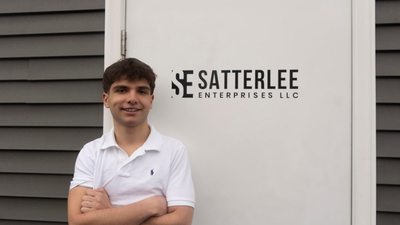
Most teenagers spend high school juggling homework and weekend plans, but Michael Satterlee spent his building a business powered by 3D printers. What began as a shoe accessories brand became the launchpad for something much bigger, a viral beer koozie that generated more than $300,000 in a single month. His story shows how social media, inexpensive technology, and constant experimentation can help a young founder test ideas without risking much money. It also reveals the lessons that come with fast growth, from hiring help to keeping up with demand. Here is how spare 3D printers became a real business.
How an 18-year-old used spare 3D printers from his shoe accessories brand Solefully to start a new business
Michael Satterlee, 18, of Clifton Park, New York, was a full-time high school student when he ran Solefully, a six-figure business that designs and 3D prints unique accessories for Crocs, according to Entrepreneur, which told his story in an as-told-to format. Satterlee told Entrepreneur that he had a bunch of 3D printers from his time working on Solefully and was not using all of them because demand at the time was limited. He asked himself why he did not simply create a different e-commerce store to put those machines to work. After brainstorming, beer koozies, the insulating sleeves that keep a can cold, caught his eye. He wondered how he could make the product better and, more importantly, how he could make it go viral.
How Satterlee designed the Beerzooka, a patent-pending beer koozie, and prototyped it in a single day
His first question was how to make a koozie easier to use. His answer was a design that opens on both the top and the bottom, so cans slide in easily. He then tested ideas for making the product go viral and found that raising the cap slightly makes the can eject when a new one is loaded, much like a shell reloading mechanism. Because he has a lot of experience with computer-aided design, he told Entrepreneur he had a working product within a day, after a couple of printed variations. The product became the Beerzooka; it is a patent-pending creation from his company, Cruise Cup. Satterlee said he has patents and trademarks filed to protect it.
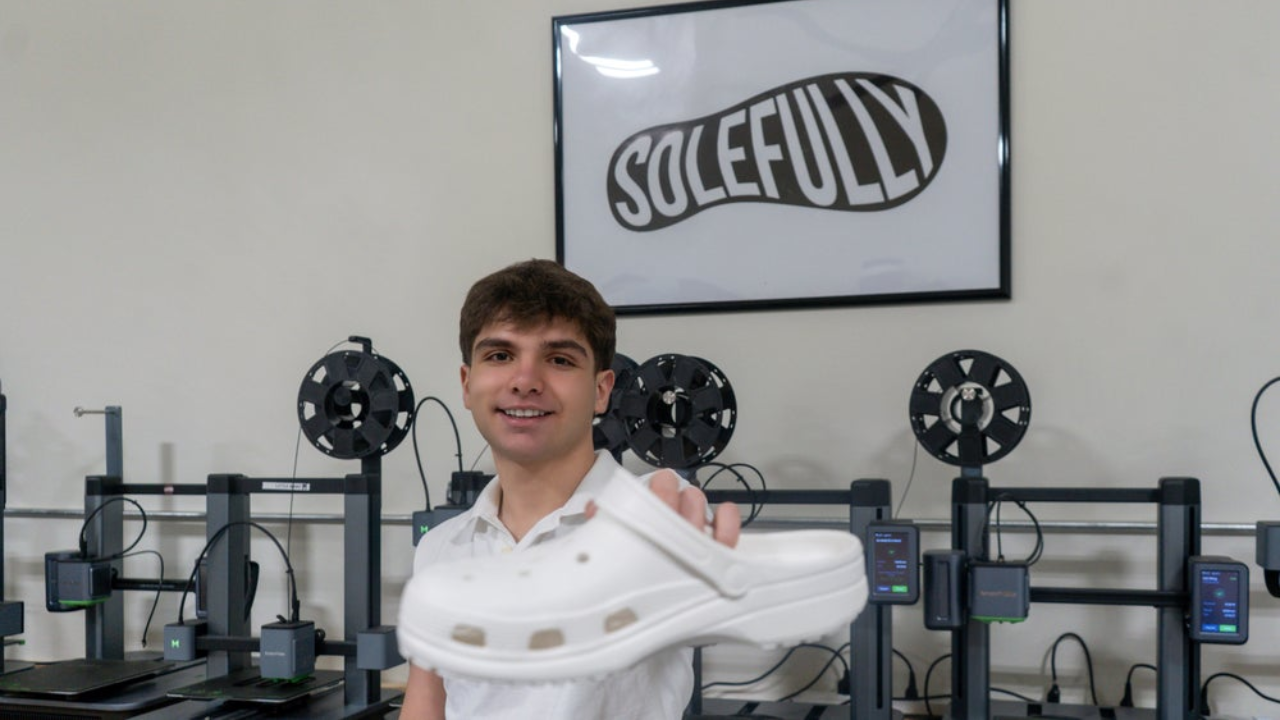
His shoe accessories brand Solefully (Image: Solefully)
How social media, Facebook ads, and viral videos drove Cruise Cup from $100,000 to $315,000 in monthly sales
He carried lessons from his first business into Cruise Cup, including how to structure a product on social media and build a Shopify store. When he posted the Beerzooka online, it drew 50 million views. Cruise Cup launched in August 2025 with about $100,000 in sales that first month, he said. Sales dipped to about $55,000 in September when he began Facebook ads, but organic views weakened. Ramping up paid ads in October brought sales back to $100,000, and November reached $315,000. He told Entrepreneur he tests content on TikTok and Instagram first, and if it works there, it will work on Facebook ads 90 per cent of the time. In December, he cut ad spend entirely to fulfil holiday orders.
Why Satterlee wants to manufacture the Beerzooka in metal and urges young entrepreneurs to test every idea
A build plate of three Beerzookas takes 15 hours to print, so he needs many printers, and even with 150 machines, a maximum of 400 cups per day can leave a backlog when a video goes viral. He is now working to manufacture the Beerzooka in stainless steel, which he said would hold drinks cold for more than 12 hours. He runs Cruise Cup, which is entirely self-funded, from a 1,500-square-foot warehouse with two full-time employees, because he said you can only get so far working alone. His advice to young founders is to test as many ideas as possible, since social media and 3D printing are a free playground for testing ads and products.