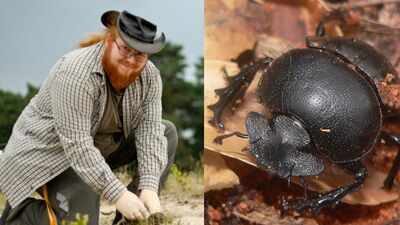
From university laboratories in Germany to beetle specimens collected from dung in China, Patrick Urban’s career has focused on insects that are easy to overlook. The German biologist specialises in dung beetle taxonomy and ecology, with particular attention to the Onthophagini group found across the Palearctic and Indomalayan regions. His work involves comparing specimens, studying fine physical differences and determining where they belong in the existing scientific classification. That careful approach led to an unusual discovery.While examining beetles recovered from dung washings in Yunnan, Urban encountered specimens that did not match any known species. Further comparisons confirmed that the beetles represented a previously undescribed species. The finding was formally published in 2026, adding a new species to the scientific record and highlighting what can still be uncovered in natural history collections.
How Patrick Urban became a specialist in dung beetle taxonomy and ecology
As reported by University of Nebraska–Lincoln, Urban’s route into this specialised corner of biology began with university studies in phylogenetics and taxonomy at Georg-August-University Göttingen, followed by biology at Bielefeld University, where he focused on evolutionary biology and ecology. His research later became centred on coprophagous scarabaeoid beetles, insects that live in close association with animal dung.Within that broad group, his particular interest is the tribe Onthophagini, with much of his work covering species from the Palearctic and Indomalayan regions. He also works with other dung beetles, including members of the Scarabaeinae, Aphodiinae and Geotrupidae, as well as beetles associated with carrion.Today, Urban is a scientist at the LWL-Museum of Natural History with Planetarium in Münster, Germany. Taxonomy is a central part of his work there, involving the identification, comparison and classification of beetles that can be difficult to distinguish from one another.
A new species hidden among collected beetles
The discovery of a new species does not necessarily begin with someone walking through a remote forest and spotting an unfamiliar animal. In Urban’s case, it began with material that had already been collected.The beetles came from dung washings in Yunnan, China. As Urban examined the specimens, several could not be confidently assigned to species already known to science. That was the point at which routine identification turned into a taxonomic investigation.Finding that a specimen looks slightly different is not enough to establish a new species. Urban had to compare the unusual beetles with related species and with historical type material, specimens that serve as reference points for scientific names. The examination included small morphological characteristics that can separate closely related insects.The work eventually showed that the Yunnan specimens represented an independent, previously undescribed species.
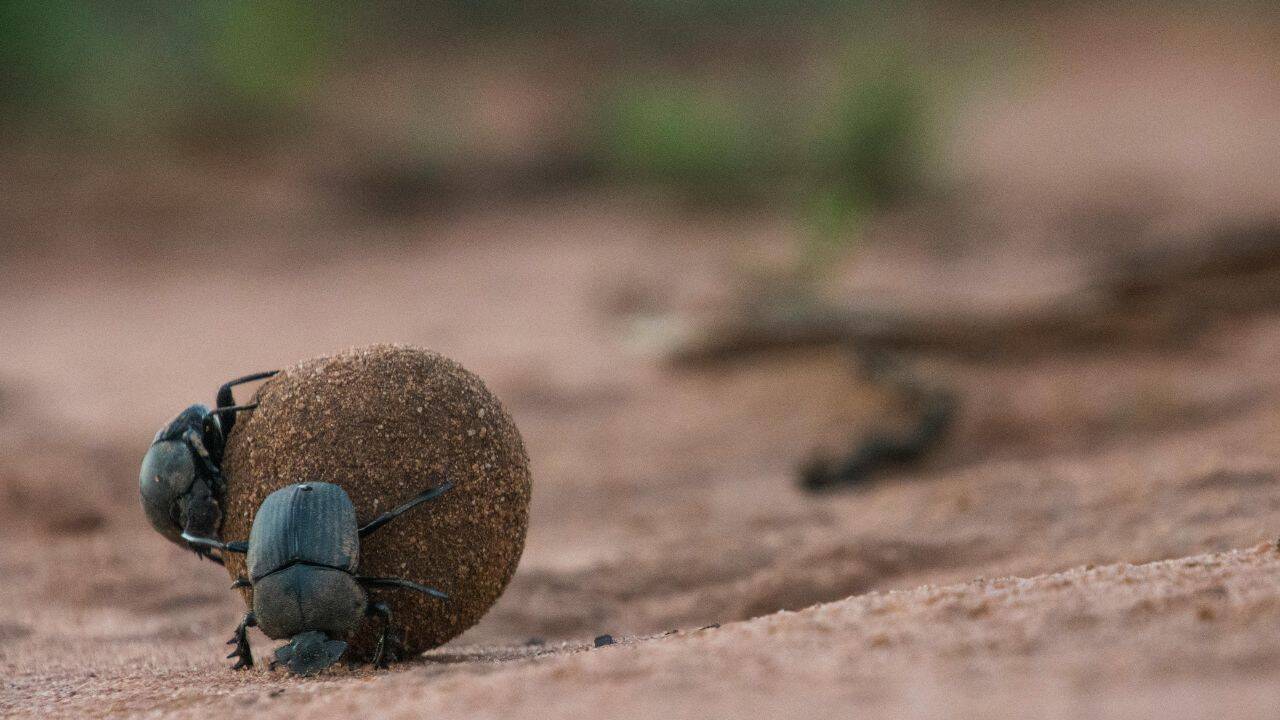
How Urban confirmed the beetle was a distinct species
According to the study published in Magnolia Press, Auckland, New Zealand, titled, ‘A new species of Onthophagus Latreille, 1802 (Coleoptera: Scarabaeidae: Onthophagini) in the subgenus Gibbonthophagus Balthasar, 1935 from the mountains of north-west Yunnan, China’ revealed that the beetle was formally described as Onthophagus (Gibbonthophagus) draconisaurei Urban, 2026. Its scientific description was published in Zootaxa on 24 June 2026, in a paper covering material from the mountains of north-west Yunnan.Urban compared the new beetle with two related species, O. (G.) balthasari and O. (G.) taurinus. The paper documents diagnostic features of the new species alongside photographs and a character matrix used to distinguish the beetles. In taxonomy, describing a species is not simply a matter of giving an unfamiliar insect a name. The evidence has to show where it fits among species that have already been described.
Urban’s find shows the value of natural history collections
Urban’s discovery also illustrates why natural history collections can remain useful long after an expedition or collecting trip has ended.A collection may contain hundreds or thousands of specimens, most of which can be assigned to known species. But occasionally there are individuals whose identity is less straightforward. They may have been overlooked, misidentified or simply never compared closely enough with the right reference material.The Yunnan beetle followed that pattern. Urban was examining material that had already been collected when he encountered specimens that could not be placed satisfactorily within the existing classification. Further comparison revealed that they belonged to a species that had not previously been described.