


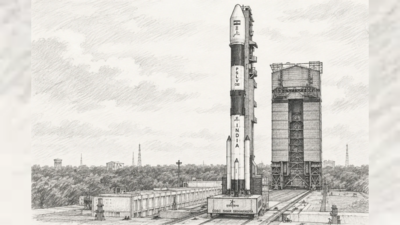
A rocket’s return to flight after consecutive failures is as much about restoring confidence as it is about fixing the engineering problems that caused the setbacks. For Isro, this makes the return of the Polar Satellite Launch Vehicle (PSLV) particularly important. But it also makes it a mission that the space agency cannot afford to rush.The PSLV has been the backbone of India’s satellite launch programme for decades. It helped establish Isro as a reliable launch-service provider, carried out some of the country’s most important scientific missions and enabled India to emerge as a player in the global commercial launch market. Its record of reliability became one of the space agency’s most valuable assets.That record, however, has come under scrutiny following two consecutive failures involving the rocket’s third stage. The latest setback, in Jan 2026, came less than eight months after the PSLV-C61 mission failed in May 2025. Both incidents have raised questions about the performance of the solid-propellant third stage (PS3), although the circumstances of the two failures were different.


Chethan Kumar, in Parallax.
The challenge before Isro, therefore, is not simply to get PSLV flying again, but to establish that the problems affecting the vehicle have been adequately addressed.On Nov 12, Isro announced that it had successfully conducted a ground static test of the modified PS3 at the Static Test Facility at Satish Dhawan Space Centre in Sriharikota. The test followed a comprehensive review of the stage’s configuration, including design margins, raw material acceptance criteria, assembly procedures and quality checks.The modifications included improvements to the nozzle configuration, strengthened mechanical interfaces and additional redundancy in sealing systems. Isro also said it had updated procedures for raw material acceptance, assembly and non-destructive testing during different stages of integration and transportation.The announcement was an important milestone in the effort to restore PSLV’s reliability. But there is a distinction between successfully conducting a test and establishing that every parameter and subsystem has performed as required.Isro’s statement confirmed the successful conduct of the ground test and said further tests would be planned following detailed analysis and reviews of the test data. It did not explicitly declare that all test parameters had been met or that every system had performed nominally.That distinction is important, particularly given the circumstances in which the modified stage is being evaluated. The performance of all systems tested needs to be examined, and certain aspects need to be reconfirmed. The complete assessment of the Nov 12 test, therefore, will depend on the analysis of the data rather than the announcement alone.This is not unusual in rocket development. Static tests are conducted to assess the performance of propulsion systems and their components under controlled conditions. The data generated must be examined against expected performance, design requirements and operating margins. A test provides evidence; the analysis establishes what that evidence means for the system’s readiness.For Isro, the stakes extend beyond the PSLV programme itself. There is an additional dimension to the latest test because of the relationship between PSLV’s third stage and the second stage (S2) of the Small Satellite Launch Vehicle (SSLV).The two stages share a closely related technological heritage. This makes the assessment of the modified PS3 relevant to a broader part of Isro’s launch-vehicle programme, even though the two stages should not be treated as interchangeable systems.This assumes significance because as of last week, Isro’s internal launch plans indicated that the agency was preparing for an SSLV launch towards the end of Nov, with Nov 25 as the initial target, followed by a PSLV launch. The implications of the PS3 test assessment, therefore, are worth considering in the context of the agency’s wider launch schedule.There is, understandably, pressure to restore the PSLV’s operational capability. Every delay has consequences for missions awaiting launch, satellite deployment schedules and commercial commitments. A prolonged interruption could also affect the confidence that customers and international partners place in India’s launch capabilities.But the urgency of a comeback must not become a reason to accelerate the process of establishing flight readiness. In fact, the two consecutive failures make a methodical approach more important.The agency needs to be certain that the modifications have addressed the underlying vulnerabilities, that the revised manufacturing and quality-control procedures are adequate, and that the performance of the modified stage is consistent with its design requirements.The PSLV’s importance also means that Isro must look beyond the immediate objective of getting the next mission off the ground. It must ensure that the corrective measures are robust enough to prevent a recurrence. That requires not just a successful static test, but confidence in the entire chain of design, material selection, manufacturing, integration, testing and flight operations.There is a larger institutional dimension here, too. Isro’s credibility has rested not on an absence of failures but on its ability to investigate them, learn from them and improve its systems. The space agency has repeatedly demonstrated this ability. But the credibility of that process depends on the rigour with which it approaches each setback, particularly when a launch vehicle with such a long operational history encounters consecutive failures.A premature return could make the eventual comeback more difficult if the problems have not been fully understood or addressed. Conversely, a carefully validated return, even if it takes longer, would give the agency a stronger basis to restore confidence in the vehicle.PSLV does not need an early comeback as much as it needs a dependable one. The Nov 12 test is a step towards that objective, but the real measure of progress will be what the data establish, what further testing demonstrates and, ultimately, how the modified vehicle performs in flight.Postscript:In Parallax, where you stand changes what you see. For Isro, the PSLV’s next launch should not be viewed as a deadline to meet, but as a test of how thoroughly the agency has learnt from its failures. A comeback is important. Getting it right is more important.