


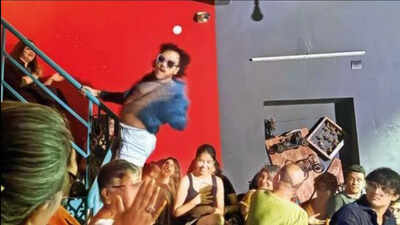
PUNE: For Gurleen Arora, drag emerged from a lifelong engagement with performance. A fashion graduate, Arora spent nearly a decade designing costumes for Bollywood, television, reality shows and theatre before discovering drag while helping organise a digital Pride event during the pandemic in 2020.“I started experimenting at home with what I had. I used old mascara to draw a beard because I wanted to explore masculine drag,” Arora said. Their first drag performance was an online presentation of an original piece titled Man Woman, centred on gender identity.But Arora noticed how few drag kings were visible in India. “I realised drag isn’t only for people who want to perform on stage. It can help anyone step into their own power and understand themselves better,” they said.Over the past decade, India’s drag scene has steadily evolved from occasional nightclub performances into a recognised performance practice with workshops, stagings at theatre festivals, Pride celebrations and a growing community of artists.Arora’s course led to the creation of Drag Kings Anonymous, an informal mentorship initiative that has since grown into workshops open to anyone. The workshops move far beyond makeup tutorials or costume design. Participants first create a drag persona through exercises exploring identity, freedom, gender and personal aspirations. They then build what Arora calls a conceptual “toolkit” before participating in a “drag meditation”, an exercise designed to encourage self-reflection.“People think drag is about becoming larger than life. For me, it’s about going deeper into yourself,” they said. The workshops conclude with collaborative storytelling, performance exercises and, in longer sessions, experimenting with makeup together.“Having people encourage and support one another makes the experience much richer. Those experiences build empathy and create bridges between cisgender people and trans and non-binary communities,” they said.Growing up in an all-boys school Kolkata-based performer Ahon Gooptu frequently played female roles in school productions, including Lady Macbeth. “I found something very comforting about wearing those costumes and inhabiting those characters,” he said. His understanding of drag changed after moving to the US in 2018 after watching a live-drag performance.“It was so different. It was bold, unapologetically sexy. I realised it was something I wanted to explore,” he said.Gooptu’s drag persona, Zenia Fauxbia Darling, became a meeting point between two worlds, Bollywood music and dance he grew up with and the queer pop culture abroad.Over the years, Zenia evolved from wigs and heavily stylised costumes to embracing a bearded aesthetic. “I stopped trying to hide my beard and made it part of Zenia’s identity. I wanted to explore how a bearded face could coexist with a glamorous, sassy diva,” he said.Exposure to New York’s drag scene broadened Gooptu’s understanding of the art form further.Returning to India meant reimagining a character born abroad. “Zenia was created in the US. Coming back made me ask myself how this character could belong here. A large part of my work is simply creating conversations. There’s so much queer joy in drag. More than anything, I want people to engage with it with curiosity,” said Gooptu.He founded House of Darling Presents, a platform that mentors emerging drag performers and creates opportunities for them to perform in Kolkata.One of the earliest champions of this art form was Kitty Su, which opened in Delhi in 2011, initially as a nightclub, and then a platform for queer performers.“The turning point came after the decriminalisation of homosexuality,” Arko Sinha, brand manager of Kitty Su, said. “Our founder, Keshav Suri, was one of the petitioners in the legal battle. After that, our vision changed completely. We wanted Kitty Su to become the country’s queerest nightclub,” he said.A major milestone came in 2015 when Kitty Su brought internationally acclaimed drag artist Violet Chachki to India. “Watching Violet perform made us realise the potential of drag performances here. Soon after, artists such as Rani Kohinoor and Maya the Drag Queen emerged in India, followed by a second generation that included Seventeen Sins, Lush Monsoon, Legendary Karma and Beyonce the Drag Queen from Bengaluru,” he said.Sinha believes contemporary drag in India also imbibes from older performance traditions. “If you look at forms like Jatra, men have long performed female characters. At its core, drag is about transformation and performance,” he said.“We want to build an Indian drag ecosystem while learning from the global scene.Large drag showcases attract between 1,000-1,500 attendees, while regular drag nights draw around 250-300 people,” Sinha said.Drag performers are typically paid between Rs 40,000 for emerging artists to several lakhs for established names, reflecting the significant investment that goes into costumes, wigs, makeup, props, choreography and months of preparation. “Many straight people are watching drag for the first time and their response has been overwhelmingly positive. Women often tell us they feel safer and more comfortable in these spaces,” Sinha added.For India’s drag artists, that expanding audience marks an important shift. What was once largely confined to queer nightlife is now finding space in theatres, workshops, festivals, cultural venues and mainstream entertainment. Drag in India is evolving not only as a celebration of self-expression, but also as a distinctive performing art that continues to redefine itself.