


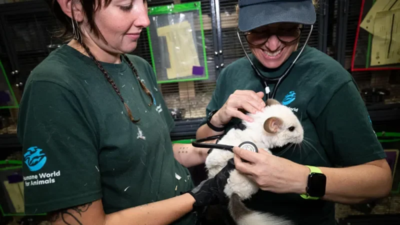
A breeding facility in Jenera, Ohio, became the centre of a federal animal welfare case after inspectors discovered hundreds of chinchillas living in severely neglected conditions. Rows of cramped cages, untreated medical conditions and animals kept in a building that had allegedly been hidden from inspectors for years prompted legal action against the breeder. Following a request from the U.S. Department of Justice (DOJ), Humane World for Animals stepped in to help remove the animals.The organisation’s Animal Rescue Team completed the rescue of 951 chinchillas in two operations. Rescuers first entered the facility on October 13 and removed 642 animals over two days. On November 3, the team returned to collect another 309 chinchillas after federal authorities secured the surrender of the remaining animals.The rescue followed years of inspections and alleged violations of the federal Animal Welfare Act at R&R Chinchilla Inc. Veterinary examinations after the animals reached safety revealed the extent of their suffering, with many showing signs of chronic health problems. The breeding facility’s owner has since agreed to surrender the animals and permanently stop activities regulated under the Animal Welfare Act.
What did inspectors discover inside the Ohio chinchilla breeding facility?
The federal investigation began after the U.S. Department of Agriculture (USDA) referred the case to the Justice Department, warning that animals at the facility faced serious danger. In August 2026, the DOJ filed a complaint against R&R Chinchilla Inc. and its president, James F. Ritterspach, alleging repeated failures to meet the Animal Welfare Act’s standards for animal care.According to the complaint, the USDA conducted 18 inspections of the facility between September 2022 and August 2026. Inspectors identified multiple violations during nearly every inspection, recording 59 violations over four years. Seventeen of these were classified as critical or direct because they had serious adverse effects on the animals’ health and well-being.One of the most troubling discoveries came on August 5, when USDA inspectors gained access to a second building that had allegedly remained hidden from inspection for years. The breeder had reportedly told inspectors that the facility housed between 300 and 450 chinchillas. However, officials alleged that approximately 800 additional animals lived in the undisclosed structure.Inspectors described the building as being in worse condition than any facility they had previously examined. Hundreds of enclosures had floors covered in faecal matter, while ammonia levels became so high that inspectors started coughing and had to leave. They also found open packets of rat poison near the chinchilla enclosures and multiple dead animals inside the building.Some chinchillas had eyes so swollen and filled with discharge that they could not open them. Another animal had a metal collar tightly embedded in the neck. Inspectors also documented an incident in which Ritterspach allegedly held a badly matted chinchilla by the tail and pulled a large section of tangled fur from her body, leaving an exposed patch of skin.
How did Humane World for Animals rescue the 951 chinchillas?
The DOJ requested assistance from Humane World for Animals after federal authorities began legal proceedings against the breeder. The organisation’s Animal Rescue Team entered the facility on October 13, 2026, and spent two days removing 642 chinchillas.The second operation took place on November 3, after the federal government secured an agreement for the surrender of the remaining animals. Rescuers returned to Jenera and removed another 309 chinchillas, bringing the total number relocated by the organisation to 951.The rescue formed part of a wider legal effort to remove the animals from the breeding operation. On August 20, the DOJ had filed a motion seeking a temporary restraining order and preliminary injunction. The court granted the temporary restraining order on August 21 and subsequently approved a modified order requiring the surrender of approximately 800 chinchillas.On November 2, the U.S. District Court for the Northern District of Ohio endorsed a consent decree under which Ritterspach agreed to surrender the remaining animals and permanently stop activities regulated under the Animal Welfare Act. The USDA also permanently revoked his federal animal welfare licence, bringing the breeding operation to an end.What kind of homes will the rescued chinchillas need?Humane World for Animals is working with its network of shelters and rescue partners to arrange suitable placements for the 951 chinchillas. However, finding homes for so many animals requires careful planning because chinchillas have specialised needs and can live for up to 20 years in captivity.Native to the Andes Mountains of South America, chinchillas are social animals that naturally live in groups. They need opportunities to explore, exercise, hide and interact with other chinchillas. They also require regular dust baths to maintain their dense coats.Unlike dogs and cats, which humans have selectively bred for companionship over thousands of years, chinchillas entered the pet trade relatively recently, during the early 20th century. They remain wild animals with natural behaviours that owners must accommodate. Humane World for Animals is therefore looking for adopters who understand the long-term commitment involved and can provide appropriate living conditions, companionship and veterinary care. The Ohio case has also drawn attention to the wider problems associated with the commercial trade in wild animals. Chinchillas face threats in their natural habitats from hunting for fur, habitat loss, poaching and the pet trade. Captive breeding operations can create further welfare concerns when animals live in overcrowded or poorly maintained conditions.The removal of 951 chinchillas from R&R Chinchilla Inc. has given these animals an opportunity to recover from years of alleged neglect. But their rescue is only the beginning. The next challenge is ensuring that they receive the care, space and companionship they need for the rest of their lives.