


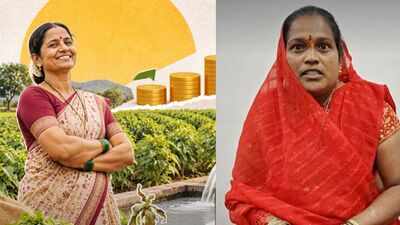
What began as a small group of 20 women farmers in Maharashtra‘s Jalna district has grown into a farmer-owned enterprise with 803 members across 18 villages. Through collective farming, better access to markets and support from development organisations, the women have built the Shiv Swarajya Farmer Producer Company, an all-women-led agricultural business that reports an annual turnover of Rs 68 lakh.The growth of the collective is not just about increasing membership or business revenue. It reflects how women farmers can take a more active role in decisions about cultivation, marketing and income generation when they come together as an organised group.With support from Larsen & Toubro’s (L&T) Unnati programme and the Watershed Organisation Trust (WOTR), the women have worked towards moving beyond individual farming activities to a shared business model. Their collective effort has helped them market agricultural produce together, explore additional income opportunities and benefit from improved water availability for farming.
From 20 women to a collective of 803 farmers
Agriculture has long been a major source of livelihood in rural Maharashtra. However, small and marginal farmers often face challenges when selling their produce individually. Limited bargaining power, dependence on intermediaries and difficulties accessing markets can affect the income they earn from their crops. For women farmers, these challenges can be even more difficult when they have limited access to resources and decision-making opportunities.The Shiv Swarajya initiative began with 20 women farmers who came together with the aim of improving their agricultural livelihoods. Over time, the group expanded its reach, bringing more women from neighbouring villages into the collective. Today, the Shiv Swarajya Farmer Producer Company has 803 members spread across 18 villages in Jalna district.Instead of operating only as individual cultivators, the members are now part of a farmer-owned business structure. This gives them an opportunity to participate in collective decisions and work together to strengthen their agricultural activities. The company is led by an all-women Board of Directors, placing women farmers in leadership positions within the organisation.
Collective marketing gives farmers a stronger position
One of the biggest changes brought about by the Farmer Producer Company is the way members approach selling their agricultural produce. When farmers sell individually, they may have limited negotiating power, particularly when dealing with traders and buyers. Collective marketing allows them to bring their produce together and explore opportunities to reach larger markets.Through Shiv Swarajya, members can coordinate their agricultural activities and market their produce as a group. This farmer-owned structure also gives them an opportunity to explore additional sources of income rather than depending entirely on conventional crop sales. The company’s reported annual turnover of Rs 68 lakh reflects the business activity generated through this collective approach.The change is significant because the farmers are not simply participating in a group savings initiative. They are part of a formal agricultural enterprise that can make business decisions, develop market connections and work towards improving the returns from farming.
Better water availability adds strength to the farming effort
Another important part of the initiative is improving access to water for agriculture. Water availability is a major concern for farming communities, particularly in areas that experience irregular rainfall and water shortages. Without reliable access to water, farmers can struggle to maintain cultivation and plan their crops beyond a single season.L&T’s Unnati programme works on community development through interventions related to water conservation, sustainable agriculture and livelihood improvement. Implemented in partnership with development organisations such as WOTR, these efforts include supporting water conservation infrastructure, improving irrigation practices and building farmers’ capacity to adopt sustainable agricultural methods.For the Shiv Swarajya collective, improved water availability has added another layer of support to its farming activities. Better access to agricultural water can help farmers plan cultivation more effectively and explore opportunities to increase farm productivity. The initiative demonstrates how strengthening rural livelihoods requires more than helping farmers sell their produce. Access to natural resources, market connections and collective decision-making all play an important role.
Women take charge of an agricultural enterprise
Perhaps the most important aspect of Shiv Swarajya’s growth is its leadership structure. The Farmer Producer Company is governed by an all-women Board of Directors, giving women farmers an opportunity to participate in decisions that influence the business. For women who have traditionally contributed significantly to agricultural work but may not always have had an equal say in decisions about selling crops and managing farm income, this represents an important shift.Running a farmer-owned company involves responsibilities beyond cultivation. Members have to understand market requirements, coordinate with buyers, manage collective activities and make decisions about the organisation’s growth. The all-women board brings these responsibilities directly into the hands of women farmers. The journey from 20 women coming together to a farmer-owned enterprise with 803 members across 18 villages also shows how grassroots initiatives can expand when communities have the right support and opportunities.With an annual turnover of Rs 68 lakh, Shiv Swarajya has demonstrated that collective farming can become a viable business model while creating leadership opportunities for women in rural communities. The story is not simply about a farming group growing in numbers. It is about women moving from being individual contributors to becoming decision-makers in an agricultural business. And in Jalna, that change is now reflected in a company that they lead and own collectively.