


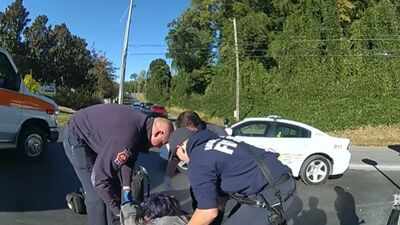
A disabled US Air Force veteran who suffered a fractured skull after being Tasered by a Tennessee deputy will receive $1 million from Knox County. The settlement comes four years after the incident, in which the deputy was searching for a 34-year-old man but stopped Brian Eugene Hux, who was 64 at the time.Hux was on Edington Road in South Knox County on October 10, 2022, when Deputy Randall Williams approached him. Williams was looking for a hospital patient who had escaped police custody. However, the information circulated among officers about the person they were seeking differed from Hux’s appearance, according to the lawsuit.According to WVLT News, the alert described a man aged 34, standing six feet tall and having brown hair. Hux, meanwhile, was 64, measured 5 feet 9 inches and had long purple hair. He was also a 100% disabled Air Force veteran.The encounter ended with Hux being struck by a Taser in the back of his head. He fell face-first onto the road. Medical records referred to in the lawsuit documented a fractured skull and bleeding in his brain. The injuries were described as permanent, and Hux now requires round-the-clock care at an assisted living facility.The incident led to a civil rights lawsuit against Williams and Knox County, filed a year later. Hux initially demanded $3 million in damages. The county has now agreed to settle the case for $1 million, his lawyer Lance Baker confirmed to WVLT News.
Body camera footage became part of the lawsuit
The lawsuit challenged the deputy’s decision to stop Hux, arguing that he bore little resemblance to the person described in the police alert. It also disputed the circumstances in which Williams used his Taser.According to the legal filing, footage from the deputy’s body camera showed Hux walking away before the confrontation escalated. The lawsuit alleged that he started running only after Williams charged towards him. Williams then fired his Taser, hitting Hux in the back of the head.Hux fell onto the asphalt, sustaining injuries that left him with lasting medical problems. The records cited in the case included evidence of the skull fracture and brain bleed. He now stays in a 24-hour assisted care facility.The lawsuit questioned whether Williams had sufficient grounds to stop Hux in the first place. It also challenged the argument that an outstanding warrant against Hux justified the deputy’s actions.
Court ruling allowed civil rights case to proceed
In July, a federal appeals court backed an earlier decision refusing to grant Williams qualified immunity. The ruling meant the deputy could not use this legal protection to have the claims against him dismissed at that stage.The appeals court identified three issues in its decision. It pointed to the absence of reasonable suspicion for the initial stop, the allegation that Williams had caused Hux to flee, and the constitutional rights of a person who has an outstanding warrant.Williams’s legal team had argued that Hux’s outstanding warrant meant the stop did not violate his civil rights. The appeals court did not accept that position.The decision was significant for Hux’s case because it allowed the lawsuit to continue towards trial. Knox County had contested the claims for more than three years before the parties reached an agreement.
Lawyer says settlement followed lengthy legal fight
Baker confirmed on November 9 that Knox County had agreed to pay Hux $1 million. The amount is lower than the $3 million he had originally sought through the lawsuit.In a statement issued on Hux’s behalf, Baker said the county had initially refused to offer his client any payment. He credited the eventual settlement to the prolonged legal battle and the federal appeals court’s decision, which he said supported the merits of Hux’s claims.Baker also said Hux had remained committed to pursuing the case despite the lengthy proceedings. The lawyer said his team had continued to challenge the county’s position throughout the litigation.He added that Hux had stayed determined to see the case through and that the settlement would allow him to move forward.