


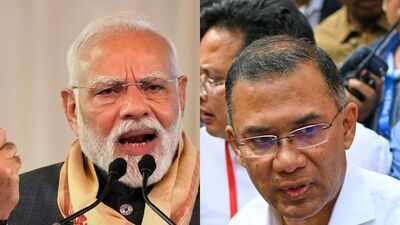
Over two years ago, student protests against the quota system in Bangladesh’s government jobs evolved into a nationwide uprising that brought down the government of then Prime Minister Sheikh Hasina, forcing her to flee to India. The political upheaval ushered in a period of considerable strain in bilateral relations with India and New Delhi-Dhaka ties having since deteriorated significantly. This is reflected in the fact that Bangladesh Prime Minister Tarique Rahman, who assumed office in February, is yet to visit New Delhi, despite having travelled to other countries in the region.The tensions have also spilled over into negotiations on the future of the Ganga Water Sharing Treaty and bilateral trade. Political mistrust has complicated efforts to reach a consensus on water-sharing, while reciprocal trade restrictions have added to economic friction.These issues have emerged as significant roadblocks in bilateral ties. The challenge for New Delhi and Dhaka, therefore, is not merely to resolve disagreements but to ensure that political differences do not undermine the broader framework of bilateral cooperation.
The Sheikh Hasina question: At the heart of diplomatic tension
The departure of Sheikh Hasina from Bangladesh in August 2024 marked a turning point in bilateral ties. Her subsequent presence in India became a major source of disagreement between New Delhi and Dhaka. During her tenure, Sheikh Hasina had maintained close relations with successive governments in New Delhi, cooperating on issues such as counterterrorism, connectivity, transit and regional security. India, in turn, viewed her as an important partner in maintaining stability in its eastern neighbourhood.

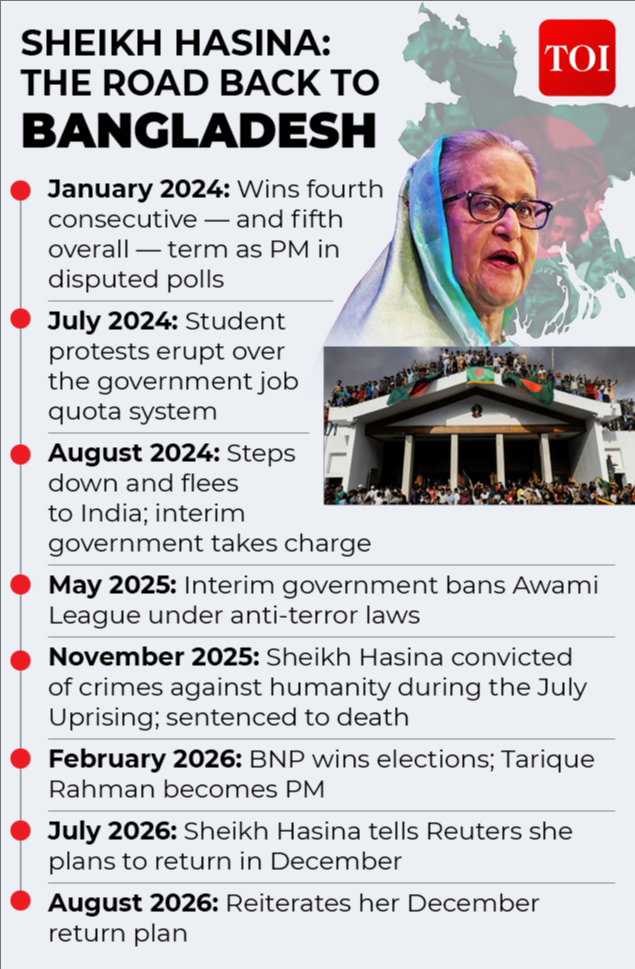
Sheikh Hasina’s road back to Bangladesh
However, this fuelled perceptions among a significant section of the public in Bangladesh that India had prioritised its own strategic interests over broader democratic and political concerns in their country. This perception contributed to a growing anti-India sentiment and played a part in the political developments that eventually led to Sheikh Hasina’s ouster.Since then, both the Muhammad Yunus-led interim administration that succeeded Sheikh Hasina and the subsequent Bangladesh Nationalist Party government, elected in February, have repeatedly sought the former prime minister’s extradition to face the law for “crimes against humanity” linked to the July Uprising, as the movement is known as in Bangladesh. Meanwhile, India has maintained that the request is being examined through the established legal process.

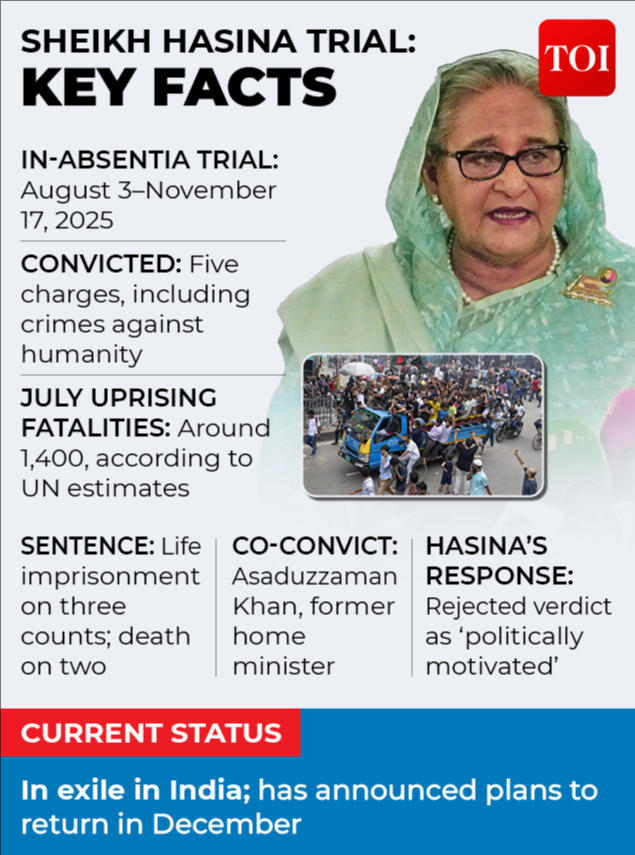
Also, Sheikh Hasina has already announced that she would return to Bangladesh in December, a timeline that is now drawing closer. If her return materialises, it could bring the extradition question to a close, although the legal and political issues surrounding her return may continue to test ties. A press conference she addressed on August 5, the second anniversary of her resignation, further complicated matters.According to Sreeradha Datta, Professor of International Affairs at OP Jindal Global University, the extradition impasse is not a roadblock in itself; rather, it is the manner in which the two sides have handled the issue that has become the stumbling block.“The roadblock is how the two sides deal with it. And the fact that the Bangladesh government laid down a condition like that (extradition) for a visit to occur is actually what has complicated the matter,” she said, referring to Tarique Rahman’s yet-to-take-place visit.Datta added that Rahman could have visited India and discussed the matter with Prime Minister Narendra Modi, but setting a precondition only complicated the issue further.Ultimately, how the Sheikh Hasina matter is handled will be an important test of New Delhi and Dhaka’s ability to manage political differences while keeping the broader relationship on track.
Shared rivers, competing interest
While the extradition impasse represents a relatively recent political challenge, disagreements over river water-sharing have long been a feature of India-Bangladesh relations. Since they share 54 transboundary rivers, differences over the equitable distribution of water are natural.However, a formal water-sharing treaty exists only for the river known as the Ganga in India and the Padma in Bangladesh. Signed on December 12, 1996, the 30-year agreement is due to expire on December 12 this year. With the renewal deadline approaching, Dhaka has called for a new or revised, longer-term agreement that includes a “guarantee” clause to ensure an assured supply of water to Bangladesh, particularly during the dry season and periods of low river levels.

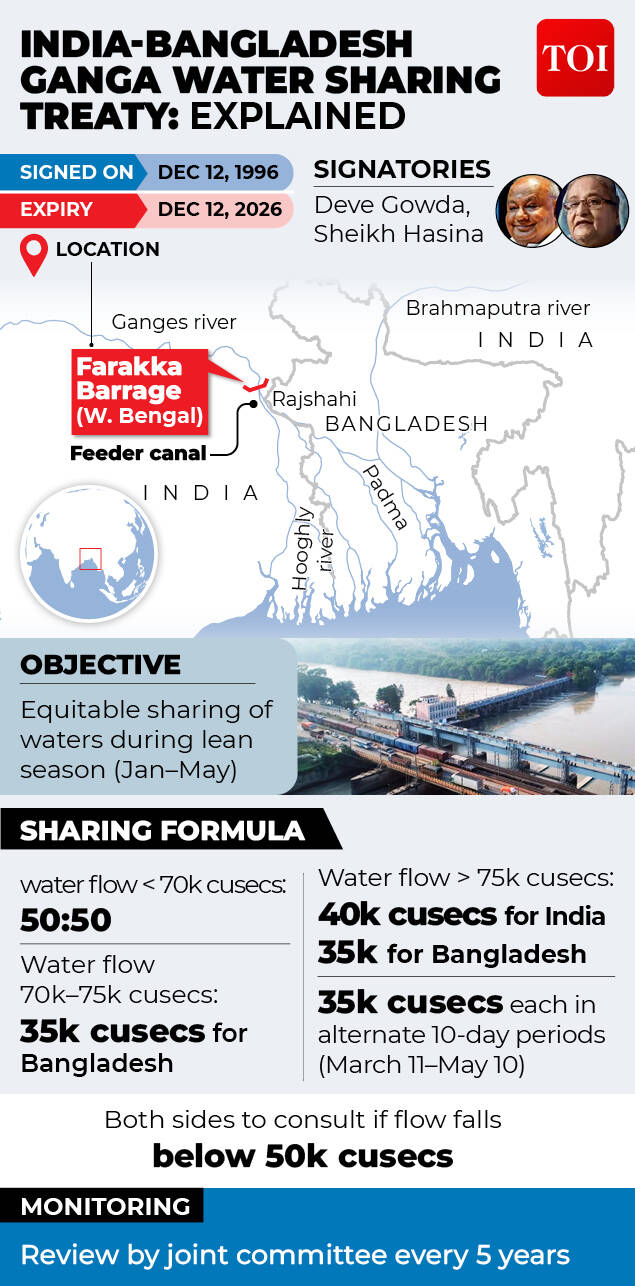
All about India-Bangladesh Ganga water-sharing treaty
Datta noted that water remains an emotive and sensitive issue for Bangladesh, adding that while a new 30-year agreement may or may not materialise, she hoped the two sides could reach an interim arrangement.“For Bangladesh, water is the most emotive and sensitive issue. … Even if we don’t expect a long-term 30-year agreement, I hope there is an interim agreement because both are agro-based economies and Bangladesh’s dependence on the common rivers is far more,” she said.Beyond the Ganga/Padma, India and Bangladesh have also had longstanding disagreements over the sharing of Teesta waters. A deal came close to being finalised in 2011 but was blocked by then West Bengal chief minister Mamata Banerjee, citing her state’s needs. Dhaka has been seeking a formal treaty to secure an adequate share of Teesta’s waters, particularly during the dry season, when declining flows affect irrigation and agricultural activities.With the BJP, which has been India’s governing party since 2014, now also governing West Bengal, there are hopes that the long-pending Teesta agreement may finally materialise.Nevertheless, against the backdrop of recent tensions, the unresolved water-sharing disputes remain another major irritant in India-Bangladesh ties.
The trade roadblock
Despite strained ties, India remains Bangladesh’s third-largest trading partner. It briefly overtook the United States in February before Washington reclaimed the second spot, while China continues to be the largest trading partner by a distance.Yet, with both sides imposing trade restrictions, economic ties remain under strain, adding another layer of friction to an already tense relationship.For instance, in April 2025, Dhaka restricted the entry of Indian yarn through several land ports, citing concerns over its domestic textile industry. The same month, New Delhi withdrew the transshipment facility that had allowed Bangladeshi export cargo to pass through Indian territory en route to third countries. The following month, India further tightened import restrictions on several categories of Bangladeshi goods through land ports, including ready-made garments and certain processed products.The curbs were discussed during trade negotiations held in New Delhi last month, marking the first meeting of the bilateral joint working group after a prolonged gap. The Bangladeshi side reportedly called for a review of restrictions on the entry of goods through Indian land ports, while India sought the removal of curbs on its cotton yarn exports.Both sides also called for the removal of other trade restrictions imposed by the other.Despite continued engagement through bilateral talks, these differences remain unresolved, adding to the wider set of contentious issues straining ties between New Delhi and Dhaka.
India’s continued outreach to Bangladesh
Likely anticipating Tarique Rahman’s eventual rise to power, New Delhi began reaching out to him following his return to Bangladesh in December 2025, after a 17-year stay in the UK. External affairs minister S Jaishankar attended the funeral of former Bangladesh Prime Minister Khaleda Zia, Rahman’s mother, who passed away just days after her son’s return to the country. Later, Lok Sabha Speaker Om Birla and foreign secretary Vikram Misri represented India at Rahman’s swearing-in ceremony.Then, in April, former Union minister Dinesh Trivedi was appointed as India’s high commissioner to Bangladesh, marking a relatively rare instance of a political figure being chosen for a diplomatic posting.

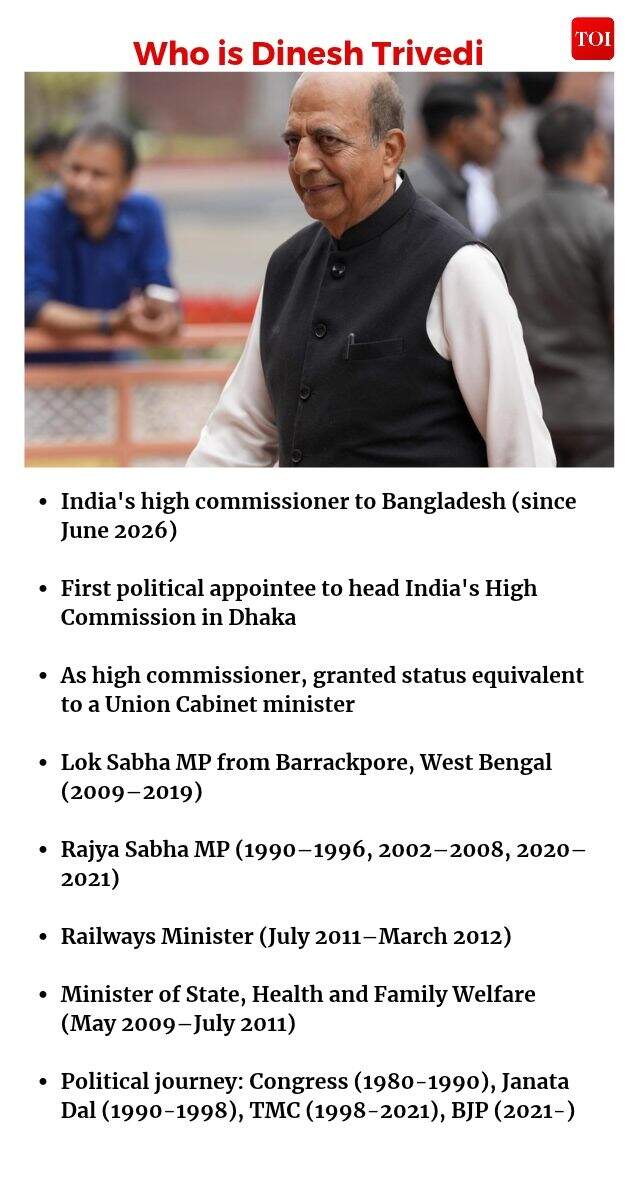
Who is Dinesh Trivedi, India’s high commissioner to Bangladesh
According to Sreeradha Datta, the move signals New Delhi’s seriousness about improving ties with Bangladesh and has, therefore, been well-received in Dhaka.“He (Trivedi) has been able to have a good outreach and he seems to have got along well with the Bangladeshis. His appointment has been well received and it probably conveyed to Bangladesh that the government was giving more attention and hoping that a political appointee would have greater ability to move things,” she said.Having been in the post for only six months, whether Trivedi can help bring about a broader reset in the relationship remains to be seen.
The road ahead for India-Bangladesh tie
India-Bangladesh relationship remains strained by a range of unresolved issues, extending beyond the impasse over Sheikh Hasina’s extradition to disputes over river-water sharing and trade. These include concerns over India’s alleged “forced push-ins” of suspected undocumented Bangladeshi immigrants, the alleged killings of Bangladeshi “civilians” by the Border Security Force at the India-Bangladesh border, and Dhaka’s pro-Pakistan tilt that began under the interim administration, among others.
Share your thoughts in the comments
Be respectful · TOI community guidelines
Yet, the relationship remains strategically important for both sides: Bangladesh is critical to India’s security interests, while Dhaka depends on New Delhi across several key sectors.Against this backdrop, Datta stressed that cooperation between New Delhi and Dhaka is in the interest of both, as well as the wider region.“India and Bangladesh have to work together for their own benefit. For the last two years, we’ve seen them not work with each other (but) it makes greater sense for not only the bilateral partners, but also for the region when India and Bangladesh work together,” she said.Ultimately, despite the many unresolved roadblocks, India and Bangladesh have little choice but to find a way to work together because of geography and shared strategic interests. The question is how soon both sides can move beyond the current strains.