


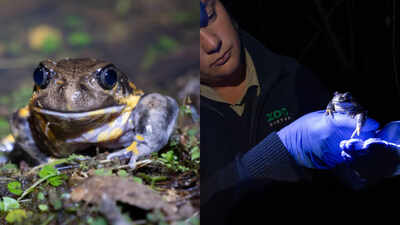
Scientists rescued about 160 tadpoles from the ashes of Australia’s Black Summer fires, raised the rare species in captivity and have now released 53 giant burrowing frogs into the forests where they were foundThe aftermath of a devastating wildfire can leave more than scorched trees and damaged landscapes. Sometimes, it reveals unexpected survivors. In Australia’s East Gippsland region, a discovery made among the remains of the catastrophic 2019–2020 Black Summer bushfires has grown into an extraordinary conservation success. Nearly six years after the fires devastated their habitat, 53 critically endangered Southern Giant Burrowing Frogs have returned to the forests, following years of specialist care and a pioneering captive-breeding programme.
From fire survivors to conservation success
According to ABC News, the frogs were originally discovered as approximately 160 tadpoles in small pockets of water after the fires destroyed extensive areas of their natural habitat. Despite the widespread destruction, the surviving tadpoles offered scientists an opportunity to protect a species whose numbers were already under pressure.Herpetologist Matt Clancy of Snowline Ecology took the rescued tadpoles to Healesville Sanctuary in 2021. According to reports, Zoos Victoria’s Melbourne Zoo and Healesville Sanctuary amphibian goalkeepers adapted to captivity.The first Southern Giant Burrowing Frog captive breeding occurred in 2025, marking another program milestone. Zoos Victoria described the achievement as a world first, marking an important step towards securing the species’ future.
An elusive species facing multiple threats
Despite its name, the Southern Giant Burrowing Frog is a relatively compact amphibian, with adults roughly the size of a cricket ball and has large eyes, muscular limbs, and a bright yellow body.According to Zoos Victoria, the species is native to south-eastern Australia, with its range extending from areas south of Kangaroo Valley in New South Wales through Victoria to Walhalla in central Gippsland.However, estimating its remaining population is particularly challenging. As ABC News reported, these frogs spend much of their lives underground, emerging primarily to breed following heavy rainfall. Males can sometimes be detected calling for just one night before disappearing underground for years.Habitat destruction, prolonged drought, bushfires and chytridiomycosis, a widespread amphibian disease, have all contributed to declining populations. Victoria currently has fewer than five known breeding sites.
Returning home with a scientific purpose
The release of 53 frogs is not simply a return to their original habitat. It also gives researchers an opportunity to understand more about their movements, survival and breeding behaviour.Zoos Victoria explained that each released frog received a microchip or passive integrated transponder (PIT) tag. These identifiers will allow researchers to recognise individual animals during future population surveys and establish how far they have travelled from their release locations.Song meters have also been installed throughout the forest to record the frogs’ distinctive calls and help field teams locate potential breeding sites.The conservation partnership between Zoos Victoria and Snowline Ecology has therefore moved into a crucial new phase. With the frogs now sexually mature and their genetics secured for future generations, researchers hope they will contribute to rebuilding wild populations, the ABC News report states. Also, it is reported that the Wildlife and Habitat Bushfire Recovery Program of Australia funded the project.Images Courtesy: Zoos Victoria