


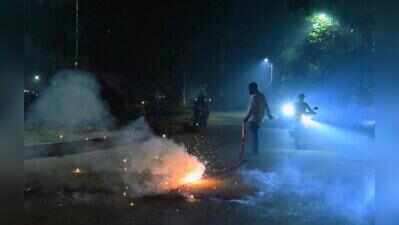
Bhubaneswar: Noise pollution in the capital city breached permissible limits by a significant margin during Diwali celebrations on Sunday night, with residential and silent zones recording some of the highest violations, raising fresh concerns over the increasing use of high-decibel firecrackers in the city.Data collected by the Odisha State Pollution Control Board showed that noise levels in residential areas touched 74 decibels (dB), exceeding the prescribed night-time limit of 45 dB by 29 decibels. The situation was equally alarming in silent zones. Near Capital Hospital, a designated silent zone, noise levels reached 57 dB, surpassing the permissible limit of 40 dB by 17 decibels.The readings indicate a deterioration compared to last year’s Diwali, when noise levels had also exceeded permissible limits across the city, though to a lesser extent. In commercial areas, where the allowed limit is 55 dB, noise levels climbed to 77.8 dB during the festivities. Industrial areas recorded noise levels close to the prescribed ceiling of 80 dB, remaining within the permissible range.Officials noted that pre-Diwali noise readings in different parts of the city had ranged between 50.4 dB and 61 dB, suggesting that the sharp increase during the festival was primarily linked to intensive firecracker use. Even under normal conditions, residential and silent zones in Bhubaneswar have often been found to register slightly above prescribed limits.Environmental experts attributed the spike in noise pollution to the growing use of sound-intensive fireworks despite repeated awareness campaigns and regulations aimed at curbing noise pollution during festivals.“This time more sound-causing firecrackers have been used, leading to increased decibel levels in residential and silent zones,” said senior environmental scientist Niranjan Mallick.The latest readings have rekindled concerns about the impact of excessive noise on public health, particularly on patients, children, senior citizens and residents living near hospitals and other sensitive areas.