


Skywatchers, lose yourself in the sky this November. Three meteor showers are on the calendar, and on the mornings of 15 and 16 November, Mars and Jupiter will sit just 1.2 degrees apart before dawn, close enough to spot without any equipment, according to NASA’s skywatching guidance for the month. A full supermoon follows on 24 November, the first of three in a row. That’s not all. NASA’s Voyager 1 spacecraft is also approaching an extraordinary milestone.Here’s the November skywatching highlight no true blue sky gazer should miss.
- Around 12 November: Northern Taurids peak; around five meteors per hour under ideal conditions.
- 15–16 November: Mars and Jupiter appear 1.2 degrees apart before sunrise.
- 17 November: Shine Bright for Voyager’s Light-Day activation.
- 17–18 November: Leonids before dawn after moonset; up to around 15 meteors per hour under ideal conditions.
- 24 November: Full supermoon; first in a series of three consecutive supermoons.
Three meteor showers

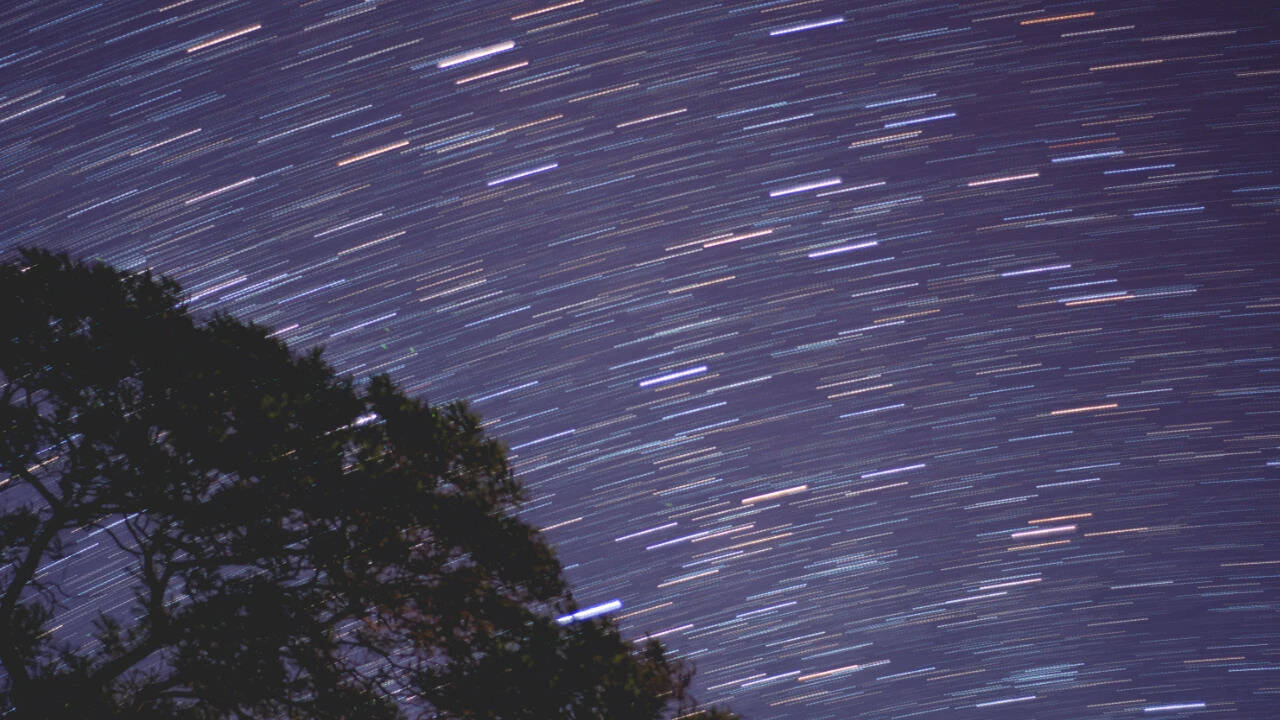
This November, you have the chance to spot two more shooting stars: the Northern Taurids and Leonids.The Southern Taurids have already appeared on 5 November. Now the Northern Taurids are expected to follow around 12 November. Both showers typically produce about five meteors per hour under ideal viewing conditions. They are also known for occasional bright fireballs that can light up the night sky.The Leonids, on the other hand, offer the best viewing experience and are expected to peak on 17 and 18 November, in the early hours before dawn and after the Moon has set. Under ideal conditions, you could see up to about 15 meteors per hour, though actual counts are usually lower.If you are particularly interested in seeing them at their best, consider travelling somewhere away from the city lights. Lower levels of light pollution will give you a better view of the meteors. It takes about 30 minutes for your eyes to adjust to the darkness, so keep that in mind when you travel.
Mars and Jupiter
In a few days, you will also get to see two planets, Mars and Jupiter, side by side. On 15 and 16 November, these planets will appear next to each other in the southeastern sky, creating a spectacle.Mars and Jupiter are separated by enormous distances in space. Their closeness is a matter of alignment. The two planets sit at very different distances from Earth but fall along the same line of sight, so they look like neighbours from our side of the Solar System. The gap, however, is not fixed. Over several consecutive mornings, the pair gradually draws closer before their positions shift and they begin to separate again.The two planets will be separated by about 1.2 degrees in the sky. That gap is slightly wider than the width of two full Moons placed next to each other, which is enough to be seen clearly without optical aid. No telescope or binoculars will be necessary.Jupiter will be the easier of the two to pick out because it is the brighter of the pair. Mars, sitting nearby, has the reddish appearance that makes it recognisable to many observers. Once you find Jupiter, Mars should be easy to locate just beside it.Both planets will be low in the sky, so an unobstructed view of the horizon matters more than height. Dark surroundings help. Streetlights and the glow from buildings wash out faint objects, and Mars is considerably dimmer than Jupiter. Allow your eyes about 30 minutes to adjust before scanning the sky.The planets will be visible in the southeast, so face that direction in the period leading up to sunrise. A clear view of the horizon will help, since both planets will sit low in the sky during these mornings.
The supermoon finale
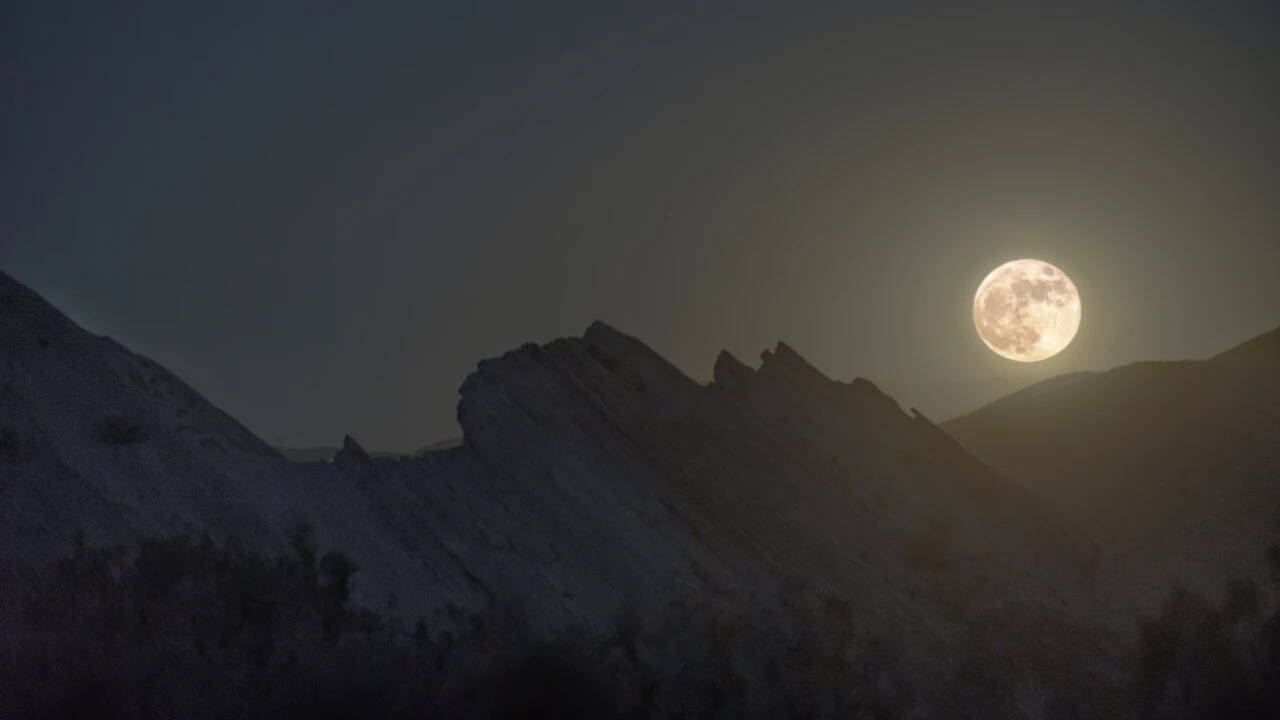
A full Moon rises over Vasquez Rocks Natural Area and Nature Center north of Los Angeles, California, on June 24, 2021.Credit: NASA/Preston Dyches
This November ends with a full supermoon on 24 November. The Moon’s orbit is slightly elliptical, so a full Moon near its closest point can look somewhat larger and brighter. NASA recommends looking towards the eastern horizon around sunset that evening, when the Moon rises. It is the first of three consecutive supermoons, with the next in December and the third in January.
Voyager 1 reaches a distance milestone
Well, that’s not all sky gazers should be celebrating this year. NASA’s Voyager 1 spacecraft reaches a distance of one light-day from Earth on 17 November. This makes it the first human-made object to travel that far. A light-day is the distance light covers in 24 hours. A radio message from Earth takes a full day to arrive, and a reply needs another day to return, making the round trip roughly 48 hours.NASA is marking the milestone on 17 November with its Shine Bright for Voyager’s Light-Day activation, which invites the public to celebrate this extraordinary accomplishment in space exploration.