


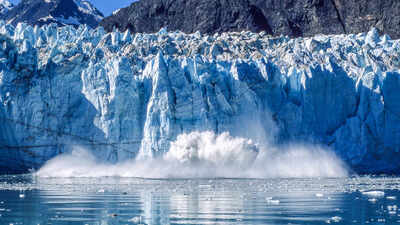
Heavy rainfall can push a glacier in Alaska to more than double its speed for a short time, according to new research. Rainfall can accelerate the glacier’s movement by as much as 251%, the study found. Scientists from Boise State University studied Sít’ Kusá, also known as Turner Glacier, and found that rainfall often triggers sudden surges in its movement. The research is published in the journal The Cryosphere.
Glacier movements

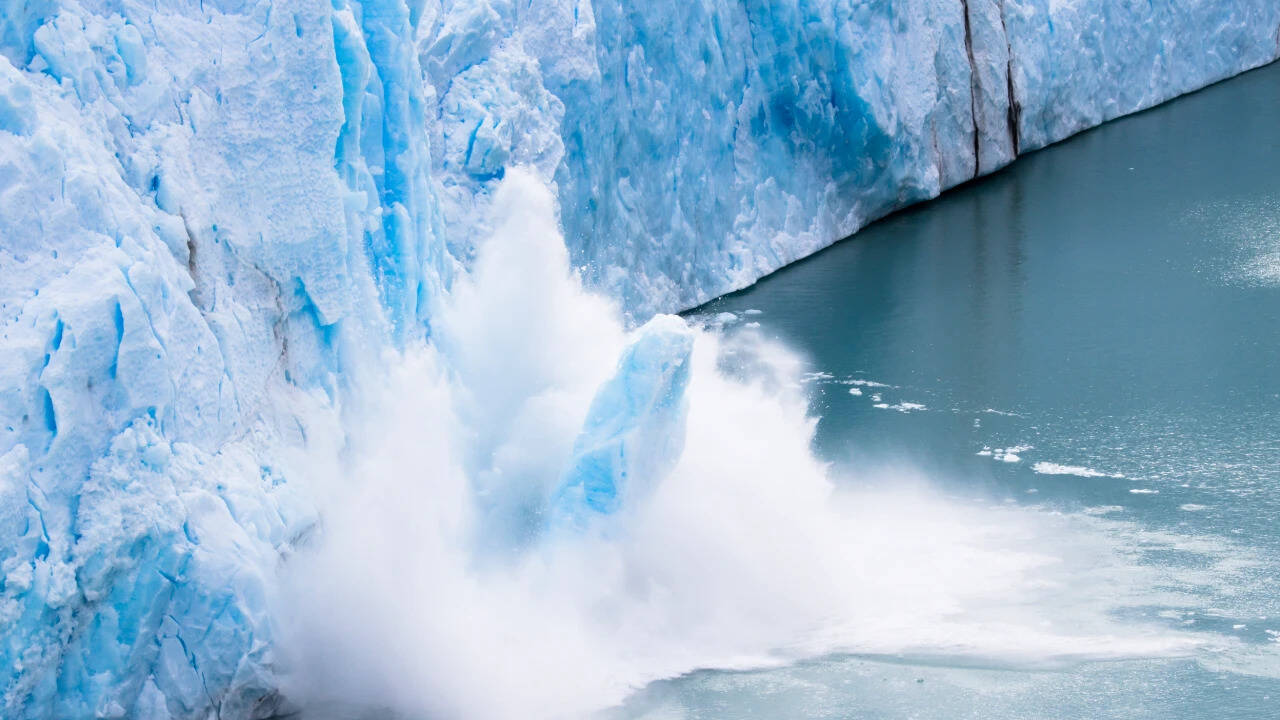
Most people think of glaciers as slow, heavy masses of ice that shape valleys over thousands of years. While that is usually true, occasionally, a glacier surges and moves many times faster than normal. Such surges can cause significant damage. They can gouge out valleys, split the surface into deep cracks and block side valleys. The blocked water can form temporary lakes, and when those ice dams break, the result can be flooding.Understanding the mechanisms behind these surges is therefore vital for scientists monitoring instabilities in glaciers around the world and their wider implications for climate change.Parker Wilkerson of Boise State University and his colleagues decided to investigate this phenomenon. They placed GPS instruments around the glacier. The devices recorded its position every 15 seconds, helping the researchers track rapid changes in speed and compare them with the glacier’s slower, long-term pace.The team then matched those speed changes with rainfall. They checked their rainfall estimates against readings from the weather station at nearby Yakutat Airport. The results were clear: more than half of the rainfall events they studied led to an increase in speed.
A surge that lasted longer
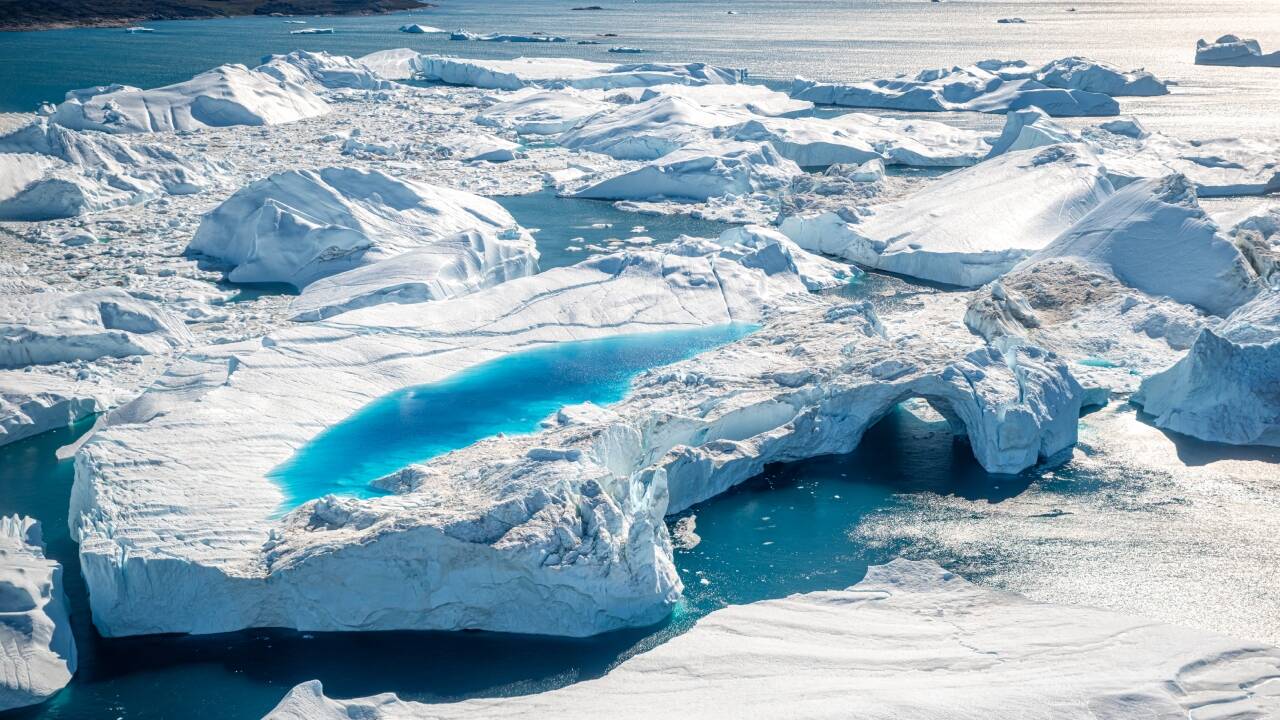
The researchers compared a surge period from 2020 to 2021 with a slower period from 2022 to 2024. During the surge, the glacier’s peak daily speed reached 7.5 metres (24.6 feet). That represented a 116% increase in a single day, or more than double its normal speed.The researchers also found that the surge lasted 66 hours, about twice as long as any surge during the slower period. They observed that it usually began about 12 hours after rainfall started, once at least 20 millimetres (0.79 inches) had fallen. The glacier returned to a stable state three days later.Even during the quieter period, rainfall sometimes accelerated the ice. These speed-ups required more rainfall, at least 60 millimetres (2.4 inches) from the start of the event. They also peaked later, about 32 hours after the rain began, on average. The increase was smaller in real terms, at 1.5 metres per day. Yet the percentage increase was 251%. This is because the glacier normally moves so slowly that even a modest push makes a large difference in percentage terms.The researchers also found that the steepest, lowest parts of the glacier accelerated the most. They suggested that this was due to a combination of the land’s shape, gravity and meltwater helping the ice move.
What dynamic drainage does
The study found that drainage is a pivotal factor. When a glacier’s drainage system works well, channels run across, through and beneath the ice, carrying rainwater and meltwater away quickly. The ice stays in contact with the bedrock and maintains a steady pace.When drainage is poor, water becomes trapped in pockets beneath the ice or in the sediment below, known as till. Pressure builds as more water arrives, pushing against the weight of the ice. This reduces friction, allowing the ice to slide over the ground.The researchers now want to investigate these links further because changing weather patterns could make such surges more common. More rainfall, combined with increased melting in a warmer world, could mean greater ice loss and rising sea levels over time. Coastal and island communities would feel the effects first.“We find that particularly large and prolonged rain events can cause temporary slow-downs during the surge, but that speeds return to pre-event levels in less than two weeks as the drainage system reverts to its inefficient state. Our work supports recent analyses of glacier instabilities suggesting there isn’t a binary switch in drainage system configuration during surges. More broadly, our findings expand our understanding of glacier kinematic responses to rainfall, demonstrating that rain events can modulate speeds of both fast- and slow-flowing glaciers,” they concluded.