


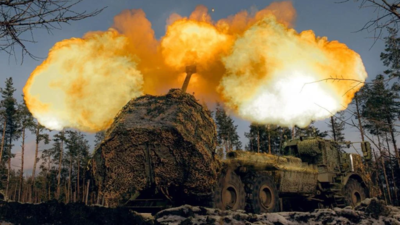
Europe’s armies are racing to replenish their ammunition stockpiles after years of supplying artillery shells to Ukraine left many countries with depleted inventories. Their efforts to rebuild exposed a major weakness: European defence manufacturers have struggled to ramp up production quickly enough to meet the surge in demand.The European Union’s ReArm Europe, or Readiness 2030, initiative (an ambitious €800-billion push to boost defence spending, strengthen military capabilities and expand the continent’s defence-industrial base) has added further momentum to this procurement drive.Indian manufacturers, able to produce ammunition at competitive prices, have emerged as beneficiaries of Europe’s scramble to restock. And the numbers reveal just how rapidly this opportunity has translated into export growth.India’s defence exports touched an all-time high of Rs 38,424 crore in 2025-26, registering a 62.66% increase over the previous year’s Rs 23,622 crore, according to the defence ministry. Defence Public Sector Undertakings (DPSUs) accounted for Rs 21,071 crore, or 54.84% of the total, while private companies contributed Rs 17,353 crore.
India’s ammunition manufacturing capabilities over the years has come a long way. However for any ammunition to deliver the designated terminal effect its reliability in terms of quality of raw materials, the indigenous content of ammunition and its critical components and the capability to design and manufacture modern fuzes becomes paramount. Munitions India Limited has a limited industrial network which has larger ramifications. The CAG report No 10 of 2024 highlights weaknesses in the supply chain. Delays in propellant production affected ammunition filling factories including specialised chemicals, energetic materials, electronic components and high grade metals. Therefore raw material quality, process consistency, laboratory testing and timely delivery must be treated as integral parts of ammunition production. Fuzes deserve a particular mention because they are essential component of many artillery, mortar and other ammunition types. BEL is working in this direction. Today we have almost achieved 91% indigenisation of many ammunition variants however the path to amalgamate critical technologies remains as a work in progress.
Maj Gen Rajan Kochhar (retd), Former MGAOC Central Command and Defence and Strategic Expert
The shift in the export landscape is significant. DPSU exports surged 151%, compared with 14% growth in the private sector, putting state-owned manufacturers ahead of private firms for the first time in this comparison. India’s defence exports have nearly tripled in five years, with the country now supplying more than 80 markets. The number of registered exporters has also increased from 128 to 145.The defence ministry attributes the expansion partly to a revamped online portal and a simplified standard operating procedure for export authorisations.

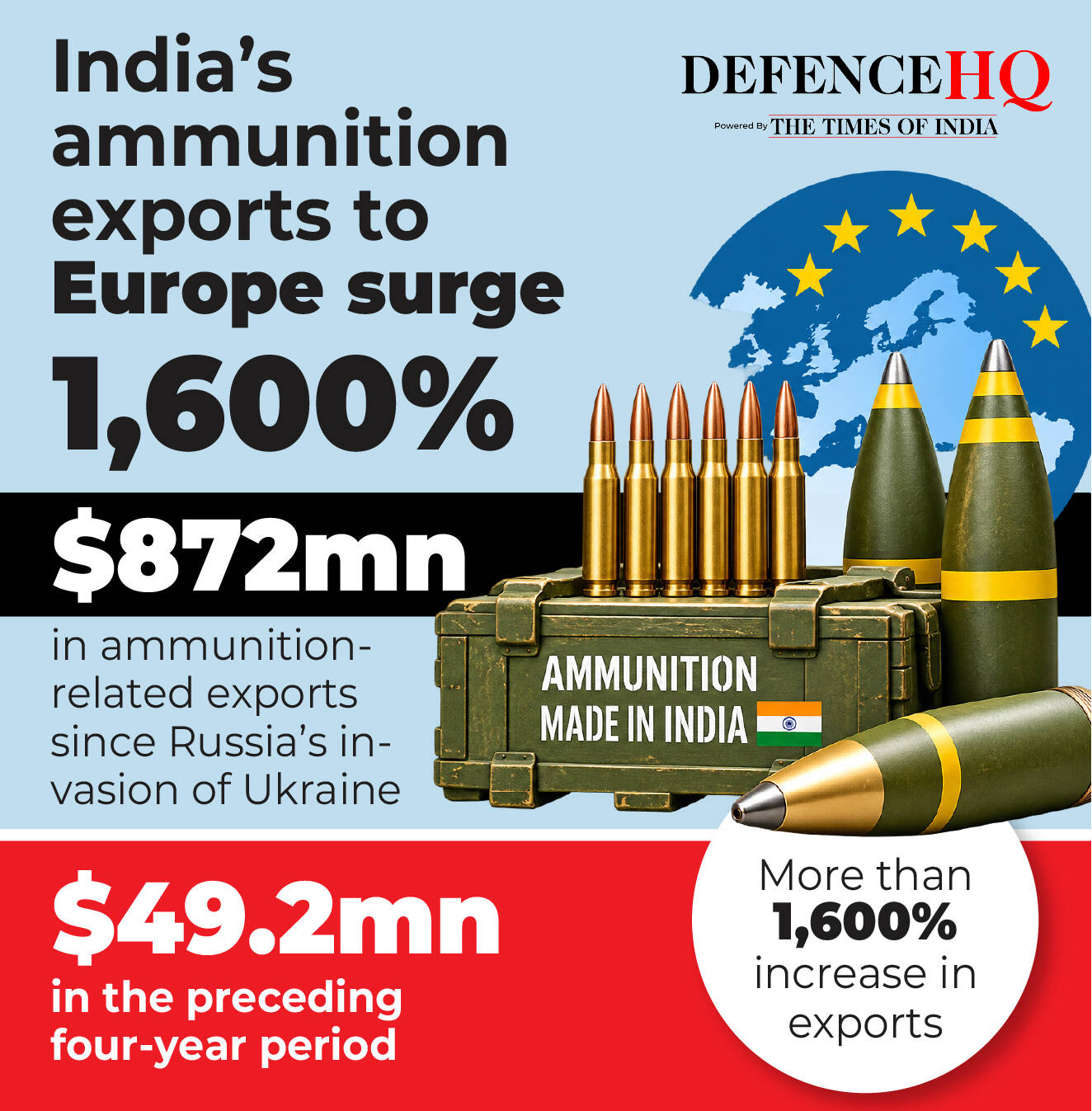
India’s ammunition exports to Europe have increased tremendously over the last few years, largely driven by the Ukraine conflict.
Europe’s growing appetite
Late last month, defence secretary Rajesh Kumar Singh said India had become the third-largest exporter of arms to Europe, largely on the back of the ReArm Europe initiative. He was referring to a media report published a day earlier.Singh said India was now exporting standard ammunition and artillery shells of various calibres to European countries in significant quantities. He also indicated that New Delhi wanted to participate more directly in European procurement programmes through joint ventures with local companies. At the same time, he pointed to India’s gradual diversification away from Russia as its principal defence supplier.The scale of the shift is evident in a recent report that found Indian companies had shipped at least $872 million worth of ammunition-related products to Europe in the four years following Russia’s invasion of Ukraine, compared with just $49.2 million in the preceding four years. That represents an increase of more than 1,600%.Nearly three-quarters of these exports went to 13 countries in Central and Eastern Europe. In these markets, India climbed from 28th place to become the second-largest foreign supplier, behind South Korea.There is, however, an important distinction: this ranking relates to specific ammunition categories in those countries. It does not mean India has become one of Europe’s leading suppliers of major conventional weapons.

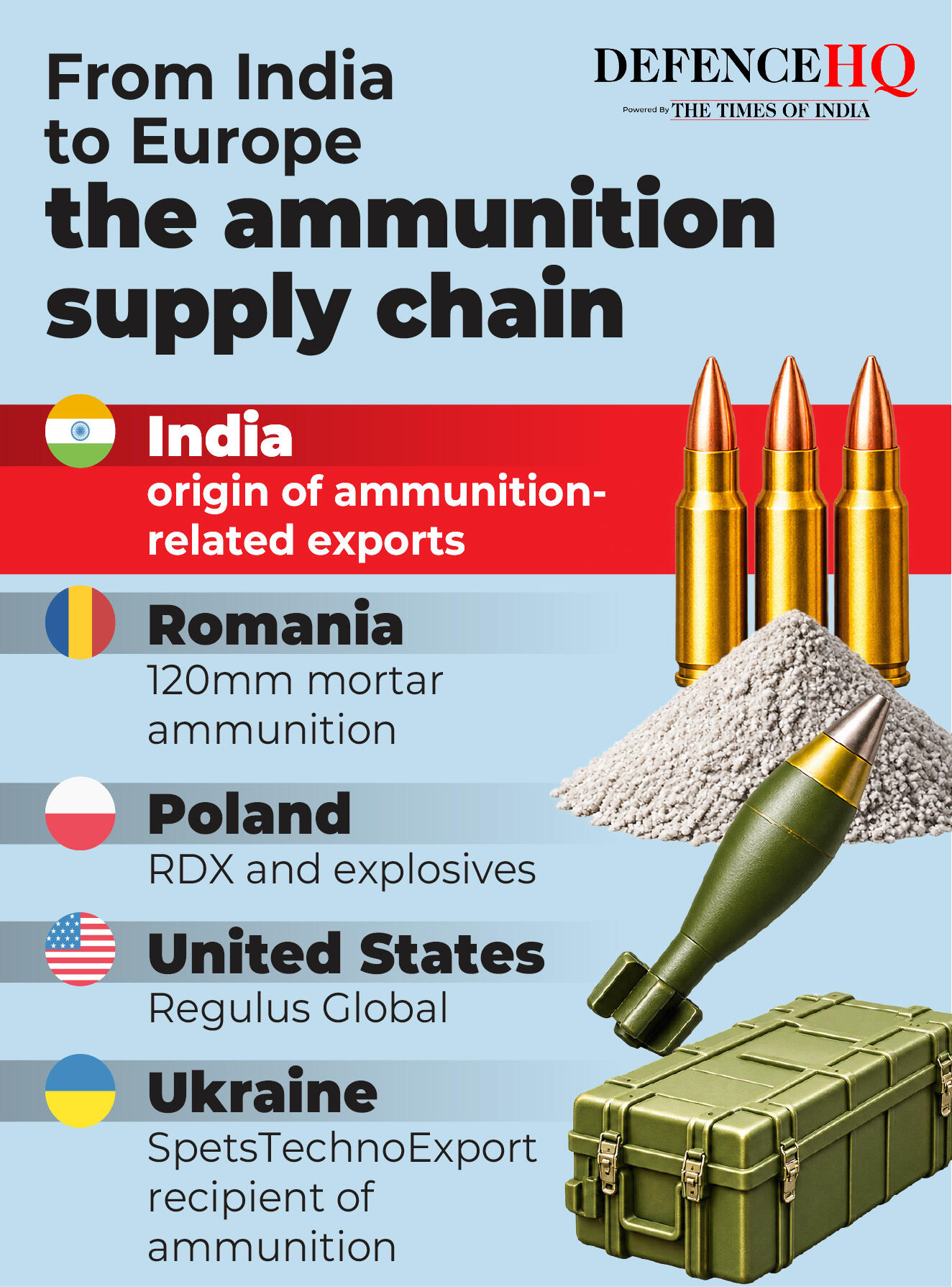
Many countries in Europe are now procuring ammunition from India, boosting export figures.
What the commerce ministry’s numbers reveal
Country-wise export data from the commerce ministry offers a closer look at how India’s ammunition trade with Europe has evolved.Across seven European destinations: the Czech Republic, Spain, Slovenia, Romania, Bulgaria, Italy and the United Kingdom — exports stood at $2.96 million in 2020-21 and $5.92 million in 2021-22, the financial year that ended just weeks after Russia launched its invasion.The numbers then climbed sharply: $56.23 million in 2022-23, $151.31 million in 2023-24 and $139.64 million in 2024-25.In other words, exports in 2024-25 were nearly 24 times their 2021-22 level. The figure was, however, around 8% lower than the peak recorded in the previous financial year.The surge has not been evenly distributed across Europe. Slovenia has emerged as the biggest destination among the seven countries, with exports rising from zero in 2020-21 to $79.46 million in 2023-24 and $71.74 million in 2024-25. It accounted for more than half of the combined exports to these destinations in both years.Spain’s purchases increased from $0.87 million to $28.45 million over the five-year period, while exports to the Czech Republic rose from zero to $21.34 million. Bulgaria, which recorded just $0.03 million in 2022-23, imported $11.70 million worth of products in 2024-25.Other markets have followed a more erratic trajectory. Italy’s purchases peaked at $24.69 million in 2022-23 before falling to $4.14 million. Romania, meanwhile, recorded imports worth $38.86 million in 2023-24, only to see the figure plunge to $1 million the following year. The United Kingdom remained a relatively small market, with purchases fluctuating between $1 million and $2 million.The uneven pattern suggests that India’s European export boom is being driven largely by individual procurement contracts and replenishment orders rather than a uniform, sustained expansion across the continent.Direct exports to Ukraine tell a markedly different story. They stood at $5.41 million in 2020-21 and $6.28 million in 2024-25, with a peak of $8.29 million in 2023-24. In other words, direct shipments have remained in the single-digit millions, with little significant change since before the war.In 2024-25, Ukraine’s direct purchases accounted for less than 5% of India’s exports to the seven European destinations. Whatever the ultimate destination of some Indian-made ammunition, the trade figures make one thing clear: the bulk of the European export boom is not being shipped directly to Kyiv.

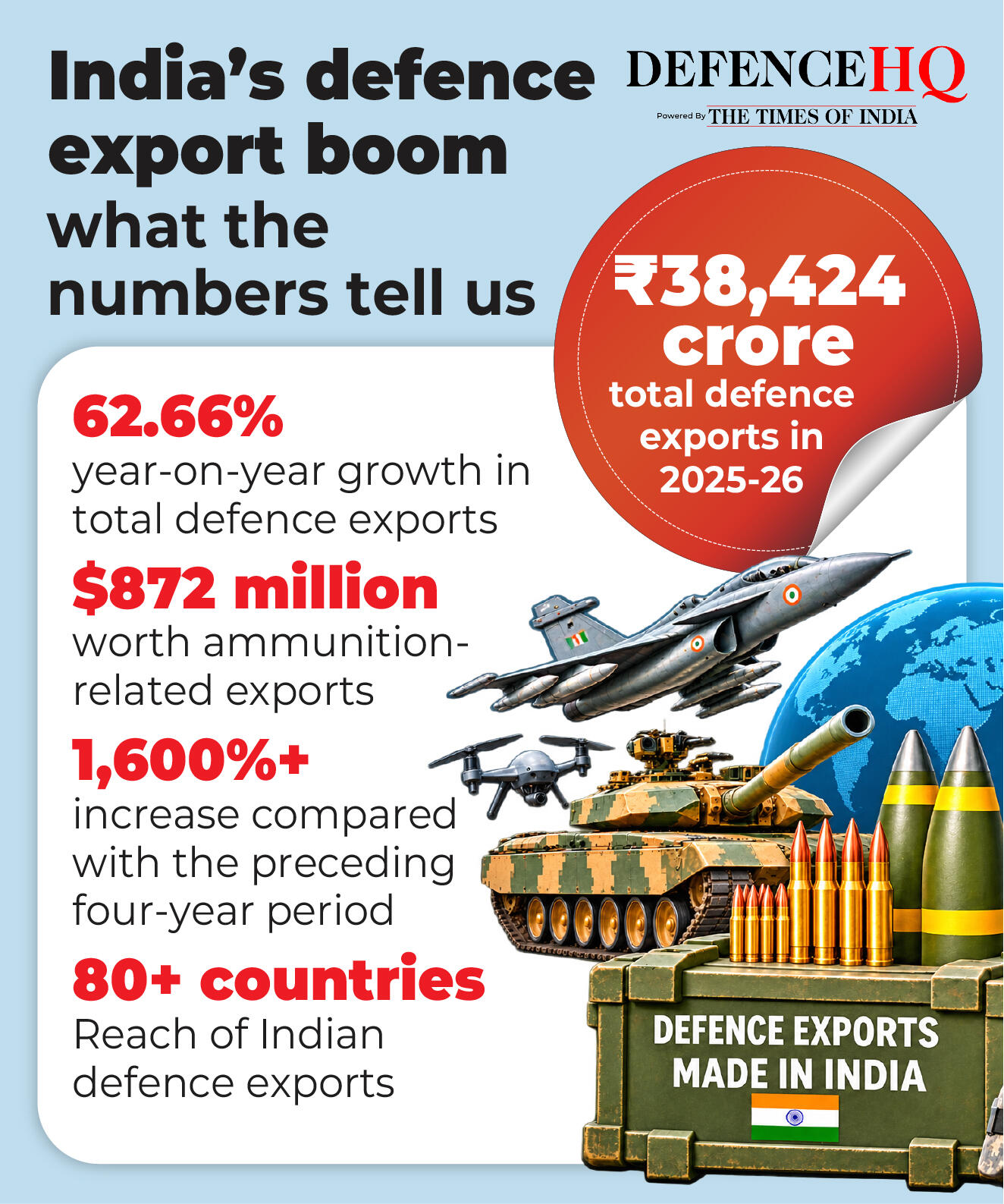
New Delhi is now selling weapons and ammunition to a much wider number of countries.
Where the shells end up
So, what happens to Indian-made ammunition after it reaches European buyers?In September 2024, a report citing customs records and nearly a dozen officials alleged that Indian-made artillery ammunition was reaching Ukraine through European intermediaries, despite objections from Moscow.According to the report, ammunition exports to four European countries, including Italy and the Czech Republic, had risen from around $2.8 million before the invasion to approximately $135 million by July 2024.Indian officials cited in the report said the Kremlin had raised the issue with New Delhi at least twice, including during a meeting between the two countries’ foreign ministers in July. India’s foreign ministry dismissed the report as speculative and misleading. Sources also told the news agency that India’s contribution accounted for less than 1% of the arms imported by Ukraine.Other reports have pointed to specific transactions that have fuelled questions about the onward movement of Indian defence products.One report said 155mm ammunition worth $62.8 million was recorded as entering Ukraine in 2024, with US-based Regulus Global listed as the exporter and Ukraine’s state-owned SpetsTechnoExport as the importer.It also cited nearly 72,000 rounds of 120mm mortar ammunition supplied by Munitions India Ltd (MIL) to Romania’s state procurement agency. Separately, at least 229,000 kg of RDX was reportedly shipped by Solar Industries to Poland’s Nitro-Chem, a company recorded as exporting RDX to a Ukrainian firm in 2024.These transactions, however, need to be viewed carefully. The RDX records do not establish that the material supplied by Solar Industries was the same consignment subsequently exported to Ukraine. They indicate a possible supply-chain connection, not conclusive proof that Indian-origin explosives reached the battlefield.Government and industry officials have maintained that these were commercial transactions and that India was not directly supplying ammunition to Ukraine.
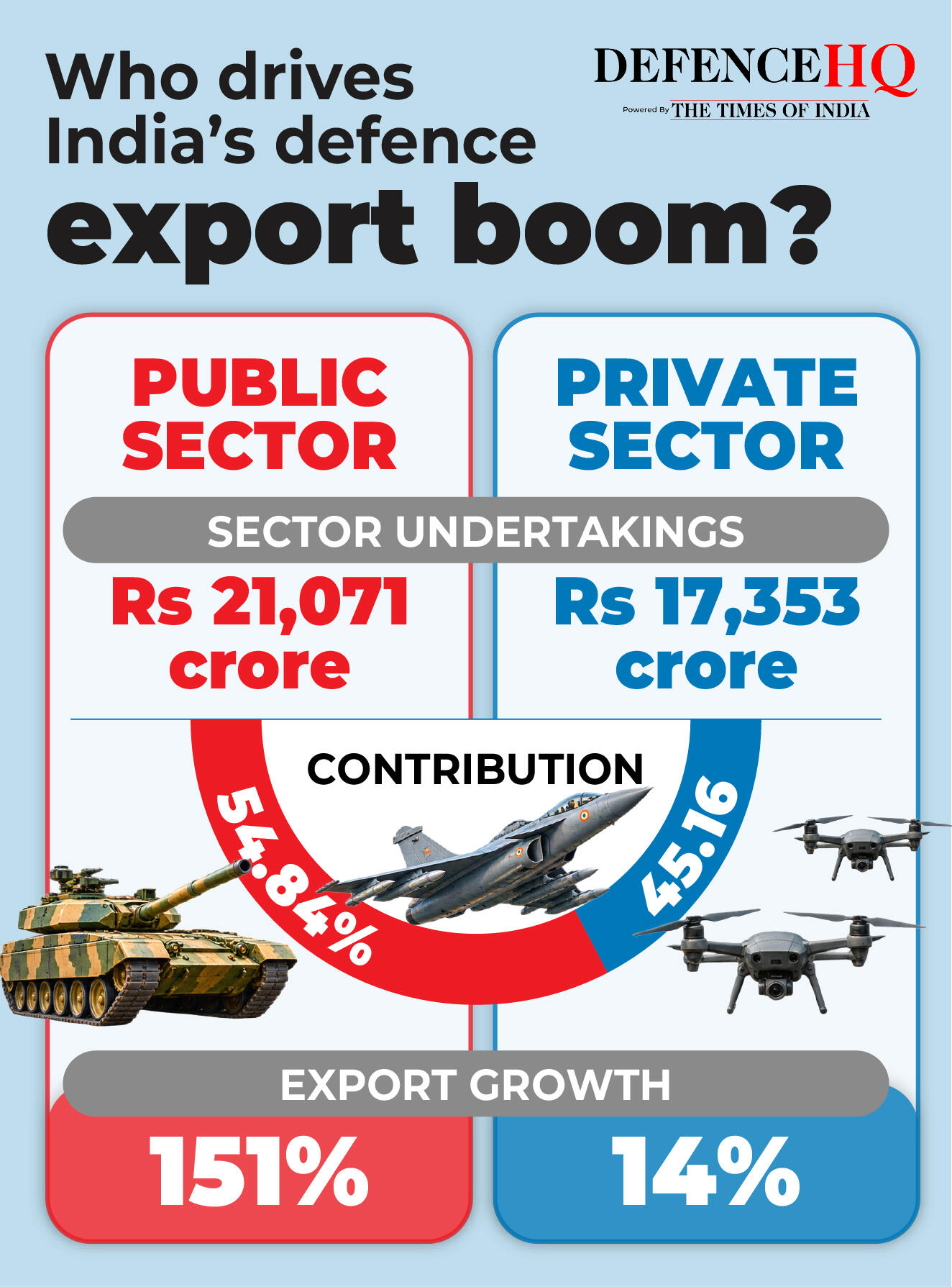
Both DPSUs and private industry are driving the weapons and ammunition sales drive.
India’s delicate balancing act
The growing ammunition trade with Europe also places India in a delicate geopolitical position.New Delhi has refrained from condemning Russia’s invasion and has abstained from UN resolutions critical of Moscow, maintaining its longstanding policy of strategic autonomy. Russia, meanwhile, remains an important defence partner, even as India gradually diversifies its sources of military hardware.Singh has said that France and Israel each account for around 15% of India’s defence imports, making them the country’s second-largest sources after Russia.
Beyond the ammunition boom

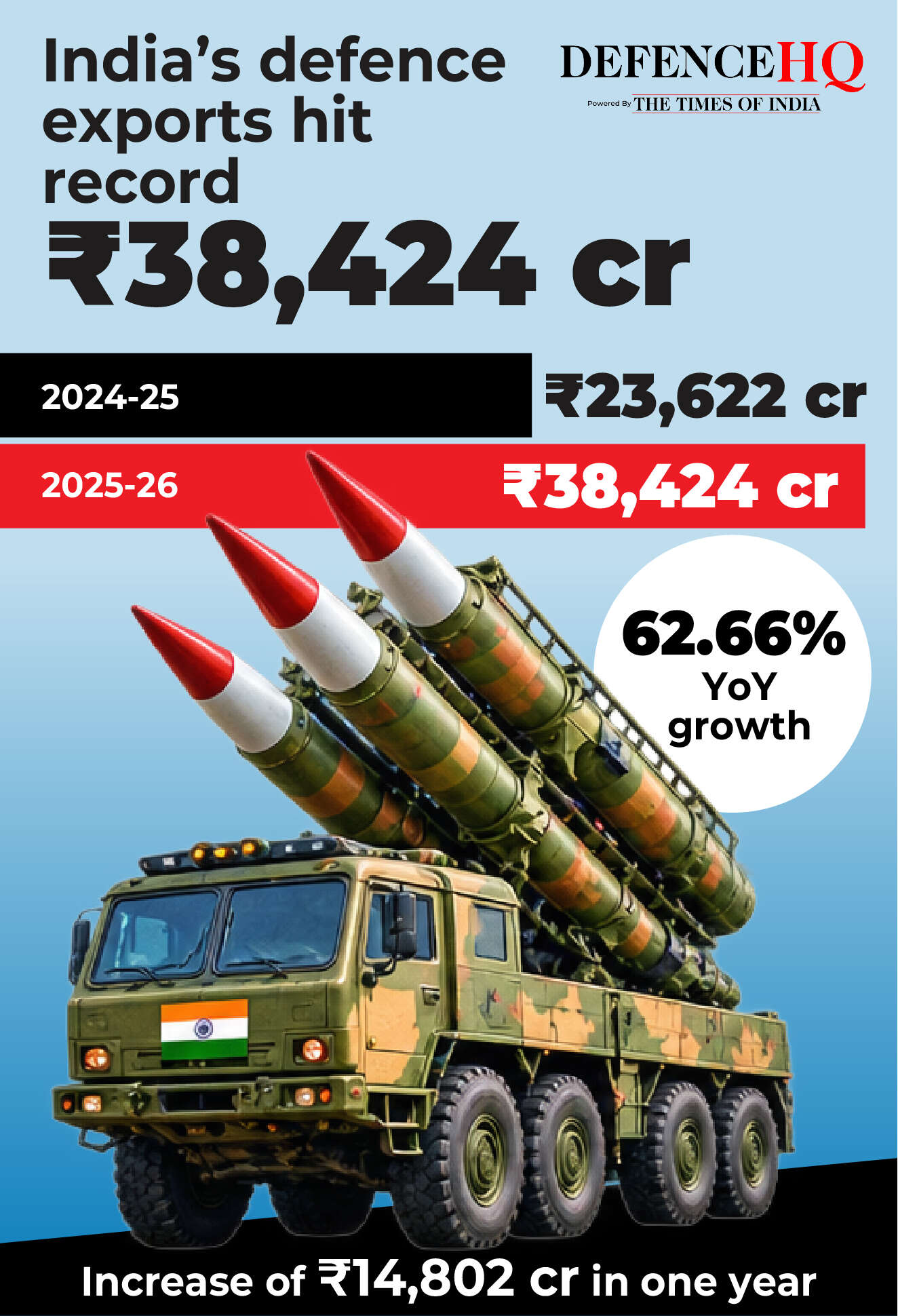
The growth in sales is increasing year after year, helping India’s heft grow in the global arena.
For all the impressive growth, there are limits to what India’s export numbers reveal about the long-term strength of its defence industry.Much of the recent expansion has been driven by basic ammunition and other high-volume products. Demand for these items can rise sharply during a conflict as countries rush to replenish depleted stockpiles, but it can also fall once emergency procurement cycles end. The decline in exports from their 2023-24 peak is an early reminder of that volatility.The bigger challenge will be converting this wartime demand into lasting commercial relationships. Joint ventures with European manufacturers, participation in long-term procurement programmes and a move towards higher-value defence systems could help Indian companies establish a more durable presence in international markets.Expanding exports will also be critical to sustaining India’s domestic defence manufacturing ecosystem, giving companies larger production volumes, greater economies of scale and access to international markets.For now, a war in which India is not a participant has created an unprecedented opportunity for its ammunition manufacturers. The real test will be whether they can turn Europe’s urgent need for shells into a lasting foothold in the global defence industry, one that survives long after the guns fall silent.