


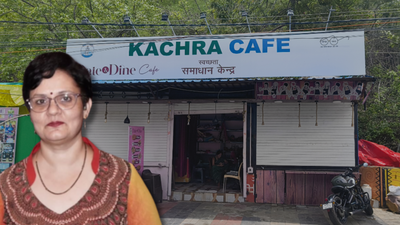
Old newspapers, empty plastic bottles, cardboard boxes and discarded household items usually end up in a waste bin or are sold to a scrap dealer. But in Bhopal, these everyday items can help people get a meal, a cup of coffee or other essentials. Homemaker Anjita Sabhlok started Kachra Cafe, an initiative that allows residents to exchange recyclable household waste for food, drinks and everyday products.In just eight months, the initiative has sent more than 45 tonnes of waste for recycling. The idea is to make waste segregation more than an environmental responsibility by giving people a practical reason to do it.According to the official website of Kachra Cafe, Sabhlok launched it through her NGO, Mannat, in collaboration with the Bhopal Municipal Corporation. The initiative aims to encourage residents to separate recyclable waste at home instead of throwing everything away together.
The question that led to Kachra Cafe

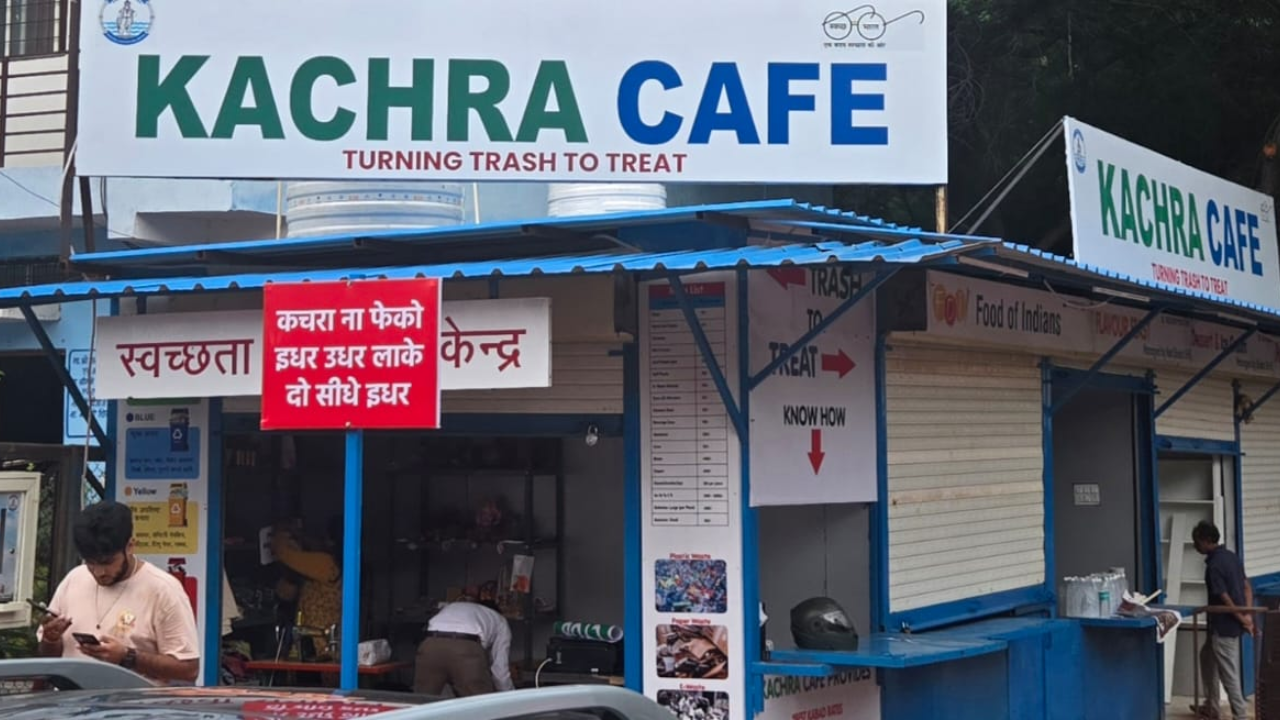
Image courtesy: Kachra Cafe
Sabhlok had been working on environmental awareness and waste management through Mannat for several years. However, she felt that educating people about the importance of waste segregation was not translating into enough action. As she wondered, “We’re educating people, but are we really seeing a change?”This made her think of a different approach. Instead of repeatedly asking people to manage their waste responsibly, she wanted to give them an incentive to do so. That thought eventually became Kachra Cafe. The concept allows residents to bring recyclable materials collected from their homes and exchange them for food and everyday essentials. Each category of waste has a fixed value, making the process simple for customers.
How does Kachra Cafe work?
The process begins at home. Residents collect recyclable materials such as old newspapers, plastic packets, cardboard, books, clothes and electronic waste and bring them to a Kachra Cafe collection centre. The waste is weighed and its value is calculated according to the material and quantity. Customers receive credits, also known as Kachra Coins or Kachra Currency, which they can redeem for food, beverages and other products.According to the cafe’s official website, different materials have different exchange rates. For instance, paper is valued at Rs 15 per kg, books and notebooks at Rs 14 per kg, milk packets at Rs 12 per kg and hard plastic jars at Rs 14 per kg. Soft plastic is valued at Rs 20 per kg, while electronic waste is listed at Rs 50 per kg.The website also lists rates for other materials, including Rs 90 per kg for beverage cans, Rs 120 for aluminium, Rs 30 for iron, Rs 400 for brass and Rs 600 for copper.The collected waste is channelled towards recycling rather than being mixed with regular household garbage. Customers can then use the credits they earn to access food and other products through the initiative’s participating outlets.
More than 45 tonnes of waste sent for recycling
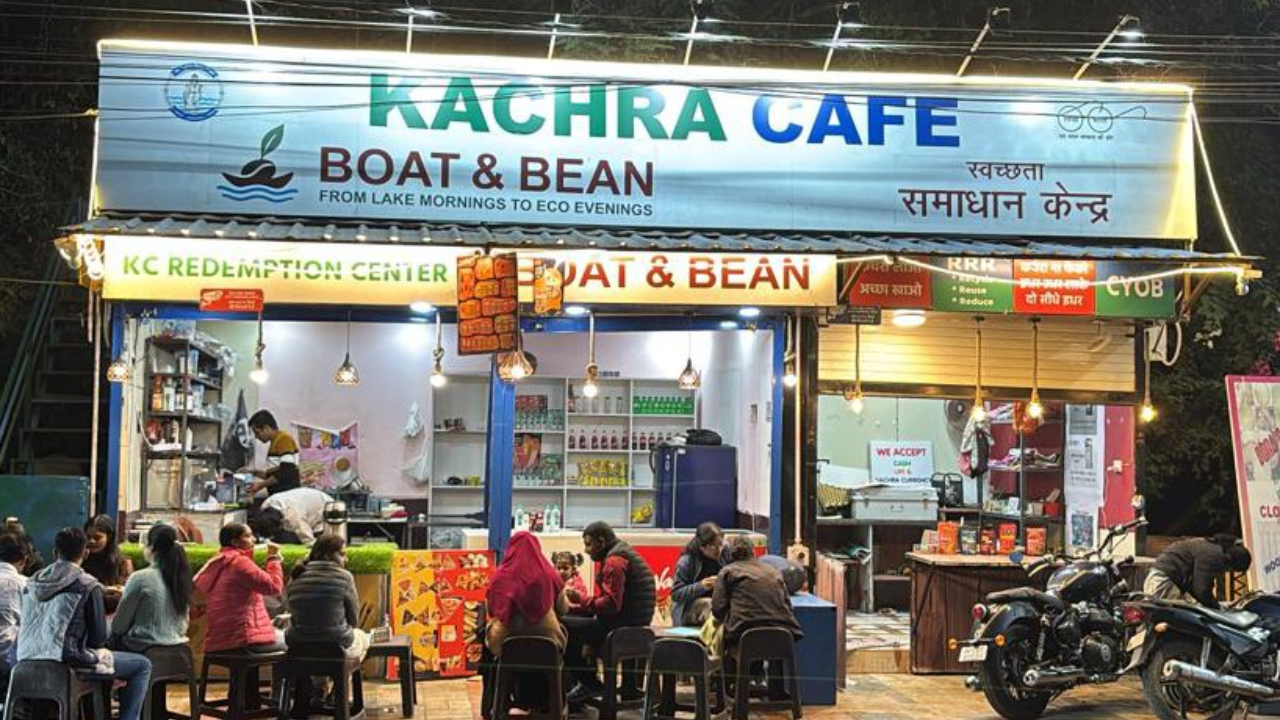
Image courtesy: Kachra Cafe
Getting people to change their everyday waste-disposal habits was not easy initially. Household waste is often treated as something that needs to be thrown away, and convincing residents to collect and separate it requires consistent effort. However, as awareness about the exchange model spread, more people began bringing recyclable materials to the cafe.According to The Better India, Kachra Cafe has sent more than 45 tonnes of waste for recycling in eight months. The initiative has also encouraged residents to learn how to segregate different materials so that they can enter appropriate recycling channels.The cafe’s approach gives people a direct benefit for participating in waste management. Instead of depending only on environmental awareness campaigns, it connects recycling with something residents can use in their everyday lives.
An idea that could extend beyond Bhopal
For Sabhlok, the initiative is not limited to running a cafe in one city. She wants other cities to explore similar models that make waste segregation easier and more rewarding for residents. The larger ambition is to encourage communities to recognise the value of recyclable materials and make responsible waste disposal part of their daily routines.Kachra Cafe’s model brings together two everyday concerns: the need to manage household waste responsibly and the need to make food and essential products accessible through a practical exchange.