


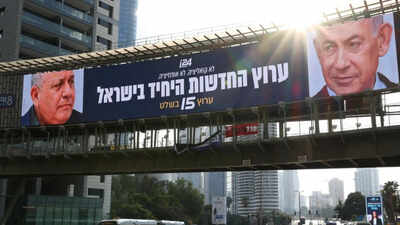
Vote counting is underway in Israel following the October 27 parliamentary elections, with Prime Minister Benjamin Netanyahu’s Likud-led bloc appearing on course to emerge as the largest in the 120-member Knesset.However, neither Netanyahu’s coalition nor the opposition alliance led by Yashar party chief and former army chief Gadi Eisenkot, who has emerged as the Israeli premier’s main rival, is likely to secure a clear majority.Once the final results are declared, parties are expected to engage in potentially lengthy negotiations to form a governing coalition. If the talks fail, Israel could face another election.
When will the final results be known
Israel’s Central Election Committee was still counting votes on Wednesday, with definitive results expected by Thursday. The count also includes hundreds of thousands of ballots cast by Israeli soldiers and diplomats voting from outside the country.Exit polls released by major Israeli television channels offer an early indication of the parties’ relative strength but cannot reliably predict the final seat tally, particularly given the country’s fragmented political landscape.The final vote count is expected by October 30, while the official results are due to be published on November 4, a week after the election.
Why is the vote count so complicated
Israel uses a proportional representation system in which Knesset seats are allocated to national party lists based on their share of the vote. Parties must secure at least 3.25% of the national vote to win seats.With around a dozen parties in contention to cross the threshold, the final seat allocation will depend on how many clear the minimum requirement, making the outcome more difficult to determine until the votes are fully counted.
What happens after the election results
Once the final tally is in, President Isaac Herzog will consult party leaders before asking the candidate he believes has the best chance of forming a government to do so. The nominee will have up to 42 days to form a government.No single party has ever won an outright majority in Israel. Therefore, governments are formed through coalitions, with negotiations often lasting weeks. Smaller parties can play a decisive role in securing a majority, making every Knesset seat important.If the nominee fails to form a government, another candidate may be given a chance. If all attempts fail, Israel could head for another election, with the incumbent cabinet continuing as a caretaker government.(With Reuters inputs)