


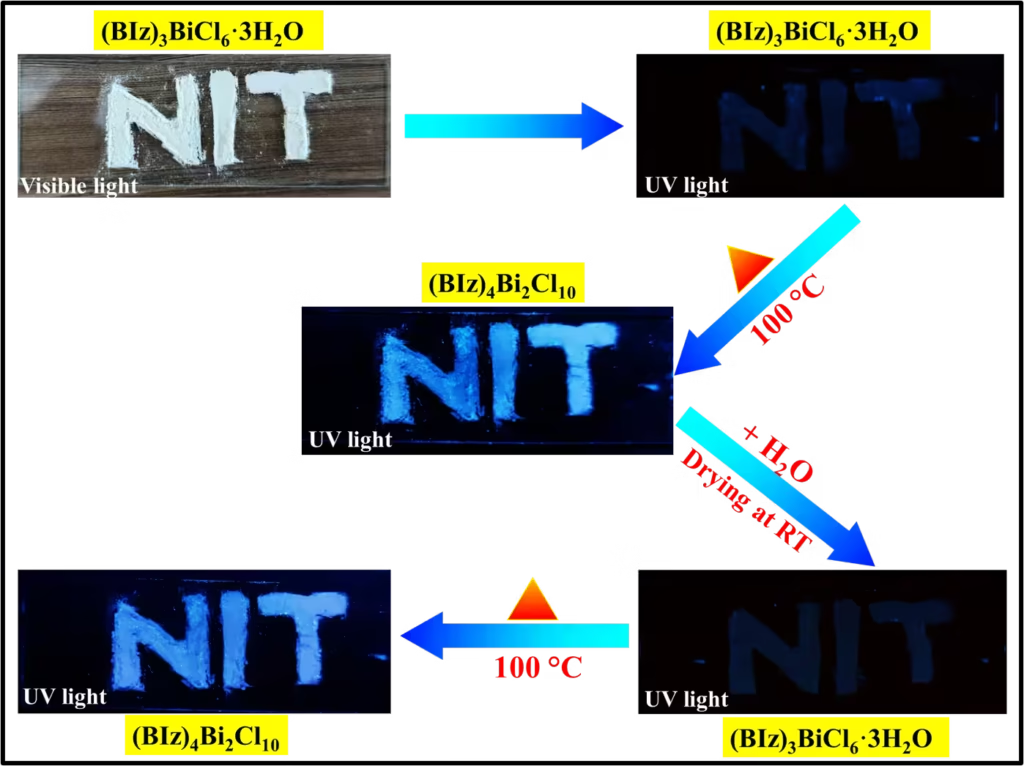

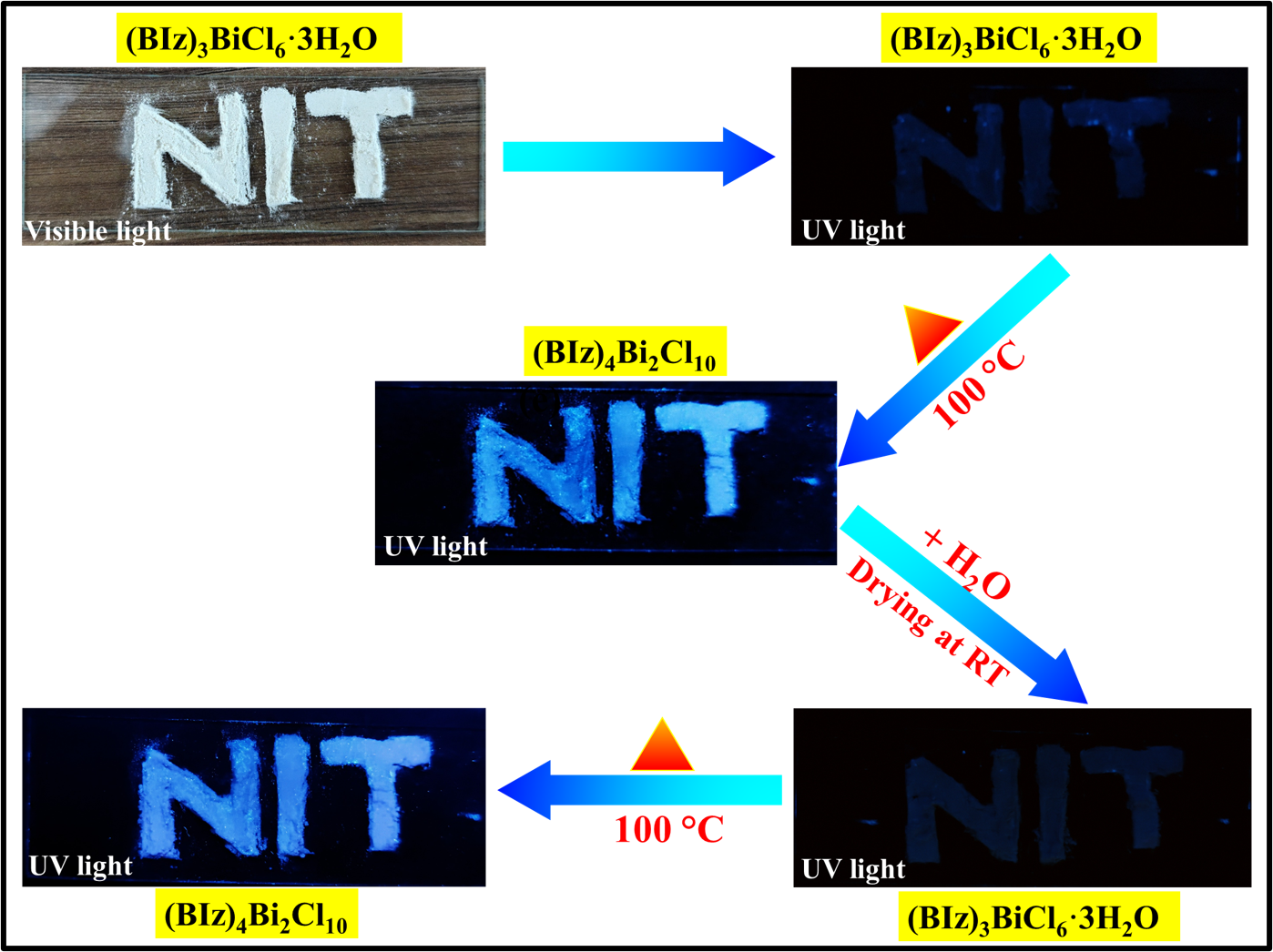
Rourkela: Researchers from National Institute of Technology, Rourkela (NITR), with scientists from IIT Guwahati, IIT Bombay and NISER Bhubaneswar, have developed new materials that emit different colours of light under ultraviolet (UV) exposure. According to an NITR press release issued on Wednesday, the materials respond to changes in heat and moisture and could find applications in security systems, sensors and lighting technologies.“The research investigated bismuth-based compounds as safer alternatives to lead-based photoluminescent materials, which are widely studied for their light-emission properties but raise significant environmental and health concerns because of lead toxicity,” said the release. The researchers said the bismuth-based compounds, which contain both organic and inorganic components, offer useful light-emitting properties without relying on lead.The findings were published in the Journal of Materials Chemistry C by Prof. Saroj L. Samal, associate professor, department of chemistry, and his research scholar Subhasish Sahoo from NIT Rourkela; Prof. Parameswar K Iyer and Chakali Srinivas from IIT Guwahati; Rajanikanta Rana from IIT Bombay; and Prof. Himansu S. Biswal and Laxmipriya Dash from NISER Bhubaneswar.The developed bismuth-based material responds to heat and moisture. When heated, it loses water trapped within its structure and emits blue light under UV light. When moisture returns, it absorbs water again and the blue emission disappears. The process can be reversed by changing the surrounding conditions, said the release.Samal said, ”The bi-based organic-inorganic hybrid halide compound is synthesized using cheaper and environmentally friendly constituents utilising a simple synthesis technique. The most interesting aspect of this material is its ability to undergo reversible structural transformation in response to heat and moisture, accompanied by change in its light emission properties.”According to the release, the material could be used in anti-counterfeiting inks for certificates, signatures and security labels. Its emission could be checked under UV light after controlled heating to verify authenticity. It may also be useful for humidity sensors in food packaging and storage facilities. The team has also developed lead-free LEDs producing yellow light under UV exposure. Combined with a commercial blue-light material, it produced a stable, cool, daylight-like white LED. The researchers plan to improve efficiency, stability, sensor reliability and white-light performance for practical applications.