


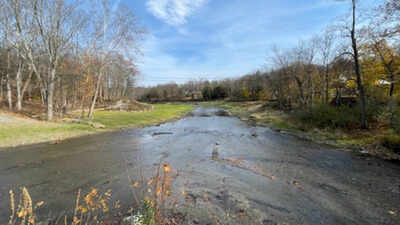
Many dams today no longer serve their original purpose, and yet they continue to require costly maintenance. For years, dams have hindered the natural course of rivers, preventing fish and other aquatic life from moving freely and causing damage not only to river ecosystems but also to the environment and overall water quality. One such dam that stood in the way of a New Jersey river was the Columbia Dam. The dam was finally removed in 2019, giving migratory fish the opportunity to swim upstream again. Now, a scientific study published in 2026 has found encouraging signs of recovery, including juvenile American eels, sea lampreys and adult American shad in areas above the former dam.The findings come from a long-term study published in Frontiers in Ecology and Evolution on April 13, 2026. Researchers monitored the Paulins Kill River in New Jersey over nine years, examining conditions before, during and after the dam’s removal to understand whether the restoration was actually helping the river and its aquatic life recover.
Why was the Columbia Dam removed?

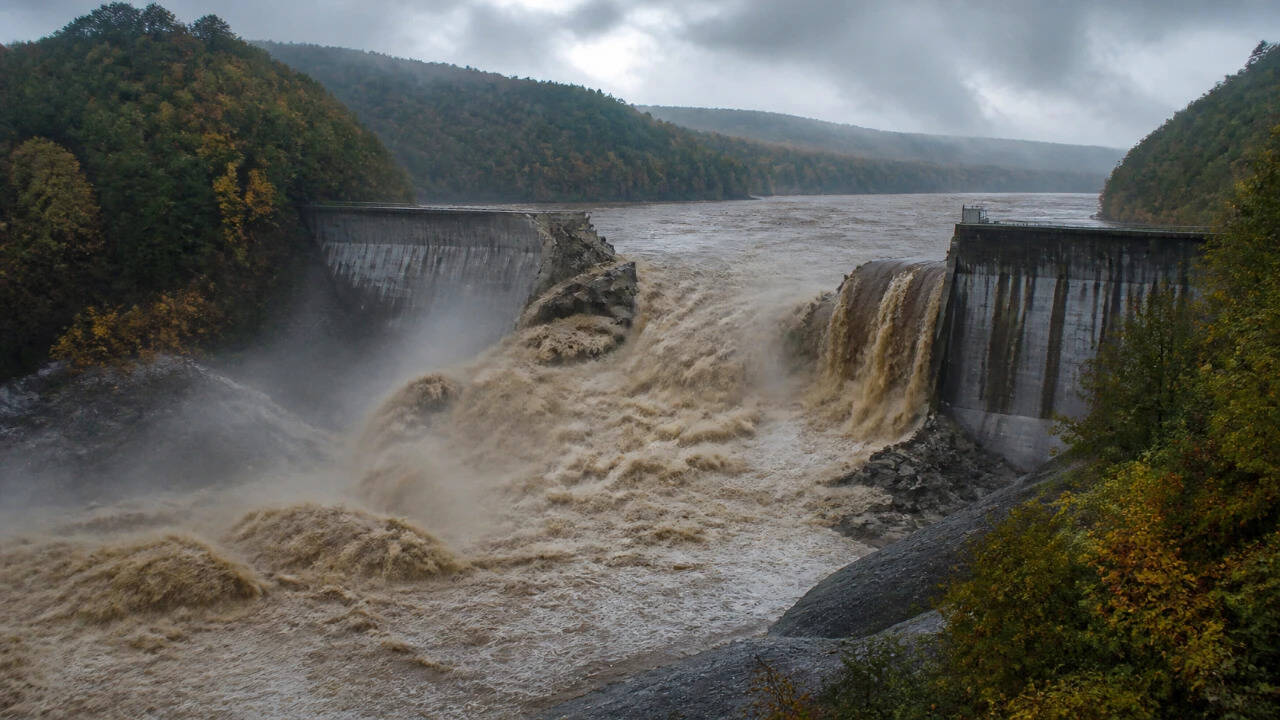
AI representation of the demolition of Columbia Dam (Canva Ai)
Built in the early 1900s by the Paulins Kill Consolidated Ice and Power Company, the dam created a pond that could supply water for the ice industry and generate energy for nearby communities, including Columbia in New Jersey and Stroudsburg in Pennsylvania. Over time, however, the structure became an obstacle for migratory fish that need to travel upstream to their breeding grounds to reproduce.Dams are well known to alter the natural flow of a river, affect water temperature and oxygen levels, interfere with sediment movement and prevent aquatic species from reaching suitable habitats. For fish that migrate between freshwater rivers and the sea, these barriers can be particularly challenging because reaching upstream areas may be essential for reproduction or access to suitable feeding grounds. As a result, the Columbia Dam was considered a priority for removal because of its location near the Paulins Kill’s confluence with the Delaware River, a historically important route for migratory fish.
The upstream flow of the lost fish
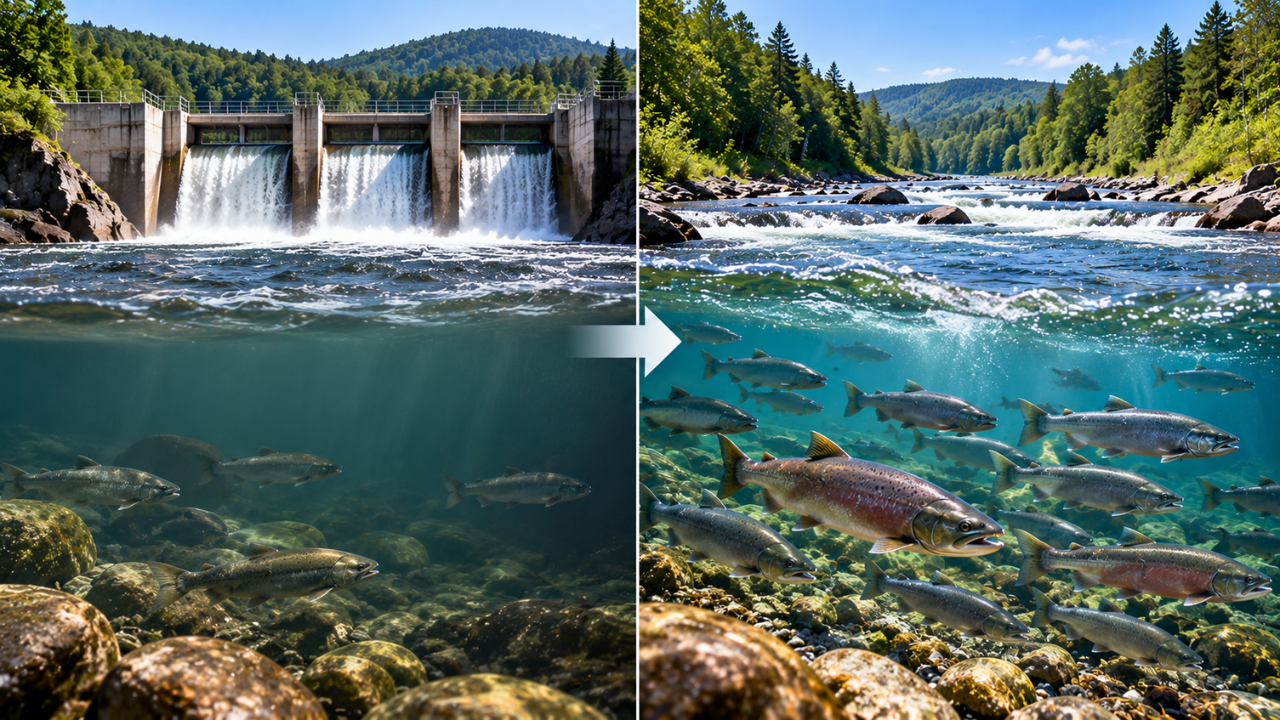
Image AI generated
The health of fish populations within a river system, particularly migratory species, is a common indicator of river health. After the dam’s removal in 2019, the 2026 study documented encouraging signs among several migratory species that had previously faced a barrier at the dam.Researchers recorded higher densities of juvenile American eels upstream of the former dam site, along with adult sea lampreys and their larvae. These findings suggest that migratory fish are once again accessing parts of the river that were previously difficult to reach.American eels have a particularly interesting journey, as they hatch in the Atlantic Ocean before their young travel towards freshwater rivers and streams, where they can spend years growing. The presence of juvenile eels upstream is therefore an encouraging sign that they can now reach habitats that were previously difficult to access because of the dam.Along with eels, sea lampreys also migrate through river systems, and their reproduction involves building nests in riverbeds where they lay their eggs. The study’s findings of adults, larvae and nests upstream suggest that the restored river reach is being used for more than simply passage through the area.American shad, meanwhile, are migratory fish that travel from the ocean into freshwater rivers to reproduce. The presence of adult shad upstream adds to the evidence that removing the dam has helped reconnect habitats that were previously difficult for migratory fish to reach.
Did removing the dam improve water quality?
Fish returning to a river is one thing, but does removing an old dam also make the water healthier? To find out, scientists looked beyond the fish and studied how the river itself was changing after the Columbia Dam came down in 2019.The scientists also monitored water temperature, dissolved oxygen, turbidity and aquatic invertebrates at different points along the river. This allowed them to examine whether removing the dam had changed the physical conditions of the water, as well as the organisms living in it.The changes were small but measurable. Relative water temperature fell by around 0.29 degrees Celsius, while dissolved oxygen rose by 0.14 milligrams per litre. Dissolved oxygen is particularly important because fish and other aquatic organisms need it to survive, while water temperature can influence the species that are able to thrive in a river.However, these signs do not mean that the river has returned completely to its original state. Things can be destroyed in seconds but take years to rebuild. These results, though, offer encouraging signs of how the river has responded to being allowed to flow more freely.
What the river’s recovery tells us about dam removal
As said, removing a dam does not instantly restore a river to the way it was before, but it certainly gives a struggling ecosystem a chance to come back to life. When a barrier is taken away, migratory fish can reach stretches of water that were previously inaccessible, while the river’s natural flow and the habitats around it can begin to change. The Columbia Dam’s removal shows how even a single intervention can begin to reconnect an ecosystem that had been cut off for decades. The return of migratory fish and the changes observed in water conditions are encouraging signs, even if the river’s complete recovery will take much longer. Sometimes, allowing nature to follow its own course is the first step towards restoring what years of human intervention had disrupted.