


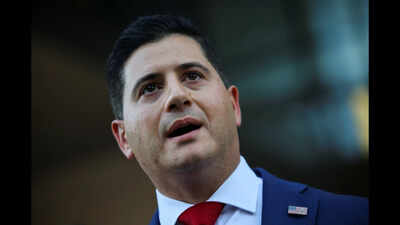
A federal judge has ruled that Bill Essayli has been serving unlawfully as Los Angeles’ top federal prosecutor. The ruling represents a legal setback for the Justice Department’s effort to preserve Essayli’s authority, but it does not immediately remove Essayli from his position. Senior U.S. District Judge J. Michael Seabright instead temporarily delayed the practical effect of his ruling, giving federal prosecutors five business days to ask for a stay while they pursue an appeal. The ruling was reported by the Los Angeles Times, The Guardian and CBS News Los Angeles, all of which describe a court order that challenges the legal arrangement used to keep Essayli in charge of one of the nation’s largest federal judicial districts.The dispute centers on Essayli’s authority to lead the U.S. Attorney’s Office for the Central District of California, which covers Los Angeles and six other counties. Judge Seabright concluded that Essayli is unlawfully serving as a “de facto” United States attorney, even though his official title is first assistant U.S. attorney. In practical terms, the judge found that the Justice Department gave Essayli powers so broad that he effectively occupied the top job without holding it lawfully. “In sum, Essayli is unlawfully serving as a ‘de facto’ United States Attorney,” Seabright wrote, according to the Los Angeles Times.The ruling does not mean Essayli has been removed from office today. Judge Seabright ordered that Essayli be disqualified from participating in or supervising two criminal prosecutions, including overseeing the lawyers working on those matters. However, the judge paused that disqualification while the government prepares its expected request for a stay pending appeal. CBS News reported that the government has five business days to file that request, and that the disqualifications would take effect one week later if the request is denied, unless a higher court intervenes.
What the ruling means
The two cases affected involve Jaime Hector Ramirez, who is charged with being a felon in possession of a firearm and ammunition, and Tu Anh Tran, who is charged with possessing property stolen from interstate or foreign shipment. Judge Seabright barred Essayli from taking part in or supervising those prosecutions. That means he cannot direct the attorneys handling the cases or otherwise exercise authority over them while the disqualification remains in place. The Los Angeles Times and CBS News both reported that the judge rejected requests to dismiss the indictments against Ramirez and Tran.That distinction matters. The judge found a problem with Essayli’s authority, but he did not conclude that the underlying criminal cases must collapse. Seabright said the defendants had not shown the substantial prejudice needed to justify dismissing the indictments. In other words, the ruling removes Essayli from a supervisory role in two prosecutions, but it leaves the charges themselves intact for now.Essayli responded to the decision by saying that his office respectfully disagreed with the order. He argued that the president and attorney general have the right to choose supervisors within the Justice Department. “Ultimately, this question will be decided by the Supreme Court, and I look forward to serving in my current role until then,” Essayli said, according to CBS News. His comments make clear that the administration views the issue as far from settled and expects it to move toward the nation’s highest court.
Why the appointment is contested
The legal fight began after Essayli was sworn in as interim U.S. attorney for the Central District of California in April 2025. When he approached the 120-day limit for serving in that temporary role, he resigned and was then appointed by Attorney General Pam Bondi as a special attorney and first assistant U.S. attorney. The Justice Department used that arrangement to allow him to continue leading the office as acting U.S. attorney. The Los Angeles Times reported that Judge Seabright rejected a similar maneuver last year, though he initially allowed Essayli to keep supervising prosecutions in his other roles.The Justice Department later revised Essayli’s delegation of authority, excluding certain powers that federal law reserves for a Senate-confirmed U.S. attorney. Government lawyers argued that this change placed Essayli’s authority on the permissible side of the legal line. Judge Seabright was not persuaded. He found that the revision made no meaningful difference because the withheld powers could not lawfully have been delegated to Essayli in the first place. “Withholding the three specific statutory powers mentioned in the revised designation order in reality withholds nothing,” the judge wrote, according to the Los Angeles Times.The ruling also follows a decision by the U.S. Court of Appeals for the 9th Circuit in a similar Nevada case involving prosecutor Sigal Chattah. That appeals court held that the Justice Department cannot keep an unconfirmed official in charge of a U.S. attorney’s office simply by changing the person’s title while giving them the full powers of the job. The Trump administration has asked the Supreme Court to review the Nevada decision, arguing that federal law permits the attorney general to delegate the powers of a vacant office and install a first assistant as its acting leader. The Supreme Court has not yet said whether it will hear the case.
A wider fight over prosecutors
The Los Angeles case is part of a broader national dispute over how the Trump administration has installed chosen prosecutors without Senate confirmation. The Los Angeles Times noted that former New Jersey prosecutor Alina Habba stepped down after an appeals court found her appointment unlawful. In Virginia, a judge’s finding that Lindsey Halligan was unlawfully appointed led to the dismissal of indictments against former FBI Director James Comey and New York Attorney General Letitia James. Those cases have made the question of temporary prosecutor appointments unusually consequential.For now, the immediate consequence in Los Angeles is narrow but consequential. Essayli remains in his role, but a federal judge has found that his authority to lead the office is legally flawed. If the government fails to obtain a stay, he will be barred from the Ramirez and Tran cases, although the office itself will continue operating. The Los Angeles Times reported that President Trump had still not nominated anyone to serve as U.S. attorney for the Central District of California as of Tuesday’s ruling.Defense lawyer H. Dean Steward, who filed a renewed challenge to Essayli’s authority in August, welcomed the ruling. He called it “a victory for the rule of law and the U.S. Constitution” and accused the Trump administration of ignoring the laws governing the appointment of U.S. attorneys. His comments, reported by the Los Angeles Times, reflect the view of critics who say the administration has used title changes and delegated authority to avoid the Senate confirmation process.The next step will determine whether the disqualification takes effect in the two cases, while the broader question of Essayli’s authority to lead the office remains contested. The Justice Department can ask Judge Seabright to stay the disqualification while it appeals, and the case may ultimately reach the Supreme Court alongside the related Nevada dispute. Until then, the ruling leaves unresolved whether a revised title and delegated authority can lawfully sustain Essayli’s leadership of the office. The Los Angeles Times, The Guardian and CBS News all frame the decision as part of an unresolved constitutional battle over who may lead federal prosecutor offices and under what legal authority.Note: This article is based on the court’s October 27, 2026 order. The government may still seek a stay, which could change how and when the ruling takes effect.