


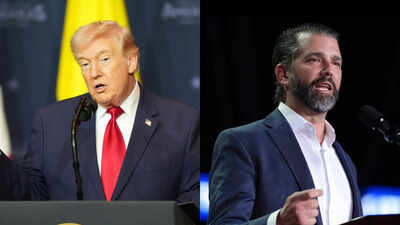
Donald Trump Jr, US President Donald Trump’s eldest son, privately opposed the war with Iran from its outset, reportedly believing Washington should stay out of another conflict in the Middle East.Trump Jr, who has long been sceptical of foreign military intervention, made his opposition known to his father, two people who spoke directly with him about the conflict told the Atlantic. He has not publicly broken with the president over the war.“Don has kept his views on the subject private, as he would never publicly break with his dad on an issue like this, but I can’t imagine anyone who knows Don would be surprised by his personal views on the subject,” a person close to Trump Jr told The Atlantic.Trump Jr’s reported opposition contrasts with the military campaign launched by his father alongside Israel against Tehran. During the 2024 presidential campaign, Trump Jr had backed his father’s promise to keep the US out of another Middle East war. “Remember when they said Trump would get us into a full-blown war with Iran?” he wrote on X in April 2024, as Iran launched a barrage of missiles and drones towards Israel.“Times like these should make us all realize how lucky we were to have Trump, his strength and his resolve,” he added.The Atlantic reported that Trump Jr’s opposition reflects his long-standing scepticism of foreign intervention. He was also particularly close to Charlie Kirk, the late conservative activist who had broken with the Trump administration to oppose the Iran war. “Don Jr. is the most MAGA of them all,” one of the people who discussed his opposition to the conflict told the publication.
MAGA divide over Iran war
The conflict has exposed divisions within the Make America Great Again (MAGA) movement over the meaning of Trump’s “America First” agenda. The divide pits non-interventionists, who believe foreign wars divert resources from domestic priorities, against hawks who argue that the US should use its military power more aggressively against adversaries.Trump Jr’s reported position is part of a broader debate within the president’s political base over whether the war runs counter to the promises that helped Trump win the 2024 election.Doubts about the conflict have also emerged within the administration. Vice President JD Vance had reportedly voiced private opposition in the past during deliberations over whether the US should join Israel’s military campaign. CIA Director John Ratcliffe and Secretary of State Marco Rubio were also sceptical of Israeli Prime Minister Benjamin Netanyahu’s initial proposal in February for a regime-change operation, particularly one conducted through air strikes, according to The Atlantic.Separately, Trump opposed a proposed Israeli offensive against Iran ahead of the November 3 US midterm elections, as his administration faces mounting economic and political pressure over the ongoing conflict, according to a Financial Times report.Three people familiar with the matter told the newspaper that the Israeli military had been ready to launch strikes on October 10 targeting Iranian nuclear facilities, regime-linked sites and civilian infrastructure, including energy plants.The proposed offensive was expected to be more intense than the US-Israeli strikes in February, with an expanded target list aimed at causing greater damage to Iran’s military and strategic infrastructure.The Financial Times reported that the White House had ruled out US attacks on Iran before the midterms, saying Washington’s blockade of Iranian ports and efforts to facilitate Gulf oil exports were succeeding.It remained unclear whether the proposed offensive would have involved direct US military participation or been conducted by Israel alone. One source suggested renewed strikes after the US and Israeli elections were possible, while another said the operation could have been intended to pressure Tehran during negotiations.
War puts pressure on Trump
The war has also taken a toll on Trump’s domestic standing as rising fuel prices and concerns over the cost of living weigh on voters.A Reuters/Ipsos poll published on October 20 put Trump’s approval rating at 31 per cent, a record low. The survey also found Democrats leading Republicans 47 per cent to 35 per cent among registered voters ahead of the November 3 midterm elections.A separate Pew Research Center survey cited by The Atlantic found that 65 per cent of Americans disapproved of Trump’s handling of the Iran operation, while 33 per cent approved. Republican approval fell from 69 per cent in March to 63 per cent, the report said.Nearly half of Americans expected the conflict to last more than a year, well beyond the administration’s initial estimate of four to six weeks.The economic fallout, including rising gasoline prices linked to energy-market disruptions, has added to pressure on household budgets. Republicans face the challenge of defending a costly conflict with an uncertain outcome while convincing voters that the administration remains focused on domestic priorities.Meanwhile, diplomatic efforts to resolve the standoff between Washington and Tehran remain uncertain, with disagreements over Iran’s nuclear programme, US sanctions and the blockade of Iranian ports complicating negotiations.