


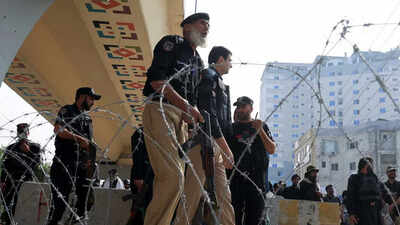
Pakistan’s imposition of emergency and governor’s rule in Khyber Pakhtunkhwa on October 11 has placed the province under direct federal control, effectively suspending the regional administration led by imprisoned former prime minister Imran Khan’s Pakistan Tehreek-e-Insaf (PTI).The move, which invokes Articles 232 and 234 of the Constitution, comes amid a worsening security situation and a crackdown on opposition leaders and protesters. It has also renewed questions over Pakistan’s decades-long policy of using militant groups for strategic gains, which critics say has fuelled the violence now threatening its own territory.The emergency has extended federal control across 12 districts in Khyber Pakhtunkhwa, further weakening elected authority in a province that has long borne the consequences of Pakistan’s security policies. The move follows years of political turmoil, including Khan’s imprisonment, constitutional amendments that have weakened judicial independence, and the removal of the PTI-led provincial government.The concentration of power in unelected authorities, alongside the military’s expanding role in civilian affairs, has raised concerns over the state of democracy in Pakistan, according to a report by news agency ANI.
Decades of militant policy and blowback
Pakistan’s security crisis has deep roots in its long-standing use of militant groups as instruments of state policy. For more than five decades, the country has pursued strategic depth through its relationship with armed groups, while distinguishing between factions considered useful and those viewed as threats.This approach has contributed to a cycle of violence that has increasingly turned inward. The state has repeatedly shifted its position towards militant organisations, including groups hostile to its own security forces. During former army chief General Qamar Javed Bajwa’s tenure, cadres of the Tehreek-e-Taliban Pakistan (TTP) were relocated to parts of the erstwhile Federally Administered Tribal Areas (FATA) and Khyber Pakhtunkhwa.The consequences have proved difficult to contain. Pakistan’s struggle with militancy has exposed the risks of treating armed groups as strategic assets while assuming their violence can be directed towards selected targets.Former US secretary of state Hillary Clinton captured this danger in a widely cited remark: “one cannot rear snakes in a backyard and expect them to bite only neighbours, as they will eventually turn on their keepers”.Rather than confronting the broader implications of this policy, Pakistan has continued to differentiate between militant factions it considers acceptable and those it seeks to eliminate. The resulting security failures have placed civilians, particularly in the tribal areas, at the centre of a prolonged conflict.
Emergency rule and the erosion of elected authority
The imposition of emergency rule marks another stage in the concentration of power within Pakistan’s security establishment. The federal intervention has effectively displaced the PTI-led provincial administration, depriving the opposition of its remaining provincial government.The move follows Khan’s incarceration and constitutional changes that have curtailed judicial independence and shielded military leadership from accountability. Critics argue that these developments have weakened the institutions meant to limit executive and military power.The emergency has also raised concerns about the separation of powers. In the affected districts, the constitutional distinction between judicial and executive authority has reportedly been set aside, concentrating control in unelected hands.Instead of addressing the failures behind the province’s deteriorating security situation, authorities have expanded federal and military involvement in civilian administration. The move has intensified concerns that emergency powers are being used not only to manage the security crisis but also to consolidate political control.
Opposition crackdown deepens rights concerns
The intervention has been accompanied by a wider crackdown on the opposition. Leaders and legislators have been detained, residences raided and political demonstrations suppressed. Protesters have faced police firing, tear gas and mass arrests.The treatment of political opponents has fuelled concerns that dissent is increasingly being treated as a security threat. The use of force against protesters has also raised questions about the government’s claim that extraordinary measures are needed to restore law and order.The crackdown comes amid concerns over restrictions on reporting from Khyber Pakhtunkhwa, following earlier developments in Khyber before a blanket media ban was imposed on events in the province. Such restrictions risk limiting public scrutiny of security operations and their impact on civilians.The growing concentration of authority has therefore created a parallel crisis. While the state faces a persistent militant threat, its response has further narrowed the space for political opposition and public dissent.
Tribal communities face renewed uncertainty
The latest intervention has also placed additional pressure on communities that have endured years of displacement and insecurity. Past military operations, including Zarb-e-Azb and Radd-ul-Fasad, remain associated with civilian hardship and human rights concerns.Thousands of displaced families are still awaiting return and rehabilitation. For these communities, the emergency raises fears of another period of disruption, particularly as the authorities expand their control and military involvement in civilian affairs.The consequences of Pakistan’s security policies have thus extended beyond the fight against armed groups. Tribal populations have faced displacement, civilian casualties and prolonged instability, while the failure to resolve the underlying conflict has left many vulnerable to further intervention.The emergency in Khyber Pakhtunkhwa brings these tensions into sharper focus. A state that has long relied on militant groups to pursue strategic objectives now faces the consequences of violence within its own borders. Its response, however, has centred on expanding federal control, weakening elected authority and restricting opposition activity.Rather than resolving the crisis, the latest measures risk deepening the divide between the state and the communities it claims to protect. The removal of an elected provincial government, the concentration of power in unelected institutions and the crackdown on dissent point to a broader struggle over Pakistan’s democratic future, even as the country confronts the long-term fallout of its militant policies.