


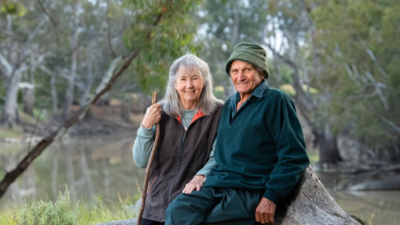
At an age when many people settle into a quieter retirement, Ken Hooper, 85, is still reaching for his chainsaw, clearing invasive vegetation and protecting native wildlife alongside his 82-year-old wife, Jill. For more than two decades, the couple have devoted their time to restoring damaged Australian bushland, demonstrating how conservation can become a lifelong commitment rather than a project confined to working years. Their work on Moona-Bingel, a property near Deniliquin in New South Wales, forms part of a wider movement of older Australians turning retirement into an opportunity to repair the natural environment. As reported by The Guardian in its October 10, 2026, feature, with conservation initiatives supported by Landcare Australia and Australia’s broader community landcare network, the Hoopers’ efforts reflect a growing interest in protecting habitats, reviving native vegetation and safeguarding biodiversity for future generations.
How retirement became a conservation mission
Ken and Jill’s journey into conservation began long before their retirement. In 1992, the couple purchased Wirra-Lo, a 180-hectare property in northern Victoria as part of their dairy farming operation. Rather than allowing the land to remain vulnerable to further environmental damage, they eventually placed it under a conservation covenant and began restoring its natural habitats.Their ambitions, however, extended beyond a single property. The couple later acquired Moona-Bingel in New South Wales, where they committed themselves to rehabilitating a much larger landscape. The conservation agreement covering the 970-hectare property has helped protect the land while the couple work to improve its ecological condition. For a time, they managed both properties, with Ken making frequent journeys between them. In 2023, they sold Wirra-Lo to the Wetland Revival Trust, allowing them to focus their efforts on Moona-Bingel. The work has continued for more than 20 years, involving the removal of invasive weeds, control of feral animals, revegetation and efforts to manage flooding. The scale of the task remains considerable, but the couple’s commitment has not diminished with age.
Native wildlife is slowly returning
The transformation at Moona-Bingel is becoming visible in the landscape itself. What was once heavily modified agricultural land is developing into a more diverse habitat, with river red gum wetlands, grey box grassy woodlands and sandhill pine woodlands among the ecosystems the couple are working to restore.Their efforts extend beyond planting trees. Managing water supplies to wetlands, controlling invasive species and protecting young vegetation are all essential to helping native habitats recover. Red deer remain a persistent challenge because they can destroy carefully nurtured saplings before they mature.Yet the signs of progress keep appearing. The couple have observed new birdlife, breeding carpet pythons and native plants returning naturally. Their work is also helping protect the ecological character of the Edward River landscape.The NSW Biodiversity Conservation Trust, which supports conservation agreements with private landholders, highlighted the Hoopers’ work in a 2024 account of their restoration efforts. The agreement covering 970 hectares was signed in 2018, providing long-term protection for the property and helping ensure that the restored land will not simply return to intensive agricultural use.
Why more Australians are turning to conservation after retirement
The Hoopers are part of a broader movement of older Australians finding purpose in environmental work. Landcare Australia’s 2026 national survey found that 80% of respondents were aged 55 or older, underlining the significant contribution of older people to community-led conservation.For many, retirement offers something that working life rarely allows: the time to commit to a long-term project whose results may take years to emerge. Conservation also provides a practical way to respond to environmental concerns, from declining biodiversity to damaged waterways and disappearing habitats.The work can be physically demanding, particularly for people managing large properties. Ken continues to use a chainsaw despite osteoarthritis and having undergone two knee replacements, while Jill keeps track of the changes taking place across the land. Their different approaches help them tackle both the demanding physical work and the close observation needed to monitor ecological recovery.
A legacy that will outlast them
For the Hoopers, restoring the land is not a task with a neat finishing date. Native forests take years to mature, wetlands require continued attention, and invasive species can undo progress if left unchecked. Protecting the property through a conservation agreement is therefore as important as the work already completed.Their experience also offers a reminder that environmental restoration does not always require grand technological solutions or large institutions acting alone. It can begin with people willing to take responsibility for a piece of damaged land and remain committed long enough to see it change.After more than two decades, Ken and Jill are still looking ahead rather than slowing down. The returning wildlife and recovering vegetation provide evidence that their efforts are making a difference, even as much remains to be done. At Moona-Bingel, retirement has become an ongoing investment in the future, one that may benefit native species and generations of Australians long after the couple can no longer undertake the work themselves.