



The Union Cabinet’s approval of a Rs 10,000-crore SME Growth Fund has opened a new route to equity financing for growth-oriented small and medium enterprises (SMEs), with manufacturing businesses set to receive the bulk of investments.But for business owners, the key questions are whether their enterprises qualify, how they can access the capital and what conditions will govern the investments. Unlike a bank loan or government grant, equity financing involves giving investors an ownership stake or other equity rights in a business.The Cabinet approved the government’s commitment of Rs 10,000 crore towards establishing the SME Growth Fund on October 6, following its announcement in the Union Budget 2026-27 on February 1.According to the finance ministry’s Cabinet release, the fund is intended to provide direct equity investments to enterprises with demonstrated business viability and the potential to scale up.


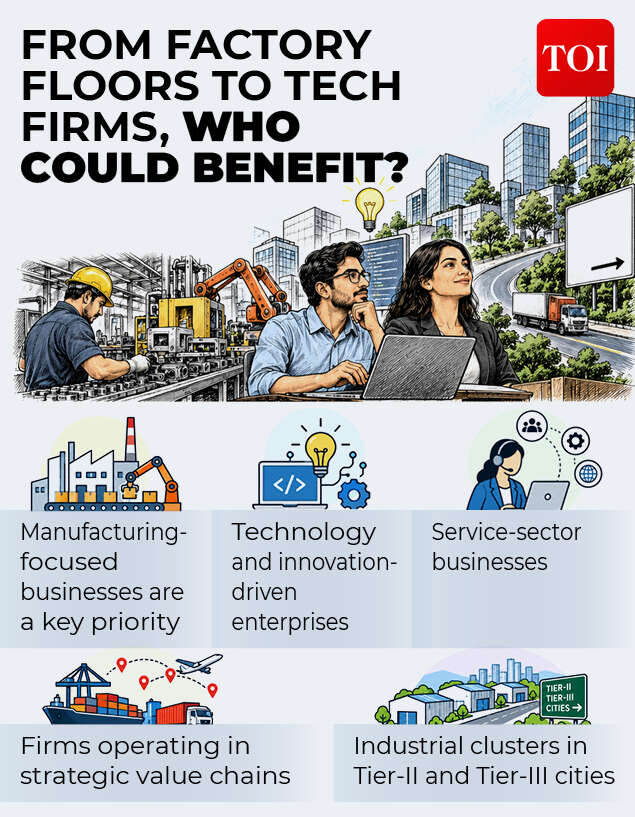
The government says the initiative is intended to address a gap in growth capital for SMEs. Existing equity-support mechanisms have largely focused on early-stage businesses and micro enterprises, leaving some established companies struggling to secure the long-term capital required for expansion, technology adoption and entry into international markets.Finance minister Nirmala Sitharaman announced the proposal in her Budget speech, saying, “I propose to introduce a dedicated ₹10,000 crore SME Growth Fund, to create future Champions, incentivizing enterprises based on select criteria.”The announcement made growth capital a central part of the government’s push to help promising enterprises expand.What is the SME Growth Fund?The fund is designed to provide what the government describes as patient equity capital to high-potential SMEs. According to the official PIB factsheet issued on October 6, the investment vehicle will support enterprises across manufacturing, services, technology, innovation-driven sectors and strategic value chains.A major share of the fund’s allocations will go to manufacturing-focused SMEs. Businesses operating in industrial clusters in Tier-II and Tier-III cities will also be considered, according to the Cabinet announcement. The government expects the investment to help businesses expand their operations, improve productivity and become more competitive.

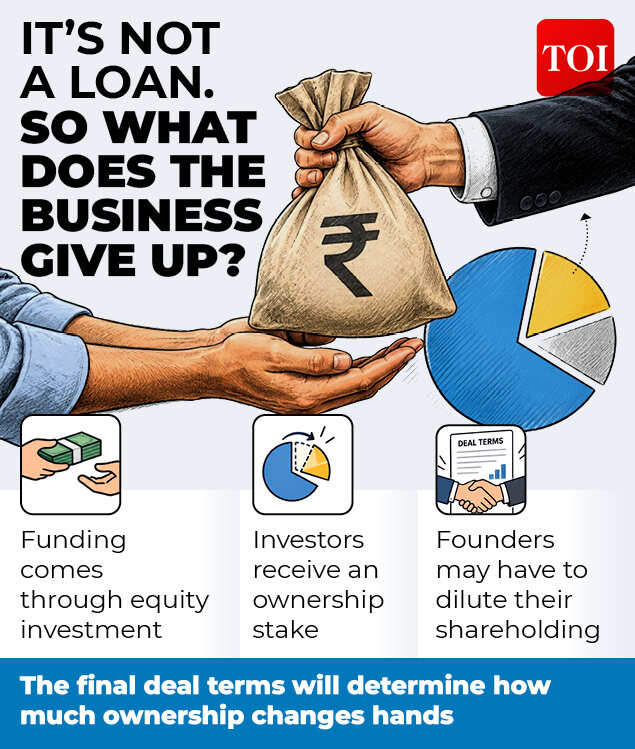
The fund will operate through an Alternative Investment Fund (AIF). In practical terms, this means the government’s commitment will be channelled through an investment vehicle that makes equity investments in selected companies, rather than being distributed as a fixed cash grant to every eligible business.This distinction matters because equity financing is different from a conventional business loan. A loan generally requires repayment of the principal and interest under agreed terms, whereas equity investment involves an ownership interest or other agreed equity rights in a business.Equity can help companies finance expansion without the same scheduled debt repayments, but it may also dilute existing ownership and involve investor rights.For instance, if a company receives Rs 2 crore in exchange for a 10% ownership stake, it gains capital without taking a conventional loan, but its existing owners give up part of their ownership. This is only an illustration, not a confirmed investment structure under the fund.The Cabinet announcement does not specify the final commercial terms for individual investments. Valuation, ownership stakes and exit arrangements will therefore need to be established through the fund’s operational framework.

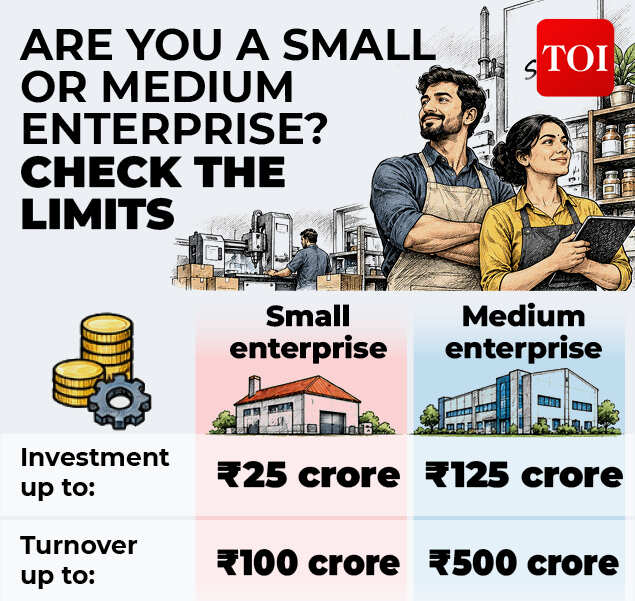
Who can benefit from the fund?The revised MSME classification, effective April 1, 2025, provides the starting point for understanding which businesses fall into the small and medium categories.According to the MSME ministry’s official classification, a small enterprise has investment in plant and machinery or equipment of up to Rs 25 crore and annual turnover of up to Rs 100 crore. A medium enterprise has investment of up to Rs 125 crore and annual turnover of up to Rs 500 crore. Both limits apply together.However, falling within these thresholds does not automatically qualify a business for investment from the SME Growth Fund. The government has described the intended beneficiaries as enterprises with demonstrated viability and scalability, and the Budget refers to incentivising businesses based on selected criteria.Manufacturing businesses are the clearest priority group. A company seeking to expand production capacity, modernise machinery or develop new manufacturing capabilities could fit the stated objectives.Technology-led enterprises, businesses developing innovative products and firms seeking to enter export markets may also fall within the fund’s broad scope. These are examples of businesses that align with the stated objectives, not guaranteed beneficiary categories.The government has additionally identified enterprises in industrial clusters in Tier-II and Tier-III cities for consideration. This could broaden the geographical reach of growth capital, although the Cabinet announcement does not establish a fixed allocation for particular cities or regions.The distinction between classification and selection is important. The MSME thresholds establish whether a business falls within the small or medium category; they do not establish that the business will receive investment. The final selection criteria will determine which enterprises are chosen.

Why does growth-stage equity matter?The fund is aimed at businesses that have moved beyond the earliest stages of development but need substantial capital to expand. While bank loans remain important for working capital and investment, additional debt may not always be the most suitable way to finance long-term expansion.The Confederation of Indian Industry (CII) welcomed the Cabinet decision in a statement issued on October 8. The industry body said the fund could support enterprises across manufacturing, technology, innovation-driven sectors and strategic value chains.The statement also described the initiative as having the potential to create India’s own “Mittelstand of globally competitive manufacturing enterprises”.The reference to the Mittelstand, Germany’s network of competitive small and medium-sized businesses, reflects the ambition to help Indian enterprises grow into globally competitive companies rather than remain small suppliers.The economic rationale is that companies seeking to expand production, enter new markets or adopt advanced technology may require capital before those investments generate returns. Equity can provide risk capital without the same scheduled principal repayments associated with conventional borrowing, although its suitability depends on a company’s prospects and the commercial terms offered.The government’s broader policy rationale is also reflected in the Economic Survey 2025-26, which examines MSMEs’ contribution to manufacturing, exports and employment. The government’s SME Growth Fund factsheet cites the Survey’s estimate that MSMEs account for 31.1% of GDP, 35.4% of manufacturing output and 48.58% of exports.These figures underline the sector’s economic importance, but the new fund targets a narrower group of growth-oriented small and medium enterprises. Its impact will depend on whether it reaches businesses with credible expansion plans and whether investments translate into higher productivity, greater manufacturing capacity and stronger export competitiveness.

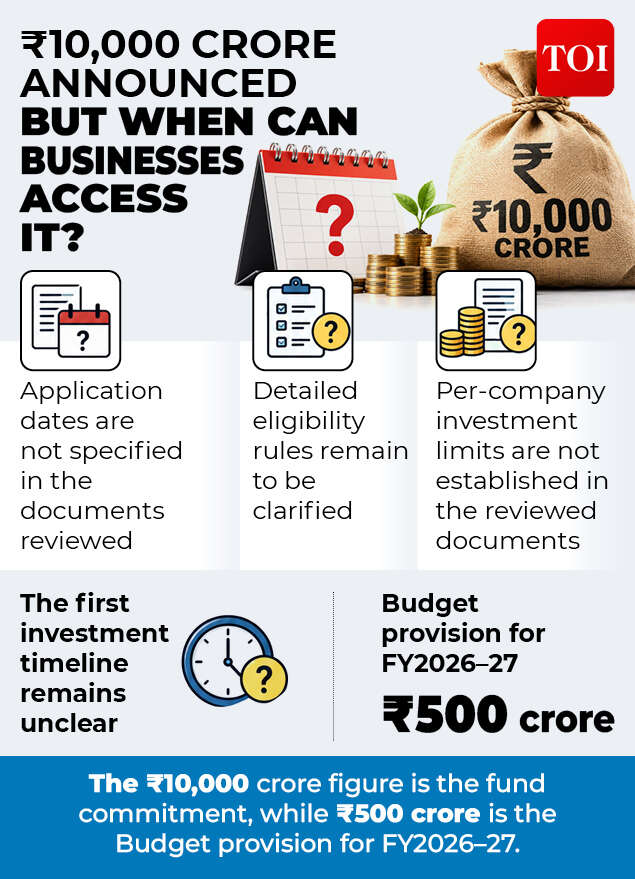
How can businesses access the money, and what remains unclear?The government has announced the broad investment structure, but the practical route for companies seeking funding is yet to be fully detailed.The finance ministry’s Cabinet release confirms that the government will commit Rs 10,000 crore towards establishing the SME Growth Fund for direct equity investments. The PIB factsheet explains the intended beneficiaries and broad investment framework.However, the official documents reviewed do not provide a complete public application procedure, a confirmed date for applications to open or minimum and maximum investment amounts for individual companies.For prospective beneficiaries, the questions are straightforward: Will companies apply directly or approach an investment manager? What financial records and business plans will be required? How will investment proposals be evaluated, and what commercial terms will apply?The identity and role of the implementing and investment-management authorities also need to be established through official notices.Until the implementing authority publishes or confirms these details, businesses should not assume that meeting the MSME classification criteria is sufficient to secure investment. Nor should the fund be treated as a grant that can be claimed automatically.A business seeking equity investment generally needs to demonstrate a credible growth strategy, financial viability and the ability to use the capital productively. These are common considerations in equity financing, but the fund’s specific requirements must be confirmed through its formal framework rather than assumed.Another issue is the relationship between the fund’s aggregate commitment and its annual Budget provision. The Union Budget’s Notes on Demands for Grants for 2026-27 lists Rs 500 crore for the SME Growth Fund in the Budget Estimates, while the Cabinet has approved an aggregate commitment of Rs 10,000 crore.The two figures represent different funding measures and should not be treated as contradictory. The Budget provision is for a particular financial year, whereas the Cabinet announcement refers to the aggregate commitment. The documents cited do not establish the complete contribution schedule or when the first investments will reach businesses.The distinction between growth equity and broader MSME credit support is also important. The government announced the SME Growth Fund alongside other measures in the Union Budget 2026-27, including an additional Rs 2,000 crore for the Self-Reliant India Fund to continue risk-capital support for micro enterprises. These are separate initiatives with different intended roles.The broader policy challenge is whether equity investment can help established firms overcome the capital constraints that prevent them from expanding. The fund could help selected companies scale up, but it is not designed to meet the financing needs of every small business.For business owners, the immediate takeaway is that the Rs 10,000-crore commitment signals a dedicated push towards growth equity, particularly for manufacturing-focused SMEs. But the amount committed to the fund is not the same as money already invested in companies.The fund’s success will ultimately be measured not by its headline size alone, but by whether it helps promising enterprises expand capacity, adopt technology, improve productivity and become more competitive. For now, the immediate question is when the investment process will begin and which businesses will be able to access it.