


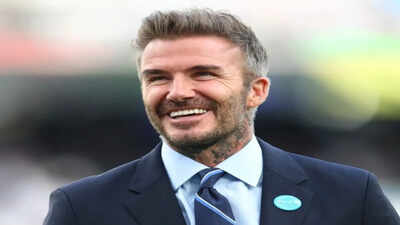
When David Beckham launched 7: The David Beckham UNICEF Fund in February 2015, he set out to help protect vulnerable children and give them a better chance of reaching their potential. The initiative went on to support work addressing violence, bullying, child marriage and barriers to education, particularly among girls. Its projects in Nepal, Indonesia, Uganda and El Salvador worked with schools, families, communities and governments to strengthen child protection and improve access to education. UNICEF UK’s 2024 annual report described that year as the final year for the fund’s then-current projects. The programme’s reported results offer a picture of what the initiative achieved, while also raising an important question: whether the systems and services strengthened through the projects can sustain those gains after the funded work ends.
David Beckham’s 7 Fund for UNICEF: how the initiative developed
UNICEF and Beckham announced the fund on 9 February 2015. It was designed to raise money and awareness for children facing violence, abuse, disease and barriers to education, with particular attention to those most at risk. The initiative was named after Beckham’s familiar shirt number and formed part of his commitment to use his public profile to support UNICEF’s work. UNICEF announced support for work in Nepal, Indonesia, Uganda and El Salvador in 2018, although its 2024 annual report describes the current four-country programme as having operated since 2019. El Salvador had also featured in the fund’s original 2015 launch. Beckham visited Indonesia in 2018 to meet children and learn about bullying and violence affecting their education.They addressed different problems according to local needs, from child marriage and school exclusion in Nepal to bullying in Indonesia and violence affecting children in Uganda and El Salvador. Rather than focusing only on immediate assistance, the programmes worked with schools, families and community organisations to strengthen protection systems and help children remain in or return to education. The distinction between the fund’s launch and its later projects matters when assessing its record. UNICEF UK’s 2024 annual report said the four-country projects had reached their final year and reported that the fund had supported 406,400 children. That milestone does not mean the wider fund or Beckham’s relationship with UNICEF ended in 2024. It means the specific programme described in those four countries had reached the end of its planned project period.
Nepal and Uganda: supporting girls’ education and preventing violence
In Nepal, the fund supported programmes in Madhesh Province, where child marriage and barriers to education can prevent girls from continuing their studies. According to UNICEF UK’s annual report, 21,723 girls who were out of school completed the Supporting Adolescent Girls’ Education programme. The nine-month initiative provided literacy and numeracy instruction to help participants enrol in formal schooling and continue their education. The report also said more than 50,000 children and adolescents received information and support relating to mental health and the harmful effects of child marriage. The fund also supported Rupantaran, a life skills programme intended to help adolescents build confidence and make informed decisions. One participant, Antima, was profiled by UNICEF as a girl from a large family who had left school because her family could not afford to keep her enrolled. She began selling snacks and now earns about NPR 700 a day, helping support her family and pay for her younger siblings’ education, according to the 7 Fund’s account. Her story illustrates the financial pressures that can contribute to school exclusion, although an individual account cannot establish how typical such outcomes are.The 7 Fund’s Uganda project page reports that more than 25,000 adolescents in Adjumani District participated in life skills sessions, although its headline gives a lower overall figure of more than 23,000 children reached through life skills programmes. More than 10,400 parents and caregivers received information about violence prevention and harmful practices that can affect school attendance and completion. The programme also supported teacher training and systems for tracking and reporting violence in schools. UNICEF has profiled young people who used life skills clubs as a route back into education and towards careers they hoped to pursue. Christine Manuela, for example, was reported to have begun nursing and midwifery training at Kuluva Hospital in Arua District after participating in a Girls Education Club supported by the fund.
Indonesia and El Salvador: tackling bullying and creating safer spaces
In Indonesia, the fund supported efforts to address bullying and peer violence, which can make school an unsafe environment and disrupt children’s education. Beckham visited the country in March 2018, meeting children involved in anti-bullying initiatives. UNICEF reported that the programme encouraged students to speak up when they experienced or witnessed violence and to help create safer learning environments. The 7 Fund’s project account says more than 147,500 adolescents in Indonesia participated in polls about bullying and mental health. These consultations gave young people an opportunity to express their views on issues affecting them. The programme also sought to involve schools and local authorities in improving children’s safety. Such participation figures measure engagement with the initiative; they do not, by themselves, establish how much bullying declined or how many children stayed in school as a direct result.In El Salvador, the programme focused on child protection and safe places for children to learn, play and take part in community activities. It worked in municipalities including San Marcos and San Martín, supporting child protection services and efforts to make public spaces more suitable for children. The 7 Fund’s project page reports that more than 1,600 child protection workers and community leaders received training and that more than 28,500 children took part in sports and recreational activities in safer community spaces. UNICEF UK’s 2024 annual report gives a different figure for recreational activities, reporting more than 27,300 children, and says 41,351 children and adolescents benefited from the programme overall. These figures refer to different reported measures and should not be treated as interchangeable. The approach recognised that children’s safety depends on more than what happens in classrooms. Access to trusted adults, community services and safe places to spend time can also matter, particularly in areas affected by violence and social disadvantage. However, the number of people trained or children using these spaces should be understood as programme reach, rather than proof on its own that violence has fallen across the communities involved.