


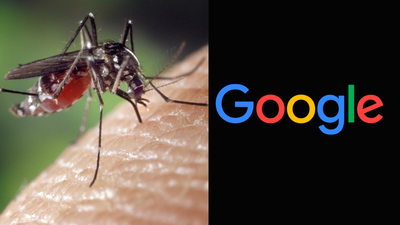
A Google-backed mosquito control project in Australia successfully released around three million specially bred male mosquitoes and reduced populations of an invasive disease-carrying species by as much as 95%, according to a report by The Conversation. The findings are drawing renewed attention as Alphabet’s Debug initiative seeks approval to release up to 32 million sterilised male mosquitoes in California and Florida to combat mosquito-borne diseases.Nigel Beebe, a professor at the University of Queensland, wrote in The Conversation that the trial showed releasing specially bred male mosquitoes can dramatically suppress populations of Aedes aegypti, an invasive species that spreads dengue, Zika, chikungunya and yellow fever.
How the Australian trial of Google’s life sciences division worked
The work began in 2015, when Beebe’s team traveled to Silicon Valley to meet scientists at Verily, Google’s life sciences division. Their goals matched a government-funded Australian research project on environmentally friendly ways to suppress invasive mosquitoes.The method relies on Wolbachia, a bacterium found naturally in many insects. Certain strains make mating incompatible, so the eggs do not develop. Because female Aedes aegypti generally mate only once, a single incompatible mating leaves them with no viable offspring. Beebe said the theory is that releasing enough Wolbachia-carrying males will make the population decline over time, and that the males’ large, bushy antennae help them find the last remaining females.Far north Queensland’s Cassowary Coast offered favorable conditions. Its towns have abundant Aedes aegypti, while surrounding farmland limits movement between communities. Before any release, the team spent two years on field surveys and community engagement, meeting households, community groups, First Nations leaders and councils. The project, called “Debug Innisfail,” then received approval from multiple regulators.During a 20-week release in 2018, about three million Wolbachia-carrying males were released into three towns, while control towns were monitored without releases. Verily built custom technology, including machine-learning-based systems to separate males from females so that only males were released.Verily contributed specialised engineering tools, including machine learning systems capable of separating male and female mosquitoes, ensuring only non-biting males were released.The results were significant. According to findings published in 2021, mosquito populations started declining within four weeks of the releases. In two towns, suppression effects persisted into the following year. One location recorded only a handful of Aedes aegypti mosquitoes 12 months later, representing roughly 95% population suppression.
Results of Google’s mosquito trial
Mosquito populations in the release towns began falling within four weeks, compared with the control towns. The findings were published in 2021. In two towns, the suppression lasted into the following year. In one, monitoring found only a handful of Aedes aegypti 12 months later, which Beebe said corresponds to roughly 95% suppression.Beebe’s takeaways for the USBeebe argued the Australian experience speaks to several American worries:* Ecology: The ecological impact is likely to be very small. Aedes aegypti is invasive in Australia and elsewhere, lives exclusively around people and bites mainly humans, so removing it from cities has few ecological consequences.* Scale: The approach can work across whole towns. Adult mosquitoes live only days, but continuous releases of highly competitive males can substantially reduce populations.* Durability: Benefits can carry over into later seasons after releases stop.He cautioned that success depends on local ecology, mosquito movement patterns and community participation, and said the technology alone is not enough. He also said researchers are still working toward better ways to separate male mosquitoes mechanically, which would be more useful in developing countries.
What the US is considering
Google’s Debug initiative, now part of Alphabet, has asked the federal government for permission to release up to 32 million sterilized male mosquitoes in California and Florida. Beebe said the plan involves releasing more than 16 million insects a year for two years.Male mosquitoes do not bite or carry disease. The hope is that they will mate with disease-carrying females, whose eggs then fail to hatch, and that mosquito numbers will fall. Beebe said the American public has questions about whether the releases are safe, whether they will work at scale and what happens afterward.