


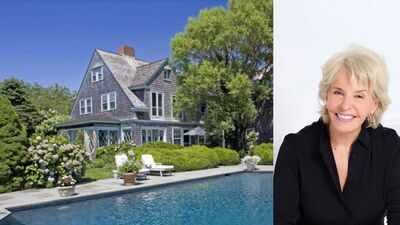
In 1979, Washington Post journalist Sally Quinn and executive editor Ben Bradlee bought the infamous Grey Gardens estate in East Hampton for $220,000, rescuing a decaying 1897 mansion that had become a symbol of bohemian decline. After restoring the 6,000-square-foot home and using it as a summer residence for decades, the property changed hands again in late 2017, selling for $15.5 million to an undisclosed buyer. The sale, first reported by The Real Deal, marked the latest chapter in the storied history of a house made famous by a 1975 documentary and later by an HBO film and Broadway musical.
From Gilded Age estate to cinematic icon
Grey Gardens was built in 1897 on Georgica Pond in East Hampton, a 12-room mansion set on 1.7 acres of land. The property became widely known not for its architecture but for its most famous residents, Edith Bouvier Beale and her daughter Edith Beale, known as Big Edie and Little Edie. The two women, relatives of Jacqueline Kennedy Onassis, lived in increasingly impoverished and eccentric conditions as the house fell into disrepair. The estate gained cultural importance after filmmakers Albert and David Maysles released a documentary in 1975 called Gray Gardens, which captured the Beales’ unusual lifestyle amid the overgrown gardens and crumbling interiors. The film turned it into a cultural landmark and inspired later adaptations, including an HBO special and a Broadway musical. By the time Quinn and Bradlee bought the property in 1979, it had become a symbol of both Gilded Age grandeur and countercultural decay, the report said.A rescue mission by two media powerhouses Sally Quinn and Ben Bradlee were already prominent figures in American journalism when they bought Gray Gardens. Under the leadership of Bradlee, who led The Washington Post during the Watergate years, and Quinn, a prominent writer and television personality, the possibilities in the long-neglected estate were seen. They began an extensive repair and restoration project, bringing the mansion back to a state of its original elegance, yet keeping its quirky personality intact.Gray Gardens was the couple’s summer home for more than three decades. The property became a retreat from Washington’s political intensity, a place where they could host friends and enjoy the Hamptons’ coastal setting. Bradlee died in 2014, and Quinn continued to maintain the home until the decision to sell. Their stewardship transformed Grey Gardens from a notorious ruin into a restored estate with a renewed sense of dignity, reported The Real Deal.
The road to a $15.5 million sale
When Grey Gardens returned to the market, it carried both historical cachet and a premium price tag. The property was listed in early 2017 for $20 million, reflecting its fame, location on Georgica Pond, and the extensive work that had gone into its restoration. By December, the estate sold for $15.5 million, a $4.5 million discount from the asking price, according to listing agent Michael Schultz of The Corcoran Group.The buyer remained undisclosed, adding to the mystique of a property that has always attracted public curiosity. The sale price placed Grey Gardens among the most notable Hamptons transactions of the year, underscoring the enduring appeal of estates with deep cultural histories. For Quinn, the sale closed a chapter that began nearly 40 years earlier when she and Bradlee took a chance on a crumbling mansion.
Why Grey Gardens remains unique in the Hamptons
The Hamptons real estate market is filled with grand estates, but few properties carry the same blend of architectural history, celebrity connection, and pop culture resonance as Grey Gardens. Its history runs from the Gilded Age to the counterculture 1970s and into the age of high-profile media personalities. Each chapter in that story added another layer of meaning to what it was, more than a big house on prime land.The mansion is 6,000 square feet, on 1.7 acres on Georgica Pond, a prized spot in East Hampton. Quinn and Bradlee’s restoration work allowed the house to serve as a contemporary residence while preserving the details that made it unique. For buyers, the attraction is not only in the physical attributes but also in the opportunity to own a piece of cultural history.
A reflection of Hamptons market dynamics
The sale of Grey Gardens took place against a backdrop of shifting dynamics in the Hamptons luxury market. In 2017, Sagaponack, long ranked as the nation’s most expensive zip code, fell to 15th place as more sales occurred at lower price points. Gray Gardens made it onto the list of the top ten most expensive zip codes with median sales prices over $3 million, joining Water Mill and Wainscott. “Properties with a storied past and a prime location are still drawing interest, even in a cooling market. Gray Gardens has proven that cultural relevance can carry weight even as broader market trends change. The $15.5 million sale price, though down from the original asking price, still delivered a handsome return on the $220,000 Quinn and Bradlee spent in 1979.
From decay to preservation and back again
Essentially, the Gray Gardens story is one of transformation. It began as a crumbling mansion occupied by eccentric relatives of a former first lady, and has been restored into an estate under the guidance of two journalism icons. The property’s trajectory reflects larger themes of preservation, reinvention, and the lasting power of place.The sale validated the vision Sally Quinn and Bradlee brought to the property nearly four decades ago, but it also marked the end of an era. For the new owners, Gray Gardens offers a rare combination of privacy, prestige and historical depth. One of East Hampton’s most talked about estates, it remains a landmark not only on Georgica Pond but in the cultural imagination of the Hamptons and beyond.