


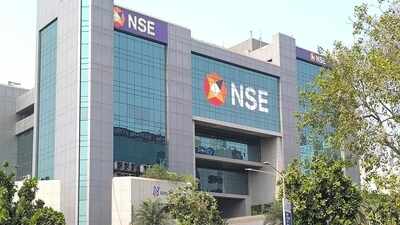
NSE IPO listing date today: National Stock Exchange of India’s shares will debut on the Bombay Stock Exchange and Metropolitan Stock Exchange of India (MSEI) today.Market participants are also tracking grey market movements closely ahead of the listing, which is among the most anticipated market debuts of the year so far. Analysts said restrictions on exits by most large shareholders could limit the availability of NSE shares in the near term, potentially putting upward pressure on prices at a later stage.NSE’s market debut will give investors an opportunity to assess how the exchange should be valued. Its longer-term growth outlook helped attract strong institutional interest, while retail investors appeared more cautious amid concerns about derivatives volumes, regulatory pressures and the possibility of more shares entering the market.If the premium reported late Wednesday by grey market platforms, including IPOWatch, remains intact, NSE could begin trading at a market capitalisation of around $47.5 billion, according to a Bloomberg repprt. That would place it as the world’s eighth-largest listed exchange by market value, compared with about $52.5 billion for London Stock Exchange Group Plc.Although investors remain broadly positive on NSE’s longer-term prospects, the stock’s performance in the months following its listing could depend on the amount of additional equity that becomes available once the lock-in periods for existing shareholders come to an end.
NSE To Debut on BSE, MSEI
In a circular issued on Wednesday, MSE said NSE’s equity shares would be admitted for trading on its capital market segment under the ‘Permitted to trade’ category, effective September 24.The Metropolitan Stock Exchange is a Sebi-recognised national stock exchange that operates an electronic trading platform covering capital markets, equity derivatives, currency derivatives and debt segments. Its platform includes equity and index derivatives, debt and currency derivatives, with more than 250 listings and over 3,100 companies available for trading.The development comes days after NSE MD and CEO Ashish Chauhan made it clear that the exchange would not approach Sebi for permission to trade its own shares on its platform. Existing regulations of the market regulator do not permit a recognised stock exchange to list its own securities on its own trading platform.
NSE IPO GMP
In the unlisted market, traders are currently quoting a grey market premium (GMP) of around Rs 83 a share, according to an ET report. This represents about 4.8% over the IPO price of Rs 1,785 and refers to the premium investors are willing to pay for the shares before their official market debut. Some reports also suggest a GMP of around 2.4%.The GMP was much higher earlier at Rs 250-310 a share, or roughly 14-17%. The steep decline suggests expectations of only modest gains when the shares list.“While investors have been waiting for the NSE listing for long, the enthusiasm has moderated because of the large issue size and expected supply,” Abhay Doshi, co-founder of UnlistedArena.com told ET.At the IPO’s upper price of Rs 1,785 per share, NSE’s valuation stands at Rs 4.42 lakh crore, compared with Rs 1.33 lakh crore for rival BSE. Some market participants said the balance between available supply and investor demand could play an important role in determining how NSE shares perform in the initial trading sessions after listing.The scheduled listing will bring to an end NSE’s long-running journey towards becoming a listed company and make it India’s second listed stock exchange after BSE.NSE launched its initial public offering earlier this month, seeking to raise Rs 22,562 crore through a 12.64 crore-share offer for sale (OFS) by existing shareholders.Since the issue was entirely an OFS, NSE itself will not receive any money from the IPO. The proceeds will instead accrue to the shareholders selling their stakes through the offering.The IPO price band was fixed at Rs 1,700 to Rs 1,785 per share. With the lot size set at 8 shares, retail investors were required to invest a minimum of Rs 14,280 to apply for the issue.Before the IPO opened for subscription, NSE had raised Rs 6,746 crore from more than 150 anchor investors.Foreign portfolio investors made up Rs 2,883 crore, or 43%, of the total anchor book. The anchor round saw participation from more than 20 foreign long-only funds, including Singapore sovereign wealth fund GIC, Abu Dhabi Investment Authority and Norges Bank.Domestic institutional participation was similarly spread across investors. More than 25 mutual funds, along with 11 insurance and pension companies, invested around Rs 3,588 crore, accounting for 53% of the anchor book.LIC, which is NSE’s largest shareholder with a 10.72% stake, also participated in the anchor round. LIC, LIC Mutual Fund and LIC Pension Fund together invested more than Rs 500 crore. The investment was made even though LIC’s existing shareholding in NSE is larger than the stake being offered through the IPO.The SBI group also took part in the anchor book through SBI Mutual Fund, SBI General, SBI Life and SBI Pension Fund. State Bank of India and SBI Capital Markets are together selling a 1% stake in NSE, while the group’s combined investment in the exchange through its various entities exceeds Rs 400 crore.NSE’s first public issue attracted strong demand during the three-day subscription period from September 17 to September 21. The IPO was subscribed nearly six times the shares on offer. Qualified institutional buyers (QIBs) drove the demand, subscribing to their reserved portion around 13 times, while the portions allocated to retail investors and non-institutional investors (NII) were subscribed 1.4 times and 6.6 times, respectively.