



Nasa may be preparing to return to the world of extreme high speed, with a mysterious aircraft resembling the legendary SR-71 Blackbird appearing in a presentation about the agency’s future experimental aircraft programme.According to The War Zone (TWZ), NASA Administrator Jared Isaacman showed the Blackbird-like silhouette during the All-In Summit in Los Angeles, on a slide titled “Rebuilding our X-plane portfolio”. The image was presented as Nasa outlined plans to expand its work on experimental aircraft and high-speed flight.Isaacman appeared to deliberately leave the identity of the aircraft unclear. When All-In host Chamath Palihapitiya referred to the image as an SR-71 Blackbird, Isaacman responded, “You sure that’s a Blackbird?”He later added that Nasa was “getting back in the business of flying high and fast again.”Isaacman also said Nasa was recommitting to flight testing and working with industry to push the boundaries of airframe and propulsion design.“It will not be long before Nasa once again is flying as high and as fast as we had in decades past, and then even more,” he said, according to TWZ.The comments by Isaacman points to a renewed focus on experimental high-speed aviation. Nasa’s X-plane programme has historically been used to test technologies that can later influence military and civilian aircraft, making the unidentified aircraft significant even if the silhouette was only conceptual artwork.

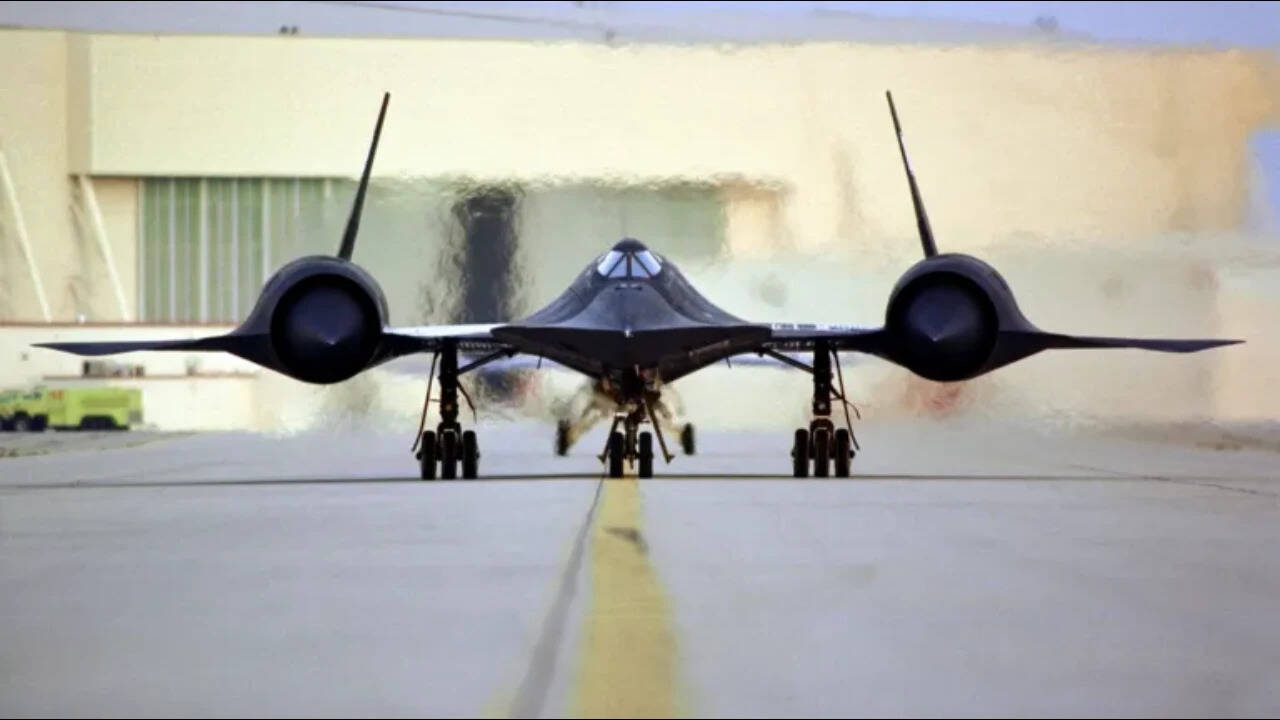
SR-71 Blackbird
The Blackbird legacyThe aircraft shown by Isaacman immediately evokes the SR-71 Blackbird, SR-71 was designed by Lockheed’s Skunk Works and first flew on December 22, 1964. The aircraft was designed to cruise at Mach 3.2, or more than 3,540 km/h, at altitudes of up to 85,000 feet.The Blackbird’s extraordinary performance was central to its reconnaissance role. Its ability to operate at extreme speed and altitude made it a platform for high-speed intelligence gathering during the Cold War.Nasa notes that the aircraft’s operating environment also made it valuable for research into aerodynamics, propulsion, structures, thermal protection materials, high-speed instrumentation and sonic booms.Nasa records that the final SR-71 flight took place on October 9, 1999, at Edwards Air Force Base.Why speed and altitude still matterModern air defence has made penetrating hostile airspace increasingly difficult, with long range radars, surface to air missiles, fighter aircraft and networked sensors creating a much more contested environment.The US National Academies has noted that speed can improve survivability by reducing the time an aircraft remains exposed to enemy defences, while hypersonic speeds can further compress the defender’s detection and engagement window.That makes the basic principle behind the SR-71 relevant even today. The Blackbird combined extreme speed and altitude with reconnaissance sensors and electronic countermeasures to operate over hostile territory.Future high speed platforms would likely have to combine them with low observability, electronic warfare, advanced sensors and networked operations to remain survivable in contested airspace.