


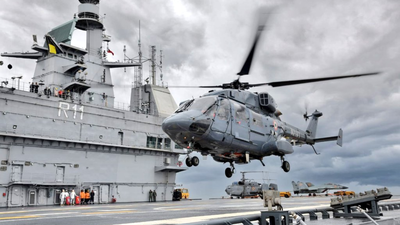
India and the UAE are deepening maritime cooperation with a new joint venture between Cochin Shipyard Limited (CSL) and Dubai-based Drydocks World, a DP World company. Structured as a 50:50 partnership, the venture will operate and expand the International Ship Repair Facility at Kochi, with the broader ambition of turning the city into a major ship-repair hub for India and the wider Indian Ocean region.In its initial phase, the facility is expected to repair more than 80 ships annually, with its workstations expanded from six to 16. This will give it the capacity to handle a wider range of vessels, including commercial ships, tankers, container carriers, offshore support vessels and specialised maritime platforms. The aim is to attract international ships that currently sail to established hubs such as Dubai and Singapore for repair and maintenance, redirecting some of that business to Indian shores.The venture is a significant boost for India’s shipbuilding and ship-repair ecosystem. Ship repair has ripple effects across several allied sectors, including steel, engineering, logistics and electrical systems, while generating employment and foreign exchange earnings.The partnership fits into a much larger national push. Under India’s shipbuilding roadmap, the government unveiled shipbuilding and maritime reform schemes worth Rs 69,725 crore in September last year, built around four pillars.The Shipbuilding Financial Assistance Scheme, worth Rs 24,736 crore, offers direct financial support to Indian shipyards along with ship-breaking credit notes. The Maritime Development Fund, at Rs 25,000 crore, focuses on investment and interest incentives to expand shipping capacity and shipyard infrastructure. The Shipbuilding Development Scheme, worth Rs 19,989 crore, provides capital support for greenfield and brownfield shipbuilding clusters, alongside risk coverage. A fourth pillar covers legal and policy reforms, including granting infrastructure status to large ships to unlock cheaper, long-term financing.CSL also operates the country’s largest dry dock and is the shipyard where INS Vikrant was built. The Vikrant is India’s first domestically developed aircraft carrier. The shipyard has also produced a host of other vessels for the Navy and is currently building six Next Generation Missile Vessels (NGMV) for it.The addition of these facilities strengthens India’s strategic shipbuilding capability. The Navy plans to operate as many as 200 ships by 2035, and increased capacity in the sector will help the domestic industry work towards that target.The government’s broader target, laid out under Maritime India Vision 2030 and Maritime Amrit Kaal Vision 2047, is to place India among the world’s top 10 shipbuilding nations by 2030 and the top five by 2047.Drydocks World is also developing facilities elsewhere in India, while the government has approved five major shipbuilding clusters nationally. Cochin Shipyard and Mazagon Dock have separately signed MoUs with Tamil Nadu agencies for a Rs 15,000 crore shipbuilding complex with a million-tonne annual capacity.