





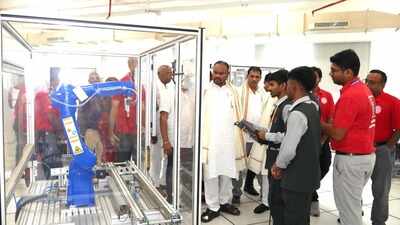
Bhubaneswar: Odisha’s World Skill Center (WSC), which was set up to bridge the gap between classroom learning and industry requirements, has emerged as a model in Niti Aayog’s blueprint for revamping India’s skilling ecosystem.The policy think tank has cited WSC in its report ‘Reimagining Skilling for Viksit Bharat@2047’ as an example of an institution offering outcome-linked, industry-integrated and modular degree and diploma programmes.The recognition comes as the state govt prepares to expand the WSC model. Two more centres are planned in Sambalpur and Berhampur over the next three years, with new-age courses ranging from agri-technology and renewable energy to semiconductor and aviation training. “We want to take skilling to more sectors and regions. The new centres will allow us to respond more closely to the requirements of local industries and emerging job markets,” said WSC chief executive officer Rashmi Ranjan Mohapatra.The Berhampur centre is likely to offer courses in agri-technology, renewable energy and retailing, while the state is exploring marine technology, underwater welding and healthcare assistant training there. The Bhubaneswar centre is being considered for semiconductor and aviation training, Mohapatra said.Recently, the World Skill Center signed 25 MoUs with govt and private engineering colleges and universities to strengthen collaboration in advanced skill development.The Niti Aayog’s report identifies WSC as an “industry-oriented institution anchored by the state govt” and places it among models that could guide the creation of similar institutions elsewhere. The report comes against the backdrop of a persistent mismatch between what students learn in colleges and technical institutions, and what employers actually require. Outdated curricula, limited industry exposure and weak links between education and jobs have affected the employability of graduates and diploma holders, it said, therefore calling for a shift from generic qualifications towards specialised, job-linked programmes, with greater emphasis on work-integrated learning, apprenticeships and industry projects. It also recommends modular, part-time and hybrid courses, including “earn-while-you-learn” models that allow students to work while pursuing education.For Odisha, the reference to WSC assumes added significance, as the state has also been selected for a State Skills Transformation Pilot under the Integrated Scheme in Skilling Architecture, announced in the Union Budget 2026-27. Odisha is among five states along with Andhra Pradesh, Uttar Pradesh, Bihar and Assam, chosen for the pilot. The initiative seeks to test how national skilling frameworks can be adapted to local labour markets, institutional capacity and the aspirations of learners.Niti Aayog has separately cited ‘Skilled in Odisha’ initiative, alongside Tamil Nadu’s ‘Naan Mudhalvan’ and Maharashtra’s ‘Mahaswayam’, as examples of state-led efforts that have contributed to the evolution of India’s skilling ecosystem.