


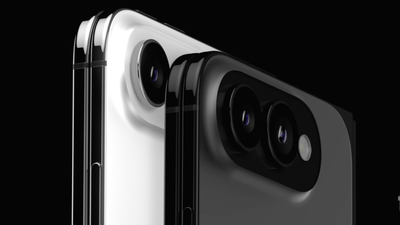
Apple opens its Surprise and Shine event at the Steve Jobs Theater on September 9, and the product the industry is actually waiting for is one the company has never sold: an iPhone that folds open like a passport. It is expected to be called the iPhone Ultra, and analyst estimates put it at a price no iPhone has approached in nearly two decades of sales. IDC projects an average selling price above $2,550, roughly Rs 2.25 lakh, with the largest storage tiers touching or crossing $3,000, about Rs 2.65 lakh.That is close to double the $1,199 iPhone 17 Pro Max. TrendForce expects a softer entry point of $2,099 to $2,299, or about Rs 1.85 lakh to Rs 2.03 lakh, while Citi has settled on a $2,000-plus start. All of those sit above the $1,899 Samsung charges for the Galaxy Z Fold 8, a phone from a company with a six-year head start in the category. Wednesday is also John Ternus’s first launch since taking over as chief executive from Tim Cook, which makes the pricing call a statement as much as a spreadsheet.A memory shortage has quietly reset what every smartphone costsComponent costs explain much of this. Memory prices have climbed more than 300 per cent in a year, pushing the average smartphone price up 27.6 per cent to $581 and wiping out the sub-$100 tier entirely. Counterpoint’s estimates show the scale of it: 16GB of smartphone DRAM cost around $42 in the second quarter of 2025 and about $181 a year later.The reason is not complicated. Three companies control roughly 90 per cent of the memory market, and all three are pointing their capacity at high-bandwidth memory for AI servers, which is harder to make but far more profitable. SK Hynix posted a 76 per cent operating margin last quarter. Micron’s adjusted gross margin hit 85 per cent. Phone makers are bidding for what is left over.IDC expects global smartphone shipments to fall 16.7 per cent in 2026 to a little over a billion units, the steepest annual contraction on record. The iPhone 18 Pro feels it too, with TrendForce putting the base model as high as $1,319, close to Rs 1.16 lakh, against $1,099 for the iPhone 17 Pro. That is a 10 to 20 per cent rise across the line-up, and TrendForce still calls it moderate, since memory costs for a 256GB iPhone 18 Pro are estimated to be nearly 400 per cent higher than a year ago. Cook, on his final earnings call, called memory pricing a “100-year flood”.Apple is launching only its costliest iPhones this September, and that is on purposeThe shortage is also shaping which phones Apple bothers to launch this month. The iPhone 18 Pro and Pro Max are expected on Wednesday alongside the foldable, while the standard iPhone 18 and a refreshed Air are held back to the first quarter of 2027. That leaves the entire autumn line-up sitting at the top of the price ladder, which is exactly where Apple has the margin to absorb a component shock. Supply-chain tracking suggests Apple has prepared roughly 10 per cent more Pro and Pro Max units for September to December than it did for the iPhone 17 Pro pair last year.The iPhone Ultra specs suggest Apple studied everyone else’s mistakesExpect a 7.8-inch inner display and a 5.5-inch cover screen, with Touch ID moving to the side button because a TrueDepth array will not fit a chassis measured at 4.5mm to 4.8mm unfolded. There are two rear cameras, a front camera that works folded or open, 12GB of RAM and a rumoured 5,500mAh battery, which would be the largest Apple has ever put in a phone. The iPhone 17 Pro Max, for comparison, has 5,088mAh.The two components everyone will actually scrutinise are the hinge and the crease. Apple is said to be chasing a fold with almost no visible seam, and to have run an additional manufacturing trial last month specifically for surface flatness and hinge performance. That trial pushed commercial production back by several weeks. Analysts who have tested a lot of folding phones make the same point about Apple arriving late: it has watched five years of hinges loosen and creases deepen on other people’s products.Multitasking will be more modest than the tablet-style comparisons suggest. Side-by-side apps with drag and drop between them are expected, not the Mac-like windowing Apple added to iPadOS.Foldable iPhone supply, not demand, is what could spoil the launchOutput is currently down to a few hundred units a day as Apple tunes the process, with a first run of around 10 million units and a ramp expected to take three to five months. There is also a possibility the device is unveiled on Wednesday and sold later in the year, the way the iPhone X was handled in 2017, and reports have suggested a US-first release with other markets in a second wave.Even with that, the projections are aggressive. Citi expects 5 million units in the second half of 2026 and another 2.3 million in the first quarter of 2027. IDC sees more than 17 million by the end of 2027 and over $45.7 billion in revenue from a category Apple has never sold into, which would give it about 40 per cent of the foldable market.Foldables are also the only part of the smartphone market still growing. IDC forecasts 12.6 per cent growth this year to 22.9 million units and an 18 per cent gain the year after. Without Apple, its analysts say the segment would have shrunk at a double-digit rate. Samsung’s share is expected to slip from 40 per cent to 32 per cent, and Huawei and Xiaomi both launched new foldables on September 7 to get ahead of Wednesday.Three out of four Americans do not want a foldable iPhone at any priceA survey of 2,605 US adults found 75 per cent are not interested in a foldable iPhone at all, and those who are said they would pay an average of $781, roughly Rs 69,000. That is less than a base iPhone 17 costs. Four in ten said memory-driven price rises are making them rethink upgrading at all.Apple has spent a decade proving that stated willingness to pay and actual queues outside stores are different things. The iPhone Ultra is the sharpest version of that test it has ever set itself, and it is running it in the worst year the smartphone market has had.